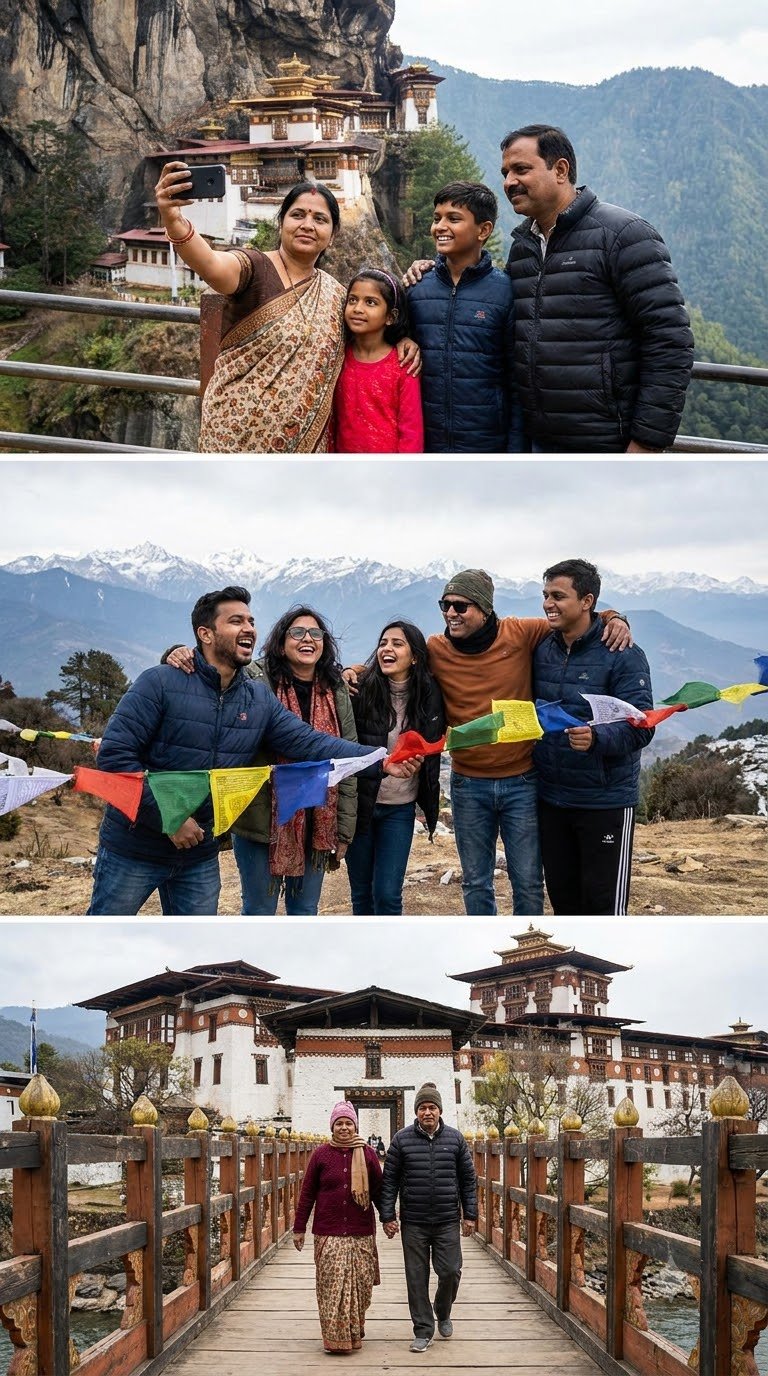
Type "Bhutan trekking package" into a search bar and most results read like a spec sheet — a trek name, a number of days, and a price. What they tend to skip is the part that actually decides whether you'll enjoy the trip: Bhutan treks are not a loose trail you follow with a map and a tent you pitched yourself. Every route runs through the same licensed structure as the rest of Bhutan's tourism — a registered operator, a government-approved route, and a trekking permit filed in advance — with a full camping operation built around it.
That structure is exactly why the trek you pick matters more than the operator you book with. Two companies running the same Jomolhari itinerary will bring nearly identical camping gear, crew ratios and permits, because the rules are set at the national level. What actually varies — and what this guide focuses on — is which route fits your fitness, your dates and how much altitude you're comfortable spending several days at. No invented figures on cost here; that depends on group size, season and camping standard, and is worth getting as a written quote rather than a guess.
What Makes a Bhutan Trekking Package Different From a Standard Tour
A regular Bhutan tour package already bundles a guide, a private car and driver, your permits and the Sustainable Development Fee. A trekking package keeps every one of those pieces and adds a second team on top of it: a dedicated trekking guide who knows the specific route, a cook and camp crew, and either pack horses, yaks or porters to carry tents, kitchen equipment and food once the road runs out. Most trailheads sit within a short drive of Paro, Thimphu or Jakar (Bumthang), so a trek is usually bookended by the same hotel-and-car arrangement as any other Bhutan itinerary — you're not choosing between trekking and sightseeing, you're adding trekking days onto a trip that still has normal ones either side of it.
The other structural difference is meals and gear. On a standard tour package, breakfast and dinner are typically included and lunch is on you. On trekking days, the camping crew cooks all three meals and packs them into the day's route, since there's rarely a restaurant to stop at once you're past the last village. That's also why trekking permits are handled separately from the standard Entry and Route Permits — each trekking route is registered individually with the Tourism Council of Bhutan before your dates are confirmed.
Bhutan Trekking Routes Compared, Day by Day
Below are five routes that cover most of what travellers actually ask for — a short introduction to camping, a classic mountain base-camp trek, a lakes route within reach of the capital, a low-altitude cultural walk, and a genuine multi-week expedition. Durations below count trekking days only; your full Bhutan trekking package will usually run a few days longer once arrival, departure and any hotel nights are added.

Druk Path Trek
ModerateParo → Jili Dzong → Jangchulakha → Jimilang Tsho → Simkotra → Thimphu
- Alpine lakes at Jimilang Tsho and Janetsho along the ridge
- The ruined dzong and meditation caves at Jili
- A ridgeline walk into Thimphu instead of the usual road transfer
- No long approach drive — starts a short way outside Paro town
Best for: first-time trekkers who want a genuine multi-day camping route without committing to a long expedition, and anyone adding a short trek onto a standard western-circuit itinerary.
See the day-by-day plan

Jomolhari Trek — Short Loop
ChallengingDrukgyel Dzong → Jangothang (Jomolhari Base Camp) → Bonte La → Soi Yaksa
- Two nights camped directly beneath Mount Jomolhari (7,326m)
- A built-in acclimatization day with a side walk to the Tshophu lakes
- Genuine chance of spotting blue sheep on the higher slopes
- Returns through the high pastures of Soi Yaksa rather than the outbound trail
Best for: fit trekkers who want a real Himalayan base-camp experience — sustained days above 3,500 metres — without signing up for a three-week expedition.
See the day-by-day plan
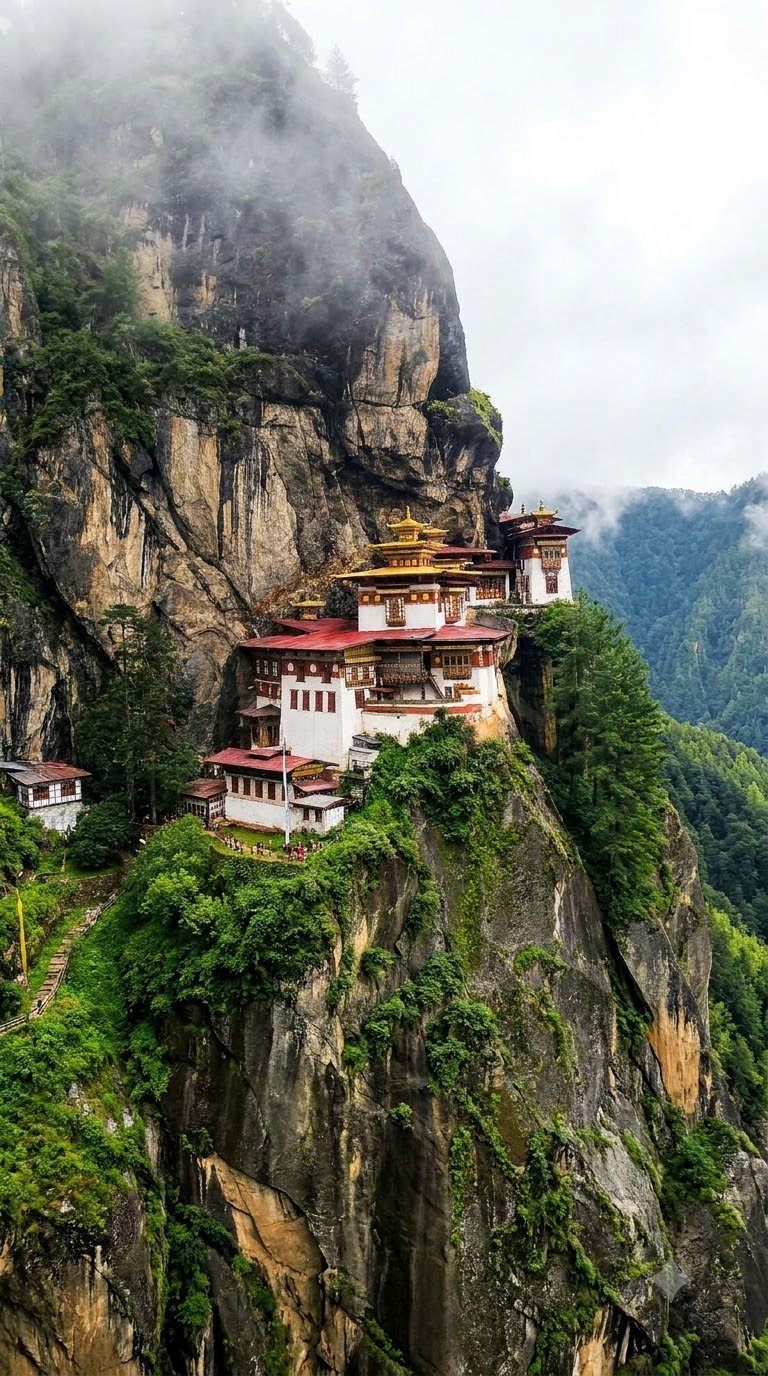
Dagala Thousand Lakes Trek
ModerateChamgang → Gur → Labatama → Panka → Talakha → Thimphu
- Dozens of high alpine lakes scattered across the Dagala range
- Sweeping Himalayan views on a clear morning near Labatama
- Trailhead within a short drive of Thimphu — no long transfer needed
- A reasonable chance of spotting blue sheep near the upper camps
Best for: travellers already following a Classic or Central Heritage circuit who want to add a proper high-altitude trek without travelling far from the capital.
See the day-by-day plan

Bumthang Owl Trek
EasyMenchugang → Phephe La → Tang Valley → Ogyencholing
- Overnight stops close to working farmhouses, not remote high camps
- The watchtower-turned-museum at Ogyencholing Palace in the Tang valley
- Forest sections known for owl sightings after dusk, giving the trek its name
- Low elevation gain throughout, with no altitude above 3,400 metres
Best for: travellers on a Central Bhutan Heritage itinerary who want a short taste of camping and village life without any serious altitude commitment.
See the day-by-day plan

Laya-Gasa Trek
StrenuousJangothang → Lingzhi → Chebisa → Shomuthang → Robluthang → Laya → Gasa
- Two nights in Laya village, home to the Layap people and their pointed bamboo hats
- Six mountain passes above 4,000 metres through Jigme Dorji National Park
- A soak in Gasa's natural hot springs on the final stretch
- Genuine wilderness — multi-day stretches with no road access at all
Best for: experienced trekkers with at least one prior high-altitude trek behind them, travelling in the narrower spring or autumn windows.
See the day-by-day plan
Looking for something longer?
The Snowman Trek links the Jomolhari and Laya-Gasa routes and continues into the remote Lunana region, crossing several passes above 5,000 metres over roughly 24 to 25 days. It's often described as one of the most demanding trek routes in the world, with a narrow autumn window and a completion rate that reflects just how remote it is. It isn't offered as a standard package on this page — tell a travel designer about your trekking background and schedule, and they can confirm whether this route genuinely fits.
Landscapes You'll Walk Through
Every Bhutan trekking package moves through a handful of terrain types that make the country's trails distinct from most Himalayan trekking regions — you're rarely on the same kind of ground for more than a day or two.
Alpine Lakes
Chains of glacial tarns along the Druk Path and Dagala routes, several said to hold trout, with campsites usually pitched right beside the water.
High Mountain Passes
The defining feature of Bhutan trekking — crossings between 4,000 and 4,900 metres that separate one valley system from the next.
Yak and Horse Pastures
Open highland grazing ground used by herding communities in summer, often the setting for a trek's most memorable camps.
Forest and Farmland
Lower-altitude routes like the Bumthang Owl Trek pass through working villages, apple orchards and mixed conifer forest.
Layap Villages
Laya and its surrounding settlements in the far north, home to a distinct culture, dress and bamboo hat style found nowhere else in Bhutan.
Natural Hot Springs
Gasa's hot springs mark the end of the Laya-Gasa route — a genuinely well-timed reward after two weeks of camping.
Matching a Bhutan Trekking Package to Your Fitness Level
The five routes above aren't ranked from worst to best — they're suited to different people at different points in their trekking life. Here's how they tend to map onto the traveller, rather than the other way around.
First-Time Trekkers
Start with the Bumthang Owl Trek or the Druk Path Trek. Both keep you well under 4,300 metres and never ask for more than five hours of walking a day, which is enough to know whether multi-day camping suits you.
Regular Hikers
The Dagala Thousand Lakes Trek is a good step up — genuinely high altitude and a longer route, but without the multi-week commitment of Jomolhari or Laya-Gasa.
Experienced Mountain Trekkers
The Jomolhari Trek delivers a real base-camp experience with sustained days above 3,500 metres, and works well as a stepping stone toward the longer Laya-Gasa or Snowman routes.
Culture-Focused Trekkers
If temples and village life matter more than altitude, the Bumthang Owl Trek trades elevation gain for farmhouse stops and a genuine look at rural Bhutanese life.
Wildlife and Remote-Wilderness Trekkers
Laya-Gasa moves through Jigme Dorji National Park for nearly two weeks, with the best odds of spotting blue sheep and a rare visit to a genuinely remote Layap community.
Trekkers Training for a Future Expedition
Treat the Druk Path or Dagala trek as a training route: similar altitude exposure to the early days of Jomolhari or Laya-Gasa, at a fraction of the time commitment.
What's Included in a Bhutan Trekking Package (and What Isn't)
Because trekking permits and route rules are set at the national level, the core inclusions look broadly similar across operators — the real differences tend to show up in crew ratios, tent quality and how many rest days are built into a route. What's genuinely worth confirming before you book is what happens to the price if the group is small, since pack-animal and crew costs are shared across the party.
Inclusions
- Licensed trekking guide, in addition to your general tour guide
- Camping crew: cook, kitchen helper and camp staff
- Pack animals (horses or yaks) or porters for gear and food
- Tents, dining tent, kitchen tent and sleeping mattresses
- Three meals a day while on the trail
- Trekking route permit and registration with the Tourism Council of Bhutan
- Sustainable Development Fee for every day of the trek
- Hotel nights, private car and standard permits either side of the trek
- Basic first-aid kit and radio or satellite communication on remote routes
Exclusions
- Personal trekking gear: boots, trekking poles, headlamp
- Sleeping bag, unless specifically arranged as a rental with your operator
- Gratuities for the trekking crew
- High-altitude travel insurance and emergency evacuation cover
- Any costs from route changes due to snow-blocked passes or a health-related early descent
Trekking Permits, Group Rules & Documents
Indian nationals still don't need a visa for a Bhutan trekking package, but there's a second layer of paperwork on top of the standard Entry and Route Permits that cover a normal tour.
- Valid photo ID: a passport with six months' validity, or a voter ID card for adult Indian nationals; children travel on a passport or birth certificate.
- Trekking Route Permit: each route is registered individually with the Tourism Council of Bhutan and the Department of Immigration once your dates and party size are confirmed.
- Park entry clearance: routes through Jigme Dorji National Park — Jomolhari, Dagala and Laya-Gasa among them — need additional clearance that your operator files alongside the trekking permit.
- Sustainable Development Fee: charged for every day on Bhutanese soil, trekking days included, at the same government-set rate that applies to the rest of your trip. It's arranged as part of your package, not paid separately at a checkpoint.
- High-altitude travel insurance: optional for a standard tour, but genuinely worth carrying for any route crossing above 4,000 metres — emergency evacuation from a remote pass is a different cost and logistics situation entirely.
- Basic fitness declaration: some operators ask trekkers past a certain age, or with a known heart or lung condition, for a short note from a doctor before confirming a high-altitude route.
The trekking permit is filed to a specific route and specific dates — it isn't transferable if a group decides to switch trails partway through planning. Lock in your route before you book flights.
Best Months for a Bhutan Trekking Package
Trekking season in Bhutan is narrower than the window for a standard sightseeing tour, since high passes need to be clear of fresh snow and trails need to be dry enough to walk safely.
Trekking suitability by month
Relative score based on high-pass snow cover, trail conditions and monsoon risk
October is the standout month for most Bhutan trekking packages — trails have dried out after the monsoon, and high passes are unlikely to see fresh snow before late autumn. April is the strongest spring alternative, with the added bonus of rhododendrons in bloom along routes like the Druk Path. Low-altitude routes such as the Bumthang Owl Trek have a wider realistic window, running from early spring through late autumn, while high routes like Jomolhari and Laya-Gasa are best kept to these two peak seasons — a pass that closes for even a day can force a change of plan on a route with no easy detour.
Altitude, Acclimatization & Staying Safe on the Trail
Every route above roughly 3,500 metres carries some risk of altitude-related discomfort, regardless of general fitness — it affects fit and unfit trekkers alike, and it isn't something you can train your way out of entirely. What actually helps is pacing: ascending gradually, drinking enough water, and treating a built-in acclimatization day as non-negotiable rather than something to skip if you're feeling strong.
Know the early signs. Headache, unusual fatigue, loss of appetite or mild dizziness above 3,500 metres are common early symptoms of altitude sickness. They usually settle with rest and fluids at the same elevation.
Don't push through worsening symptoms. Confusion, a persistent cough or shortness of breath at rest are signs to descend and tell your guide immediately — every reputable trekking crew carries basic first-aid and knows the nearest descent route on their trail.
Longer routes like Jomolhari and Laya-Gasa build rest days into the itinerary specifically for this reason — use them. If you're trekking with a pre-existing heart, lung or blood-pressure condition, mention it to your operator well before booking so the itinerary and crew can be planned around it.
What to Pack for a Bhutan Trekking Package
Camping equipment, tents and kitchen gear are provided as part of the package — what you're responsible for is everything you'll wear and carry personally.
Clothing & Personal Gear
- Broken-in, waterproof trekking boots
- Layered clothing: moisture-wicking base layers, a warm mid-layer, waterproof shell
- Warm hat, sun hat and insulated gloves
- A sleeping bag rated for sub-zero temperatures, or arrange a rental in advance
- Sunglasses with strong UV protection for high-altitude glare
- Quick-dry towel and basic toiletries
Trail Essentials
- Trekking poles
- Headlamp with spare batteries
- Reusable water bottle or hydration bladder
- Personal first-aid kit and any regular medication
- A power bank — charging points disappear once you're past the trailhead
- Cash in small denominations for tips and any incidental purchases along the way
How to Choose the Right Bhutan Trekking Package
- Match the route's altitude profile to your own trekking history, not just its headline duration. An 8-day trek with two nights above 4,500 metres is a different proposition from an 8-day trek that peaks once at 4,000 metres.
- Ask how many rest and acclimatization days are built in above 4,000 metres, and confirm they aren't the first thing dropped if the schedule runs tight.
- Confirm whether cold-weather gear is rented locally or needs to be carried from home — this genuinely changes what goes in your bag.
- Check the crew-to-trekker ratio, not just the campsite photos. A well-staffed trek recovers faster from a bad-weather day than a thinly-staffed one.
- Build a buffer day into your travel dates in case a pass closes and the group needs to wait it out before continuing.
- Ask specifically what happens if someone needs to descend early. A good operator has a clear answer ready — a spare horse, a support vehicle at the nearest road-head, a plan — not an improvised one.
Frequently Asked Questions: Bhutan Trekking Packages
What is included in a Bhutan trekking package?
A Bhutan trekking package includes everything in a standard tour package plus the trail-specific layer: a trekking guide, camping crew, pack animals or porters, tents and kitchen equipment, three meals a day on the trail, the trekking route permit, and the Sustainable Development Fee for every day of the route. Personal gear, gratuities and high-altitude travel insurance are usually excluded.
Do I need previous trekking experience for a Bhutan trekking package?
It depends on the route. The Bumthang Owl Trek and Druk Path Trek are manageable for reasonably fit travellers with no prior trekking background, while routes like the Jomolhari Trek and Laya-Gasa Trek involve sustained days above 4,000 metres and are better suited to hikers with at least one multi-day trek behind them.
How difficult are Bhutan's trekking routes?
Difficulty in Bhutan is driven mainly by altitude and trip length rather than technical climbing. Short, low-altitude routes like the Bumthang Owl Trek are easy to moderate, mid-length routes like the Druk Path and Dagala Thousand Lakes treks are moderate, and longer routes like Jomolhari and Laya-Gasa are challenging to strenuous because of sustained high-altitude walking days.
What is the best trekking route for a first-time visitor to Bhutan?
The Druk Path Trek is usually the best starting point: five days of camping between Paro and Thimphu, alpine lakes, and a highest point of roughly 4,200 metres, without the long approach drives that longer central and northern routes require.
When is the best time for a Bhutan trekking package?
April to early June and late September through November are the strongest windows for most Bhutan trekking packages, since mountain passes are clear of fresh snow and trails are dry. Low-altitude routes like the Bumthang Owl Trek have a wider window, while high routes like Laya-Gasa are essentially limited to these two seasons.
Are trekking permits different from a standard Bhutan tour permit?
Yes. Alongside the standard Entry Permit and Route Permit that cover a regular tour, a trekking package needs its route registered separately with the Tourism Council of Bhutan and, for routes through Jigme Dorji National Park, additional park clearance. Your operator arranges all of this once your trekking dates are confirmed.
Can a Bhutan trekking package be combined with a standard sightseeing itinerary?
Yes. Most travellers add a trek onto a standard circuit rather than trekking for the entire trip — for example, the Druk Path Trek onto a Paro-Thimphu-Punakha itinerary, or the Bumthang Owl Trek onto a Central Bhutan Heritage route. The guide, car and hotel nights on either side stay the same as a non-trekking package.
Is travel insurance necessary for a Bhutan trekking package?
It is not legally required for Indian nationals, but it is strongly recommended for any route that climbs above 4,000 metres. Evacuation from a remote mountain pass is a genuinely different cost and logistics situation than a delay in Paro or Thimphu, and a good policy covers both medical treatment and emergency transport.
Ready to Plan Your Bhutan Trekking Package?
Share your fitness level, available dates and group size, and a travel designer will match you to a route that genuinely fits — with a transparent, written quote and no deposit required.