
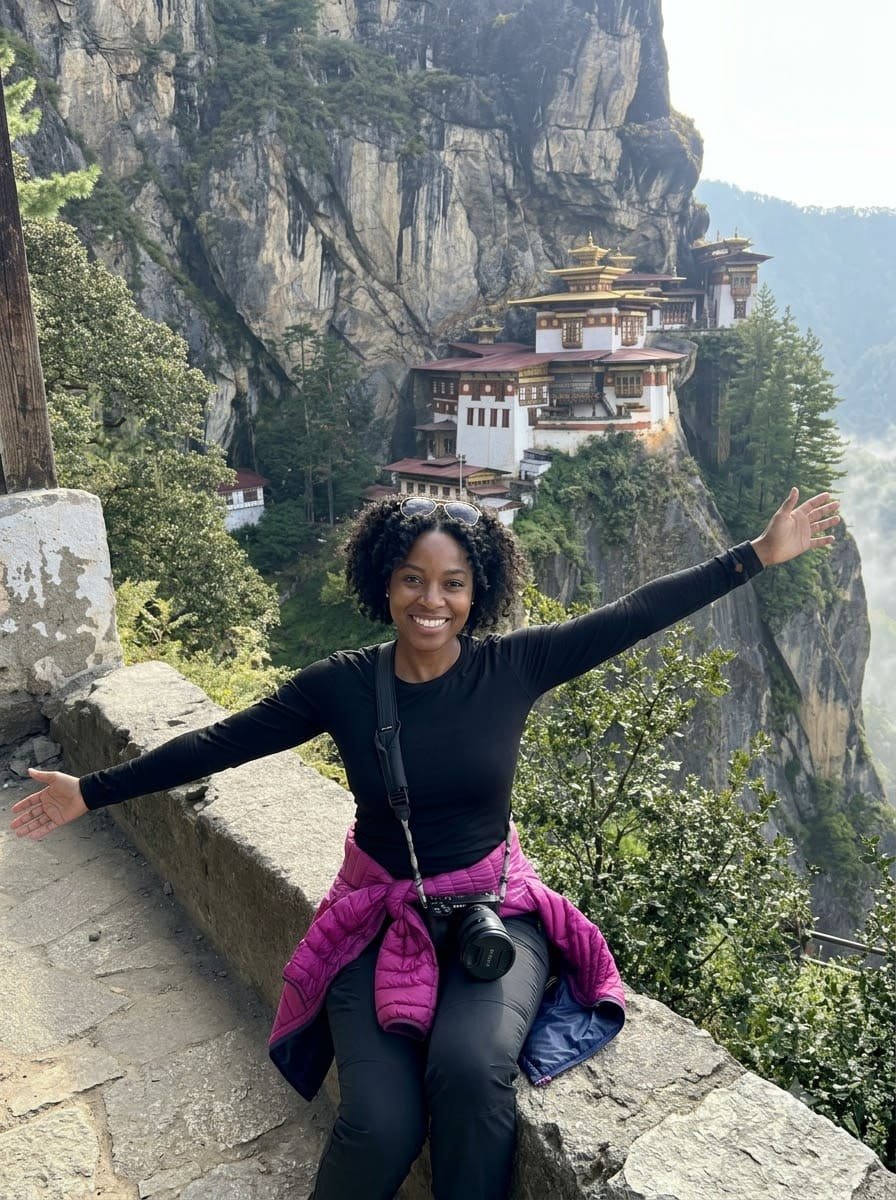
Search "Bhutan tour packages from USA" and a lot of what comes back reads like it was written for a country that doesn't need a visa to get in — because most of it was, in fact, written with Indian travelers in mind. American travelers are working from a different starting point: no shared border, no visa-free entry, and a flight that always involves at least one stop before you ever see Paro's runway. None of that is difficult once you understand the order it happens in, but it does change what "planning ahead" means for this particular trip. This guide focuses on exactly the parts that are different for a US traveler — the visa, the fee, the routing, and how much time you actually need to set aside — rather than repeating generic advice that assumes you're already somewhere in the region.
How American Travelers Reach Bhutan
Paro International Airport is Bhutan's only way in by air, and only two carriers — Drukair and Bhutan Airlines — fly there at all. Neither operates anywhere near North America, so every US traveler connects through a regional hub first. Which one makes sense has less to do with any fixed "best" option and more to do with your outbound routing, your tolerance for a longer layover, and whether you'd rather turn that layover into its own mini-trip.
Via Bangkok
Suvarnabhumi Airport carries the widest range of Drukair and Bhutan Airlines departures to Paro and pairs easily with long-haul flights from most major US gateway cities. For a lot of American travelers, this ends up the simplest single connection to design a whole itinerary around.
Via Delhi
Indira Gandhi International has a daily flight to Paro and fits naturally if your outbound routing already passes through India, or if you'd rather tack on a short India stop before or after Bhutan.
Via Kathmandu
Tribhuvan International's short hop to Paro is genuinely one of the more memorable regional flights — window seats line up with the high Himalaya on a clear day. It's the natural pick if Nepal is part of the trip, and it's the routing behind one of the itineraries further down this page.
Via Singapore
Changi Airport connects to Paro only once or twice a week, so it suits travelers with genuinely flexible dates more than anyone working around a fixed return flight home.
Land borders exist too, but they're not really built for a US departure. Bhutan has opened its Phuentsholing and Samdrup Jongkhar crossings to non-regional tourists in recent years, so a traveler already moving overland through India or Nepal on a longer regional trip can, in principle, drive in. For a first Bhutan trip starting from the US, though, flying into Paro through one of the hubs above is still the far more practical route.
The Bhutan Visa and Sustainable Development Fee for US Citizens
Indian, Bangladeshi and Maldivian nationals are the only travelers who can enter Bhutan without a visa. Everyone else — American citizens included — needs one for every trip, along with a nightly Sustainable Development Fee (SDF) that funds Bhutan's free healthcare, education and conservation work. Neither step is complicated, but both need to happen in a specific order before you can even book your flight to Paro.
- Check your passport validityA US passport valid for at least six months beyond your planned return date. Bhutan doesn't accept any other document as travel identification for entry.
- Book through a licensed Bhutanese tour operatorEvery non-regional visitor — American travelers included — arranges their trip through a licensed Bhutanese operator or a partner agency, since only a licensed operator can file the visa application on your behalf.
- Apply for your Bhutan eVisaYour operator submits your passport bio page, a passport photo and an outline itinerary through Bhutan's online visa system, well ahead of your travel dates.
- Wait for visa clearance before booking your Paro flightDrukair and Bhutan Airlines won't issue a ticket until clearance comes through, so this step effectively sets the earliest date you can actually fly.
- Pay the Sustainable Development FeeCharged per night to every non-regional visitor, and usually bundled with the one-time visa fee into a single payment your operator collects ahead of the trip.
- Get your visa stamped, and keep your paperwork on handImmigration stamps your passport on arrival in Paro. Keep a copy of your visa approval and SDF receipt with you afterward — they can be checked during your stay.
A couple of details are worth knowing before assuming this runs on the timeline of a typical tourist visa. You can't purchase a Drukair or Bhutan Airlines ticket without clearance already in hand, so the visa step is what actually sets your earliest possible departure — start it as soon as your dates are firm, not the week before you fly. And while your operator handles the filing, they still need your passport details locked in early to get the process moving at all.
On the Sustainable Development Fee specifically: the nightly rate, and the one-time visa fee that goes with it, are set by Bhutan's government and revised from time to time, so we're deliberately not printing a figure here that could be stale by the time you read it. Ask your operator to confirm the current rate for US citizens in writing before you book — it should already be reflected in your package invoice, not tacked on as a surprise at the airport.
Types of Bhutan Tour Packages from the USA
Before comparing specific itineraries, it helps to know which category actually fits your trip. A similar-looking nine-day route gets sold very differently depending on who it's built for, and on how the long-haul flight itself factors into the plan.
Classic Fly-In Cultural Circuit
The standard first Bhutan trip for US travelers: fly into Paro through a regional hub and cover the western circuit — Paro, Thimphu, Punakha — at a steady, unhurried pace.
Stopover Combination Packages
Pairs the Bhutan circuit with a night or two in the connecting hub city, most often Bangkok or Kathmandu, so the unavoidable layover turns into real travel time instead of dead time.
Multigenerational & Group Packages
Families or groups of friends flying in from different US cities, sharing vehicles and a guide once everyone lands in Paro on the same day.
Honeymoon & Anniversary Packages
A slower daily pace, boutique lodges and more private time — popular with American couples looking for a destination that still feels genuinely undiscovered.
Festival (Tshechu) Packages
Itineraries timed around a specific masked-dance festival date, usually built around a block of vacation days rather than a single long weekend, given how far the trip already is.
Trekking & Wellness Extensions
A short trek — the Druk Path is the usual choice — or extra hot-stone-bath and spa time, layered onto the standard circuit for travelers who've already committed to the flight and want more out of it.
Choosing the Right Trip Length from the USA
Once you've priced in two long-haul flights and at least one regional connection on each end, the math around trip length changes. A week that feels generous for a trip to Europe can feel tight once you count a travel day on either side of it, so it's worth matching your itinerary to how much paid time off you're actually working with — not to how many nights sound impressive on paper.
Trip length, by how much time you have
A starting point — your own pace and how you feel about long flights matter as much as the calendar
Realistic if about a week off is all you can spare. Covers Paro, Thimphu and Punakha, including the full Tiger's Nest hike, without adding a second country to the trip.
Turns an unavoidable layover into an actual destination — usually a couple of nights in Kathmandu — instead of a few hours spent in an airport lounge.
Worth the extra time if you'd rather spend two unhurried days in one valley than add another town to the checklist.
Makes the most sense once you've decided one long trip beats coming back a second time — it pushes past the western valleys into Trongsa and Bumthang.
Compare Bhutan Tour Packages from the USA by Itinerary
The four itineraries below map onto the trip lengths above, including one built specifically around a Kathmandu stopover — a detail most general Bhutan guides skip entirely, since they're usually written for a reader who's already somewhere in the region.

Classic Bhutan Circuit
Classic Circuit6 Nights / 7 Days · Paro · Thimphu · Punakha
Ideal for: first-time visitors flying from major US gateway cities
- A tight, efficient circuit built to fit inside a single week of US vacation time, door to door
- The full Tiger's Nest hike, without cutting the pace short to save a day
- A return night in Paro before you fly out, since regional flights depart in the morning
- Punakha's suspension bridge and a farmhouse hot-stone bath worked into the same week as the capital
Best for: American travelers with about a week of vacation time who want the core Bhutan experience without extending the trip further.
See the day-by-day plan

Bhutan with a Kathmandu Stopover
Nepal Add-On8 Nights / 9 Days · Kathmandu · Paro · Thimphu · Punakha
Ideal for: travelers connecting through Kathmandu who want more than a layover in Nepal
- Two country stamps for one long-haul flight out of the US
- A full day in Kathmandu's Durbar Square, Boudhanath and Swayambhunath before Bhutan even starts
- The Kathmandu–Paro flight itself, one of the more scenic short hops in the region on a clear day
- A gentler landing than flying straight from a US layover into a packed Bhutan schedule
Best for: travelers who'd rather break up the long flight from the US with a genuine stop in Nepal, not just a layover.
See the day-by-day plan
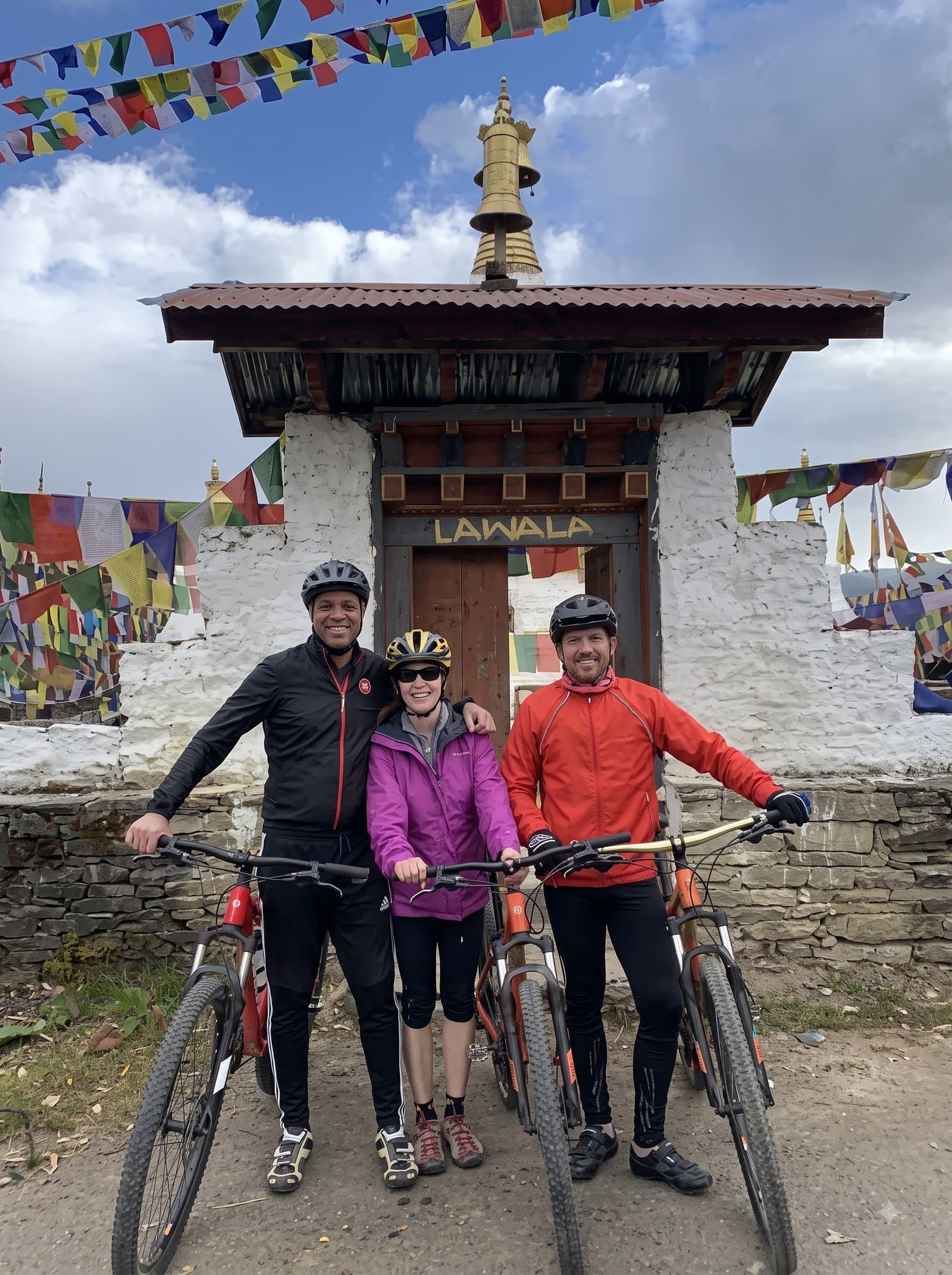
Complete Western Bhutan & Phobjikha
Nature Focus9 Nights / 10 Days · Paro · Thimphu · Punakha · Phobjikha
Ideal for: nature lovers and photographers with a little more time to spend
- Two unhurried nights in Phobjikha Valley, well past where most short itineraries turn back
- Gangtey Monastery and an easy valley-floor nature walk
- Seasonal black-necked crane viewing, roughly November through February
- A slower overall pace, useful for shaking off the jet lag from the trip out
Best for: travelers who'd rather spend two slow days in one valley than add another town to the itinerary.
See the day-by-day plan
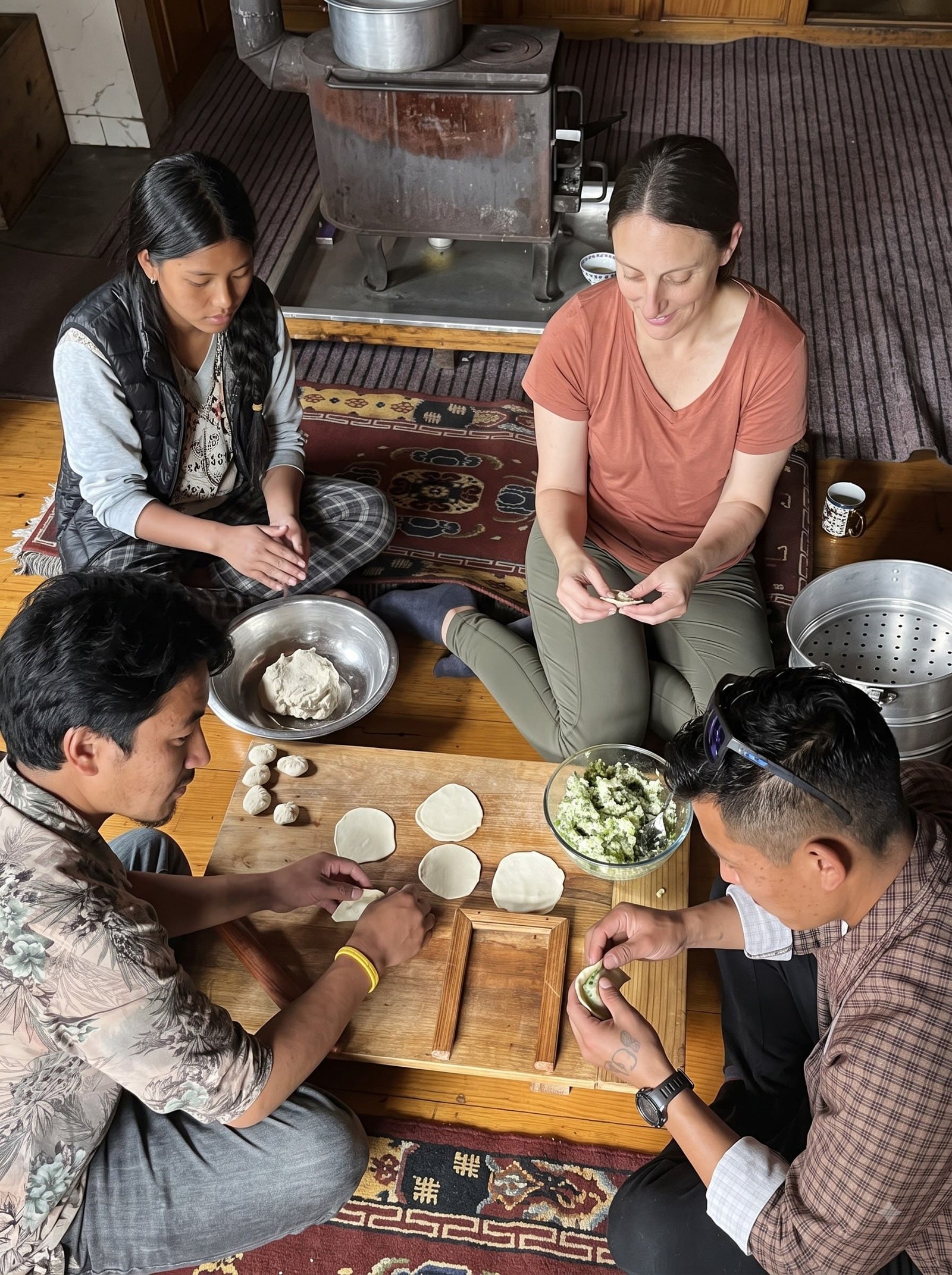
Grand Central Bhutan Journey
Deep Dive12 Nights / 13 Days · Paro · Thimphu · Punakha · Phobjikha · Trongsa · Bumthang
Ideal for: repeat visitors and travelers who'd rather take one long trip than two shorter ones
- The full run into central Bhutan — Phobjikha, Trongsa and Bumthang — that shorter circuits skip entirely
- Trongsa Dzong, built directly into a cliff above the Mangde River gorge
- Jambay Lhakhang and Kurjey Lhakhang, among the oldest temples in the country
- A trip long enough to justify the flight time, for travelers who'd rather go deep once than come back twice
Best for: travelers who've already committed to the long flight and want to see more of the country than the standard western circuit covers.
See the day-by-day plan
Every itinerary above is a starting template, not a fixed script — shift a night between towns, swap the hub you fly through, or extend a free day. Share your travel dates, group size and departure city, and a travel designer will confirm what actually fits, with a written itinerary and quote to follow.
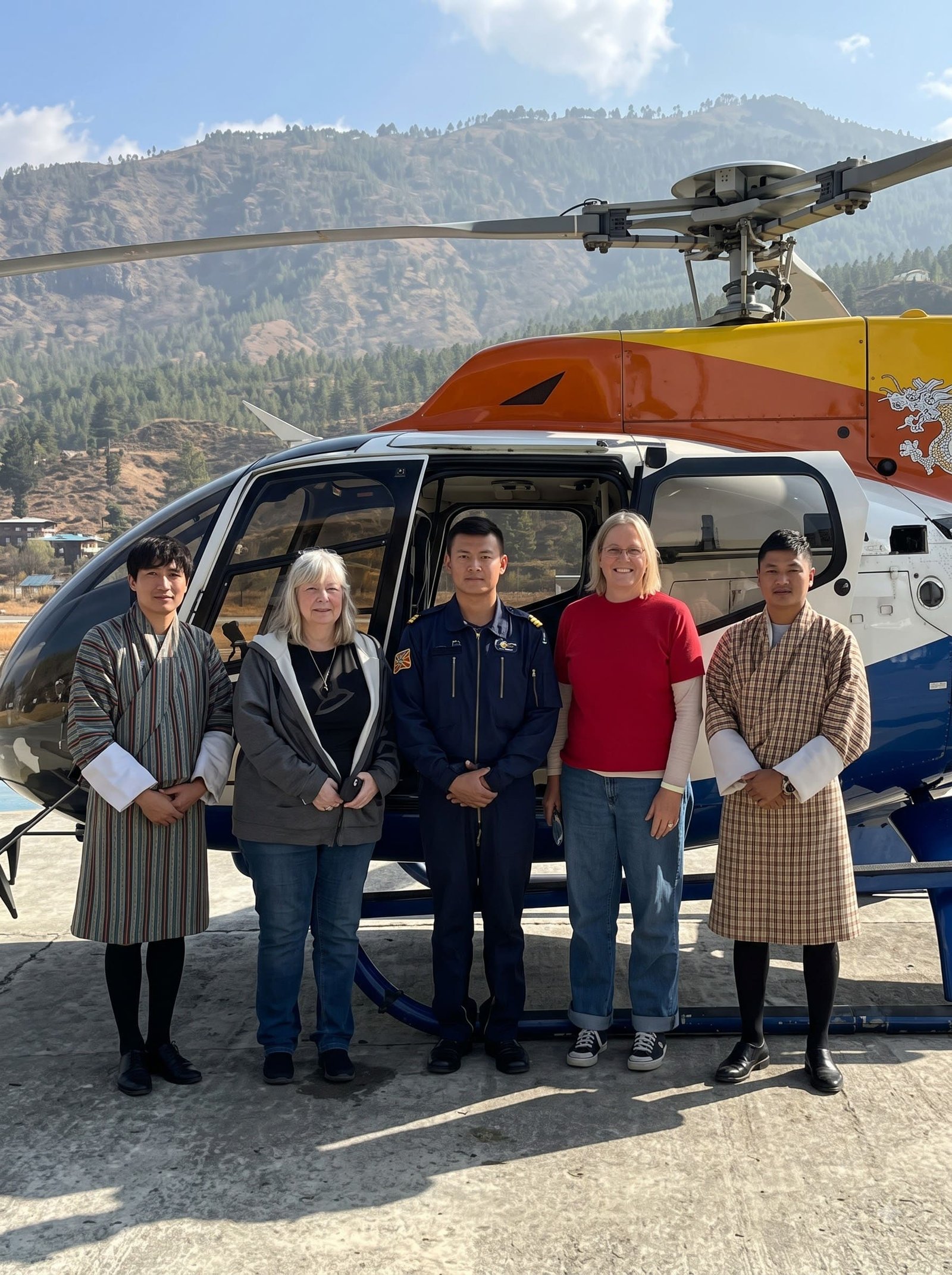
Best Time for American Travelers to Book
Weather drives most seasonal advice about Bhutan, and that part doesn't change by nationality. What does change for US travelers is the holiday calendar layered on top of it — there's no single American holiday that drives demand the way Diwali does for Indian travelers, which actually works in your favor if your dates have any flexibility at all.
Weather & booking pressure, by month
Higher bar = clearer skies, but also more competition for hotel rooms from travelers of every nationality, not just the US
If your dates can flex, late May and September sit close to peak-season weather without peak-season competition for hotel rooms. If you're set on October or November — the clearest skies of the year — book earlier than feels necessary anyway, since Bhutan's total hotel capacity is small and fills from every direction at once, not just from the US.
What's Included and What's Not
Bhutan's tourism system sets a baseline that every licensed operator follows, so core inclusions look broadly similar across most Bhutan tour packages no matter where you book from. Where a US-focused package tends to differ from a shorter regional trip is the meal plan and the buffer built in around your international flights.
Inclusions
- Hotel accommodation for every night of the itinerary
- Licensed, English-speaking Bhutanese guide for the full trip
- Private vehicle and driver
- Visa clearance processing and Route Permit arrangements
- Sustainable Development Fee at the applicable international rate
- Airport transfers at Paro
- Full-board meal plan covering breakfast, lunch and dinner
- Bottled water throughout the trip
- One included cultural activity, such as an archery session or a farmhouse hot-stone bath
Exclusions
- International flights to and from the US, and the regional flight to and from Paro itself
- Alcoholic beverages and specialty drinks
- Entrance tickets to individual museums beyond what's included in the itinerary
- Travel insurance and personal shopping
- Optional add-ons: trekking permits beyond the itinerary, festival seating, rafting, hot air ballooning
- Costs from a missed connection or a weather-delayed flight into or out of Paro
Documents American Travelers Need for a Bhutan Tour Package
The paperwork involves one more step than what Indian nationals deal with, simply because a visa is part of it — but it's still a short, predictable list once you know what belongs on it.
- Valid US passport: valid for at least six months beyond your planned return date.
- Bhutan visa clearance: arranged by your licensed operator before you can book a Paro-bound flight, and stamped into your passport on arrival.
- SDF and visa fee payment confirmation: a receipt worth carrying alongside your visa printout during the trip.
- Passport-size photographs: a recent set for each traveler on the booking.
- Travel insurance with medical evacuation coverage: not a legal requirement, but strongly recommended given how limited hospital care is outside Thimphu.
On travel insurance specifically: a standard US travel policy often doesn't cover medical evacuation from a mountain valley, and Bhutan's hospital infrastructure outside Thimphu is limited. Check that any policy you buy for this trip explicitly names medical evacuation, not just trip cancellation and lost luggage.
The most expensive part of a Bhutan trip from the US usually isn't the visa or the nightly fee — it's not carrying insurance that actually covers a medical evacuation.
Practical Tips for American Travelers
Currency
Bhutan's currency is the Ngultrum, pegged one-to-one with the Indian Rupee. US dollars aren't used for everyday purchases, though larger hotels can sometimes exchange cash. Cards work at hotels and some shops in Thimphu and Paro, but ATMs are scarce once you leave the main towns.
Time zone & jet lag
Bhutan sits far ahead of every US time zone, with no daylight saving to help close the gap on either end. Build a slow first evening into your itinerary rather than scheduling anything demanding right after you land.
Connectivity
US mobile plans generally don't roam in Bhutan by default. A local SIM or eSIM is easy to arrange on arrival, and hotel wifi in the main towns is reliable enough for basic use, though patchier once you're out in the valleys.
Altitude & pace
Paro and Thimphu sit at a moderate elevation. Most travelers adjust without any issue, but an easy first evening beats scheduling a hike straight off a 20-plus-hour journey.
Language
Dzongkha is the national language, but English is the medium of instruction in Bhutanese schools and standard across tourism and guiding, so it's rarely a real barrier for American visitors.
Packing & tipping
Layers work better than one heavy jacket, since valley towns can be warm at midday and cold again soon after sunset. Tipping your guide and driver isn't traditional in Bhutan but is now common practice among international tour groups — ask your operator what's typical.
Frequently Asked Questions: Bhutan Tour Packages from the USA
Do US citizens need a visa to visit Bhutan?
Yes. Unlike Indian, Bangladeshi and Maldivian nationals, US citizens need a Bhutan visa for every visit. It's arranged as an eVisa by your licensed tour operator before you travel, and stamped into your passport when you land in Paro.
Is there a direct flight from the United States to Bhutan?
No. Paro is Bhutan's only international airport, and neither Drukair nor Bhutan Airlines — the only two carriers that fly there — operate a route from North America. Every US traveler connects through a regional hub, most commonly Bangkok, Delhi, Kathmandu or Singapore.
What is the Sustainable Development Fee, and does it apply to US travelers?
The SDF is a nightly government fee charged to every non-regional visitor, including US citizens, that funds Bhutan's free healthcare, education and conservation programs. It's usually combined with the visa fee and built into your package invoice rather than paid separately at the border. Because the rate is set by Bhutan's government and revised periodically, confirm the current figure with your operator in writing before booking.
How many days should I plan for a Bhutan trip from the USA?
Budget at least a week door-to-door once you count the connecting flights each way. A 6 to 7 day circuit covering Paro, Thimphu and Punakha is the shortest trip most operators recommend, 9 to 10 days lets you add Phobjikha Valley, and 12 to 13 days opens up central Bhutan.
Do I need a licensed guide, or can I travel independently in Bhutan?
Every foreign tourist — American travelers included — books through a licensed Bhutanese tour operator to get visa clearance, and a licensed guide accompanies you for the length of your trip. Fully independent, guide-free travel isn't an option for non-regional visitors.
What currency does Bhutan use, and can I pay with US dollars or cards?
Bhutan's currency is the Ngultrum, pegged one-to-one with the Indian Rupee. US dollars aren't used for everyday purchases, though larger hotels can sometimes exchange cash. Cards are accepted at hotels and some shops in Thimphu and Paro, but ATMs are scarce once you leave the main towns, so carry some Ngultrum in cash.
How far ahead should I book flights and a visa for Bhutan from the USA?
Visa clearance alone can take a couple of weeks, and Drukair and Bhutan Airlines won't issue a ticket until that clearance comes through, so most operators ask for at least four to six weeks' notice — longer around October, November and the Christmas and New Year weeks, when both flights and hotel rooms fill up early.
Is travel insurance necessary for a trip to Bhutan?
It isn't a legal entry requirement, but it's strongly advisable. Hospital care outside Thimphu is limited, and a medical evacuation from a mountain valley is expensive without coverage, so most operators recommend a policy that explicitly includes medical evacuation before you fly.
Ready to Book a Bhutan Tour Package from the USA?
Share your travel dates, departure city, group size and the kind of trip you're planning, and a travel designer will map a flight routing and itinerary that actually fits — with a transparent, written quote and no deposit required to get started.