

A comfortable Bhutan tour package is a guided trip in a private car that is paced for ease: hotels with proper bathrooms and heating, no more than one long drive between rest days, two main sights a day instead of five, and a free afternoon or spare night built in. Most travellers pick five to eight nights across Paro, Thimphu and Punakha and finish with a night back in Paro before the flight home.
- Comfort comes from pacing and room quality, not from adding more days.
- Western Bhutan has the shortest drives and the best roads, so it is the natural base.
- Autumn and spring are mildest, and winter works if the hotel heating is good.
- Indian nationals do not need a visa. Your operator arranges the permits.
Nobody plans a holiday hoping to be uncomfortable, and yet plenty of Bhutan itineraries quietly are. They fit Tiger's Nest, a three-hour drive, a dzong and a cultural show into one day, then wonder why the grandparents went silent at dinner. Bhutan is a small country, but its roads wind, its valleys sit at very different heights, and a day that looks easy on the map can feel long from the back seat.
Bhutan comfortable tour packages exist to close that gap. Below you'll find what the label should really mean, four itineraries to compare, and the practical detail that decides how a trip feels: hotels, road times, altitude, seasons and paperwork. Prices are left out on purpose. They depend on hotel category, dates and group size, so a written quote for your exact trip is more useful than a number on a page.
What Makes a Bhutan Tour Package Comfortable
There is no official comfort grade in Bhutan's tourism system. It is a word operators use, and not always in the same way. For one company it means an air-conditioned car, for another a four-star hotel. We'd say a package has earned the label when these five things are true at the same time.
-
1
Rooms that work properly
An attached bathroom, hot water that arrives within a minute, and a heater or warm bedding for the cold months. Most comfortable plans sit in the upper three-star to four-star range, close enough to town that dinner doesn't depend on the car.
-
2
Drives you can enjoy
Bhutan has no motorways, so even short distances take time. Up to three hours counts as a light road day here. Anything beyond four hours should get a day to itself, with nothing planned after it.
-
3
A slower sightseeing rhythm
Two proper stops a day, not five. A later start after a long drive. A guide who sets the pace by the slowest walker in the group rather than by the clock.
-
4
Food you will actually eat
Local cooking leans on chillies and cheese. A good plan flags vegetarian, Jain or milder meals early, so the kitchen isn't improvising at your table.
-
5
Slack in the schedule
A free afternoon or a spare night absorbs a delayed flight, a rain-slowed road or simply a tired traveller. Without it, one small hiccup can spoil three days.
Notice what is missing from that list: luxury. Bhutan's top-end resorts are a separate category with their own budget and style of travel. Comfortable packages sit in the sensible middle, a clear step up from basic without the resort premium.
Bhutan Comfortable Tour Packages Compared by Length
Four lengths are worth comparing. All of them stay in western Bhutan, because that is where the roads are best and the valleys sit closest together. Every plan also finishes with a night back in Paro, so the morning of your flight isn't spent on a mountain road. Treat them as starting points: nights can be swapped, added or dropped once a planner knows who is travelling.
| Package | Length | Route | Longest drive | Pace | Suits |
|---|---|---|---|---|---|
| Comfort Escape | 4N / 5D | Paro · Thimphu · Paro | About 1 hour (Paro to Thimphu) | Very light | Short breaks, first taste of Bhutan |
| Comfort Classic | 6N / 7D | Paro · Thimphu · Punakha · Paro | 4 to 5 hours (Punakha to Paro) | Easy | First-timers, couples, parents |
| Slow Western Circuit | 7N / 8D | Paro · Thimphu · Punakha · Paro | 4 to 5 hours (Punakha to Paro) | Slowest | Seniors, slow-pace couples |
| Comfort Valleys | 9N / 10D | Paro · Thimphu · Punakha · Phobjikha | 4 to 5 hours (Phobjikha to Thimphu) | Easy, with one high valley | Nature lovers, repeat visitors |

Comfort Escape
Short & Easy4 Nights / 5 Days · Paro · Thimphu · Paro
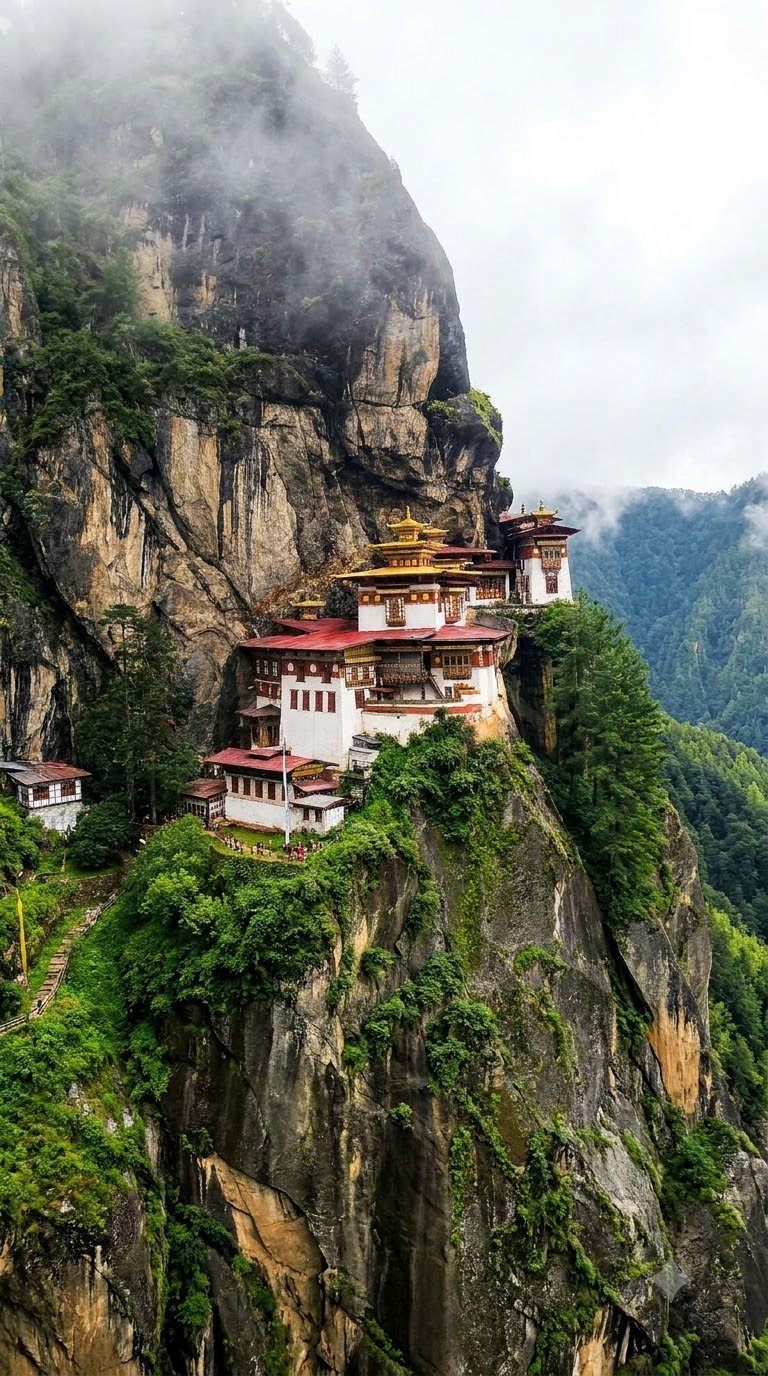
- Tiger's Nest at your own limit: the full climb, or only as far as the halfway cafeteria viewpoint
- One short road day, about an hour between Paro and Thimphu
- A Thimphu afternoon that isn't rushed: Buddha Dordenma, the Memorial Chorten and a slow walk through town
- The last night is back in Paro, close to the airport
Best for: Travellers testing Bhutan over a long weekend, couples who want a gentle first trip, or anyone with limited leave who still wants a proper Tiger's Nest day.
See the day-by-day plan
Comfort Classic
Balanced6 Nights / 7 Days · Paro · Thimphu · Punakha · Paro
- Dochula Pass and its 108 memorial chortens, a scenic stop that needs no walking
- Two nights in Punakha, the warmest valley, so there's one proper rest day
- Punakha Dzong and the suspension bridge, a flat riverside walk
- A calm evening back in Paro before the flight home
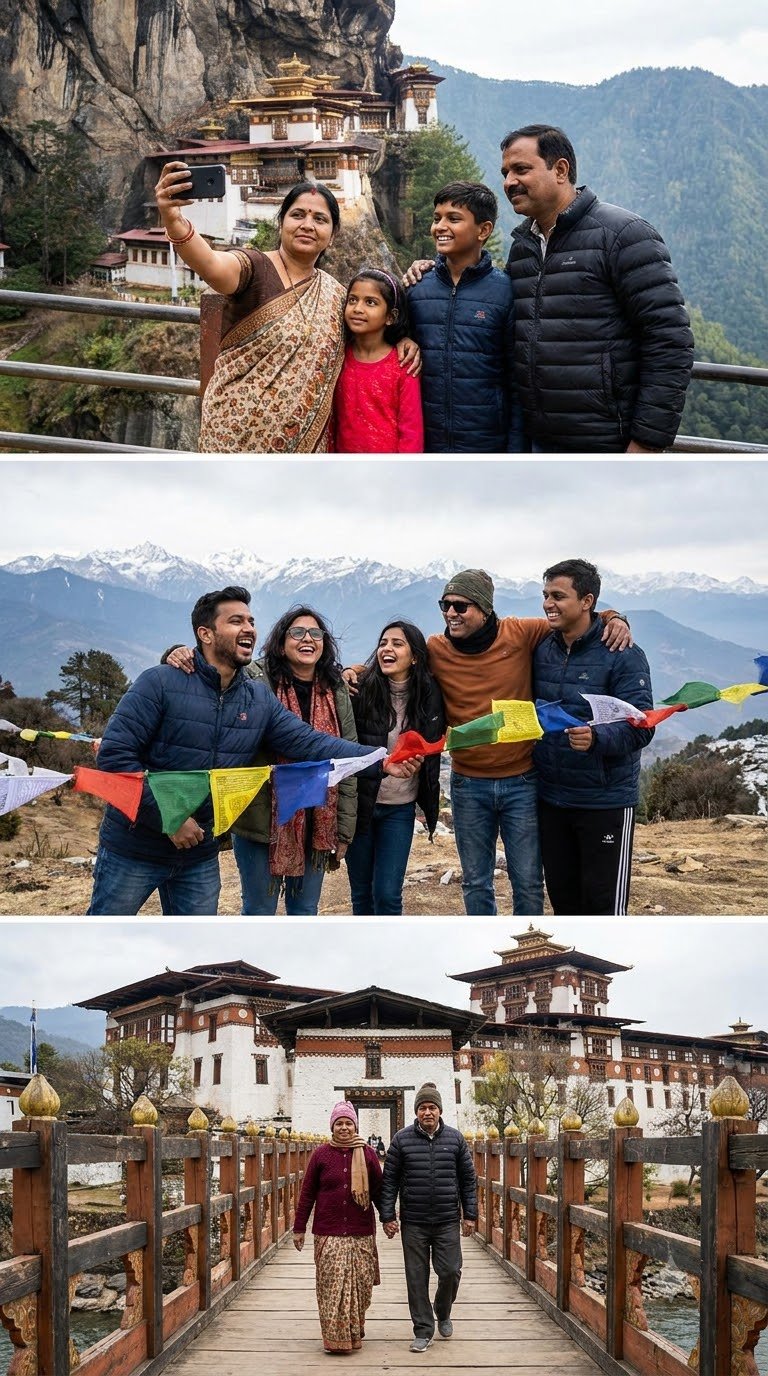
Best for: The balanced choice for first-time visitors, couples and parents travelling together who want the three headline valleys without feeling hustled.
See the day-by-day plan

Slow Western Circuit
Slowest Pace7 Nights / 8 Days · Paro · Thimphu · Punakha · Paro
- A second Thimphu night, so one whole day in the capital has no driving in it
- A big Tiger's Nest day is always followed by a light one
- Later starts on every driving day
- Hotels chosen with lift access or ground-floor rooms where available
Best for: Senior travellers, anyone who tires quickly at altitude, or couples who would rather have a good book and a view than a full schedule.
See the day-by-day plan
Comfort Valleys
Scenic9 Nights / 10 Days · Paro · Thimphu · Punakha · Phobjikha
- Two nights in Phobjikha, a broad high valley with an easy valley-floor trail
- Gangtey Monastery and the Gangtey nature trail
- Black-necked cranes winter in the valley from late autumn
- The return from Phobjikha is split across two days, so you never face it all at once
Best for: Nature lovers, photographers and repeat visitors who want a quieter valley, provided they are happy with one longer drive day.
See the day-by-day plan
The longest driving days are listed openly because they are the thing people most often regret not asking about. On the plans that reach Punakha, the way back to Paro is the long day. Nothing else is scheduled around it, and lunch in Thimphu breaks it up.
Who Bhutan Comfortable Tour Packages Suit Best
The same itinerary doesn't suit everyone. Here is how we would bend it for four common groups.
Senior travellers and parents
The two things to plan around are walking surfaces and altitude. Monastery steps are steep and uneven, so we usually suggest ground-floor rooms, shorter site visits and a route that keeps the highest, coldest valley for later in the trip. Punakha's lower altitude makes it a natural place to rest.
Couples and anniversary trips
Couples tend to want quiet more than activity. An extra night in Punakha, a long lunch instead of a fourth monument and a hotel with a decent view usually matter more than ticking off every dzong.
Families with children
Children cope well when days are short and there is room to run around. Our guide to Bhutan family tour packages covers age-by-age pacing, permits for children and the fee concessions that apply.
First-time visitors
Resist the urge to see the whole country. Western Bhutan covers the airport, the capital, the best-known monastery and Punakha, the former capital, on the country's best roads. You can always come back for the east.
Hotels on a Comfortable Bhutan Tour: What to Expect and Ask
Most Bhutan comfortable tour packages use hotels in the upper three-star to four-star range. Five-star resorts exist, and they are lovely, but they are a different kind of trip. In the comfortable middle, quality varies more between individual hotels than between star labels, which is why it helps to know what to ask.
One surprise for visitors from the plains is that heating matters more than cooling. Between roughly November and March, evenings in Paro, Thimphu and Phobjikha are properly cold. Air-conditioning is rarely needed at these heights, with lower Punakha in summer the main exception.
| Ask this | Why it matters |
|---|---|
| Which hotel in each town, and what star category? | Names let you check location and guest reviews instead of trusting a label. Star categories follow Bhutan's own classification, so they are a fair yardstick. |
| Is there heating in the room? | Between roughly November and March, evenings in Paro, Thimphu and Phobjikha are properly cold. Heating matters far more here than air-conditioning. |
| How far is the hotel from the town centre? | A hillside hotel can mean a car ride for every dinner and every evening stroll. |
| Are there lifts or ground-floor rooms? | Many hotels are low-rise with stairs and no lift. If anyone has stiff knees, ask before you confirm. |
| Do you have twin or connecting rooms? | Useful for friends, parents travelling with adult children or families. Popular room types go first in festival months. |
| What is the dinner arrangement? | A set menu, buffet or choose-from-the-menu dinner changes how easy it is to get vegetarian or milder food. |
Ask for hotel names in writing before you pay anything. A good planner will share them without fuss.
Road Times and Altitude: The Hidden Side of Comfort
Two numbers decide how a day feels: hours in the car and metres above sea level. Neither shows up on most brochures.
Approximate drive times between stops
Longer bars mean a longer day in the car
These are honest estimates, not promises. Road widening and rain can add time, and Bhutanese drivers stop for photographs, prayer flags and the occasional cow. That is exactly why the comfortable plans above keep the long drives apart from the sightseeing days.
Altitude at the main stops (approximate)
Higher means cooler and thinner air
None of these heights is extreme for a healthy adult. They do explain why the first evening should be quiet, why water matters, and why a comfortable plan puts Phobjikha, the highest overnight stop, after a few easier days. Anyone with a heart or lung condition, or who is pregnant, should check with a doctor before booking.
Best Time for a Comfortable Bhutan Tour
Bhutan's seasons are distinct, and each one changes how comfortable a trip feels more than it changes what you can see. The scores below are our planning guide rather than a measurement.
Autumn
September to NovemberDry air, the clearest mountain views and steady daytime temperatures. Thimphu's Tshechu festival usually falls in this window, which is wonderful and also the reason hotels fill early. Book well ahead.
Spring
March to MayMild days, rhododendrons in bloom on the higher roads and, usually, the Paro Tshechu. Evenings are still cool, so pack layers.
Winter
December to FebruaryCrisp, sunny days and the fewest visitors. Mornings are cold in Paro, Thimphu and Phobjikha, and a pass can see snow. Punakha stays mild, so winter plans lean on it. Choose hotels with proper heating.
Monsoon
June to AugustGreen hills and thin crowds, but rain slows the roads and a landslide can delay a drive. Lower Punakha turns hot and humid. If these are your only dates, add a spare night and keep the plan short.

If your dates are fixed by school holidays or leave, don't panic. Every season is workable with the right plan. The adjustment is usually a spare night in the monsoon, warmer layers and heated rooms in winter, and an early hotel booking in autumn.
Getting to Bhutan Without the Stress
Every plan on this page assumes you reach Bhutan by air or by road and are met by your guide on arrival. For comfort, the way in matters more than people expect.
Fly into Paro
Non-stop flights reach Paro from Delhi, Kolkata, Guwahati and Bagdogra. It is the shortest door-to-door route and the least tiring, especially for older travellers and anyone with a bad back. Weather can move flights, so avoid tight onward connections on the day you leave.
Cross by road
Entry points include Phuentsholing, Gelephu and Samdrup Jongkhar. Phuentsholing is the usual choice, with Thimphu around five to six hours beyond. It suits travellers already in North Bengal or Assam, but it makes a long first day, so keep that day free of sightseeing.
Whichever way you arrive, keep the first evening empty. Paro sits at about 2,200 metres, and a quiet few hours before the Tiger's Nest climb makes the rest of the trip easier.
What a Comfortable Bhutan Tour Package Includes
The core bundle is the same on every Bhutan trip, because the government requires it: a guide, a vehicle, permits and the daily fee. Comfort lives in the details, such as room type, how well the guide has been briefed and how the days are paced. Here is what is covered and what is not.
Included
- Hotel stays on the agreed room plan, with twin or double rooms as requested
- English-speaking guide who has been briefed on your group's pace
- Private car with driver, sized to your group
- Driver allowance and parking fees
- Airport or border pick-up and drop-off
- Sustainable Development Fee, with the standard child concession applied
- Entry Permit and Route Permits for every traveller
- Breakfast and dinner on the MAP meal plan
- Complimentary SIM card and mineral water per room
Not included
- All entrance fees and monument fees
- Personal expenses
- Airfare or train tickets
- Lunch
- Costs arising from unforeseen events such as landslides or flight delays
Lunch is not part of the plan, which leaves you free to eat when and where it suits you, whether that is a farmhouse stop, a café in town or a light bite after a big breakfast. It also makes vegetarian, Jain or child-friendly meals easier, because you choose the place.
Permits and Documents for Your Bhutan Trip
Indian nationals don't need a Bhutan visa, which is one reason it is such an easy overseas trip from India. There is still a short paperwork trail, and it applies to every traveller, children included.
- Photo ID for every adult: A passport with six months' validity, or a voter ID card for adult Indian nationals.
- Passport or birth certificate for each child: Either is accepted. Carry the original, not a photocopy.
- Entry Permit: Free, applied for online and arranged by your operator as one group booking once your package and dates are confirmed. It covers Thimphu and Paro.
- Route Permit: Also free, and needed for Punakha, Phobjikha and other areas beyond Thimphu and Paro. It is usually issued the same day.
- Passport-size photographs: Keep a couple of spares per person in case a physical form is needed at a border.
- Regular medication and a basic medical kit: Pharmacies thin out once you leave Thimphu, so carry a few days' extra supply.
- Travel insurance: Not mandatory for Indian nationals, but sensible for every traveller, especially seniors.
The Sustainable Development Fee is the government's nightly charge on visitors. It is folded into your package, with the standard concession for children aged six to twelve and no charge below six. Current rules are published by the Tourism Council of Bhutan.
Confirm that the Route Permit is arranged for every traveller before you leave home. It is the document people forget to ask about, and the easiest to fix in advance.
How to Choose the Right Comfortable Bhutan Tour Package
If you are comparing quotes from several operators, run each one through these seven checks.
- Decide how many nights you can enjoyFour nights is a taste, six to eight is comfortable, and nine or ten lets you add a high valley. More days only help if the pace stays gentle.
- Match the valleys to your drive toleranceParo, Thimphu and Punakha are close together. Phobjikha and anything further east add real driving time.
- Share every traveller's age and any limitsMention knees, back trouble, altitude worries and food needs. Group size alone tells a planner very little.
- Ask for hotel names and categories in writingCompare the same towns and the same star range across quotes, not just the headline offer.
- Find the longest driving dayCheck what is planned after it. A long drive followed by a full sightseeing afternoon is not comfortable.
- Look for slack and a Paro finishAt least one open afternoon, and ideally a final night in Paro so the flight morning is calm.
- Ask what happens if a flight or road is delayedA clear answer, and a spare day in the plan, are signs the itinerary was built with care.
Small Things That Make a Big Difference
None of these will appear in an itinerary, but all of them change how the trip feels.
- Layers beat one heavy jacket. Mornings and evenings are cold even when the afternoon is warm.
- Shoes with real grip. Monastery paths and wet stone steps are slippery. Sandals are a poor idea on the Tiger's Nest trail.
- Motion-sickness tablets if anyone in your group is prone. The road over Dochula Pass has many bends.
- Sun protection. The UV is stronger at altitude than it feels, even on cool days.
- Modest clothes for dzongs and temples: covered shoulders, long trousers or skirts, no hats inside. Photography inside temples is not allowed.
- Some cash for small purchases. Card payment can be patchy outside the bigger towns, and ATMs are scarce.
- Snacks and a day-bag for long drives, particularly for children and older travellers.
Frequently Asked Questions: Bhutan Comfortable Tour Packages
What is a comfortable Bhutan tour package?
It is a guided Bhutan trip in a private car that is paced for ease. That means good-quality hotels with proper bathrooms and heating, short or well-spaced drives, no more than two main sights a day, and some free time or a spare night built in. The guide, car, permits and government fee are included just as they are on any other package.
How many nights are enough for a comfortable Bhutan trip?
Five to eight nights across Paro, Thimphu and Punakha suits most travellers. Four nights works as a first taste if you stay in Paro and Thimphu. Add Phobjikha only if you can give the trip nine or ten nights, otherwise the driving starts to eat into the rest.
Are comfortable Bhutan tour packages suitable for senior citizens?
Yes, they are often built with seniors in mind. Plans use later starts, shorter walks, ground-floor or lift-access rooms where the hotel has them, and a rest night before any higher valley. Tiger's Nest can be done in part, since the halfway cafeteria viewpoint gives a good view without the final steps. Anyone with a heart, lung or blood-pressure condition should check with a doctor first.
What hotel standard should I expect on a comfortable Bhutan tour?
Usually the upper three-star to four-star range, with attached bathrooms, hot water and heating in the cold months. Five-star resorts are a separate luxury category. Ask for hotel names in writing so you can compare quotes properly.
Is the Tiger's Nest hike compulsory?
No. Many travellers climb all the way, others stop at the cafeteria viewpoint halfway, and some skip it for a day in the Paro valley. Your guide adjusts to the group, and ponies can usually be arranged locally for the first part of the climb.
What is the best time for a comfortable Bhutan tour?
Late September to November and March to May. Skies are clearer, temperatures are mild and the roads are in their best shape. Winter works if your hotels are heated, and the monsoon works if you add a spare night.
Do Indian travellers need a visa for Bhutan?
No. Indian nationals travel on a free Entry Permit, plus a free Route Permit for areas beyond Thimphu and Paro. Your operator applies for both once dates are confirmed. Carry a passport valid for six months or a voter ID card, and children can travel on a passport or birth certificate.
Are meals included in Bhutan comfortable tour packages?
Breakfast and dinner are included on the MAP plan. Lunch is not, so you can eat when and where it suits you. Vegetarian, Jain and milder meals can usually be arranged if you mention them when booking.
How is a comfortable package different from a luxury one?
A comfortable package focuses on pacing, good three-star to four-star hotels and well-planned drives. A luxury package is usually built around five-star resorts and private extras. For many trips the comfortable middle is enough, without the resort premium.
How much does a comfortable Bhutan tour package cost?
It depends on the number of nights, hotel category, travel dates and group size, so there is no single figure that fits everyone. Send your dates and group details and a travel designer will reply with a written quote that lists exactly what is included.
Ready to Plan Your Comfortable Bhutan Trip?
Tell us your dates, how many of you are travelling and anything that affects comfort: knees, altitude worries, food preferences. A travel designer will reply with a suggested route and a written quote, with no deposit needed to get started.
Travelling with children? See our Bhutan family tour packages guide.