Almost everyone who plans a Bhutan trip hits the same wall. The country is small, the sightseeing list looks short, and yet quotes for Bhutan tour packages vary wildly in length, route and inclusions. A four-night plan and a ten-night plan can both claim to cover "the best of Bhutan", and in a sense both are telling the truth. One simply covers far less ground, far more slowly.
What follows is a practical walk-through rather than a brochure: what a package really bundles, the different kinds of Bhutan tour packages on offer, five itinerary lengths compared side by side, the permit rules Indian travellers should know, the seasons worth planning around, and the questions that separate a dependable operator from a vague one. There are no price tables here on purpose. Costs move with season, hotel category and group size, so a written quote for your own dates is far more useful than a number lifted from a listing.
What a Bhutan Tour Package Actually Means
In most countries a "package" means a flight and a hotel stitched together. In Bhutan it works differently. Your journey to Paro airport or to a border gate is booked separately, and the Bhutan tour package begins the moment you arrive. From there it is a ground arrangement: a licensed guide, a private vehicle with a driver, hotels, permits, the government's Sustainable Development Fee and, in most cases, breakfast and dinner.
Strictly speaking, Indian nationals are not obliged to buy a package. You can arrange permits and approved hotels yourself, and some travellers do. Most still prefer a package, and for sensible reasons. The roads are slow, winding and unfamiliar. A good guide turns a row of similar-looking dzongs into stories you will actually remember. And one operator handling permits, hotels and the fee for the whole group removes a great deal of paperwork. Visitors from other countries need a visa and pay the Sustainable Development Fee in US dollars, and nearly all of them book through a licensed Bhutanese operator.
What usually sits inside the bundle
- A licensed, English-speaking guide who stays with you throughout
- A private car or van with a driver, not a shared seat
- Hotels for every night of the itinerary, with breakfast and dinner
- Entry and Route Permits, arranged for the whole group
- The Sustainable Development Fee, which is charged per person per night
- Airport or border transfers at the start and end
A good Bhutan tour package is judged by what it leaves out of each day, not by how much it crams in.
Types of Bhutan Tour Packages
Before you compare nights, decide what kind of trip you are actually buying. Most Bhutan tour packages fall into one of the families below. They overlap, of course. A cultural trip can include an easy hike and a honeymoon can include a festival. But the emphasis changes the hotels, the guide briefing and the days that are chosen.
Cultural and Sightseeing
The classic. Dzongs, lhakhangs, museums, a monastery hike and village stops across the western valleys. For most people this is the right first Bhutan tour package.
Festival Tours
Built around a Tshechu, when entire districts gather in their finest dress for masked dances. Dates follow the lunar calendar, so they shift each year, and hotels near the venue fill early.
Trekking and Hiking
From a gentle overnight walk to multi-day routes such as the Druk Path. These need reasonable fitness, spare days for acclimatisation and the right season.
Spiritual and Wellness
Meditation sessions, time with monks, hot stone baths and slow mornings. Best for travellers who want stillness more than coverage.
Nature and Birdwatching
Black-necked cranes in Phobjikha during winter, rhododendron slopes in spring and the warmer southern valleys for birds through the year.
Family Holidays
Shorter drives, flexible walking and rooms placed side by side, with the pace set by the youngest and the oldest traveller.
Honeymoon and Couples
Fewer sights, better rooms, a quiet dinner or two and a free afternoon every day or so.
Luxury and Premium
Upper-category hotels and lodges, private touches and generally more room in the schedule, usually with fewer hotel changes.
Bhutan Tour Packages by Duration, Compared
Five lengths cover almost every request we see. Each card below shows how the nights are split across valleys, because that split, more than the headline number of days, decides how rushed a trip feels. Any of these plans can be adjusted by swapping a night, adding a rest day or changing direction once your operator knows who is travelling.

Quick Bhutan Break
Short & Easy3 Nights / 4 Days · Paro · Thimphu
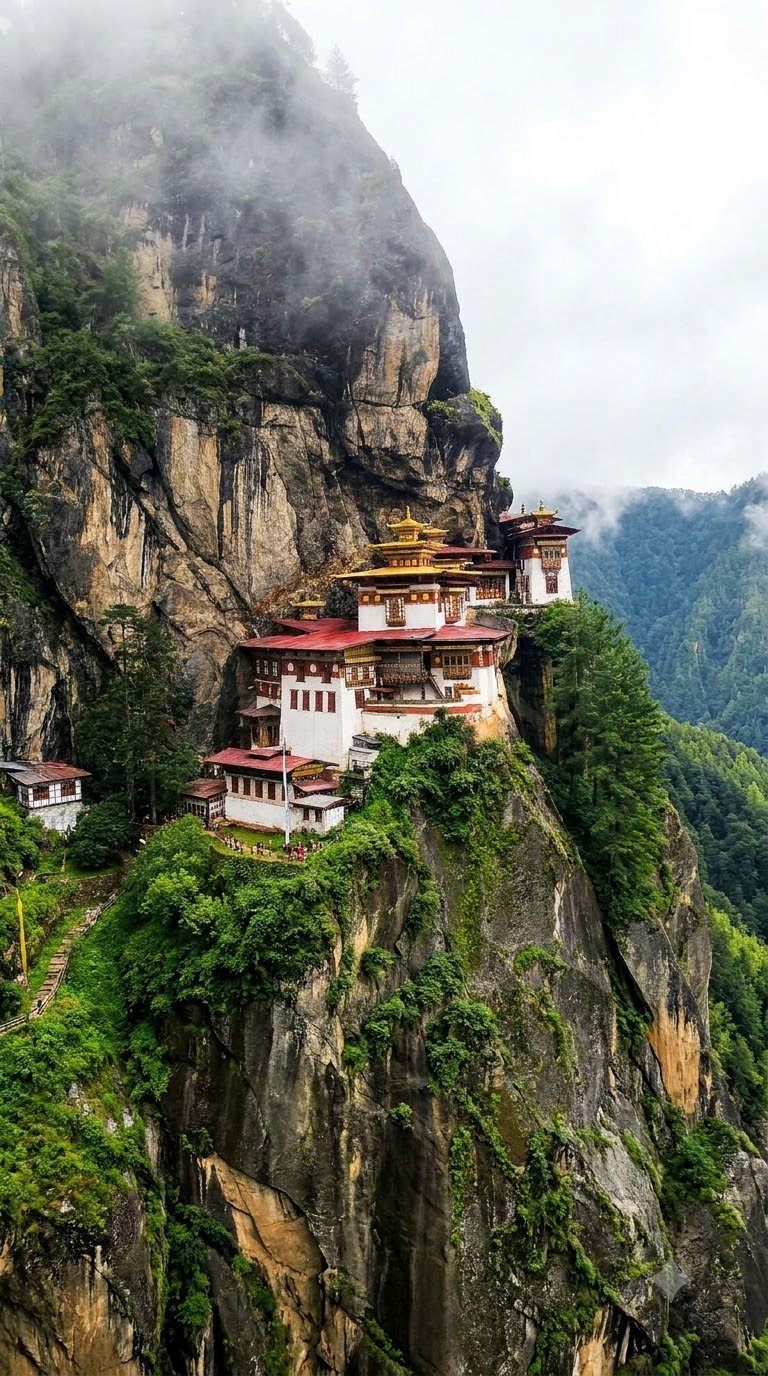
- Tiger's Nest gets a whole day to itself instead of being squeezed between other sights
- One unhurried day in Thimphu: Tashichho Dzong, the Buddha Dordenma and the craft shops
- Kyichu Lhakhang and Rinpung Dzong in Paro, both within minutes of the hotel
- Short enough to fit around a long weekend plus a day or two of leave
Best for: first-time visitors with only a few days of leave, or anyone who wants a taste of Bhutan before committing to a longer journey.
See the day-by-day plan

Classic Bhutan Introduction
Beginner-Friendly5 Nights / 6 Days · Paro · Thimphu · Punakha
- Dochula Pass and its 108 chortens, with Himalayan views on clear mornings
- Punakha Dzong, standing at the point where two rivers meet
- Chimi Lhakhang, reached by an easy walk through village rice fields
- A final night back in Paro, so your flight never depends on a long morning drive
Best for: travellers with roughly a week who want the standard western circuit without spending half the trip packing and unpacking.
See the day-by-day plan
Western Bhutan Circuit
Most Popular7 Nights / 8 Days · Paro · Thimphu · Punakha · Phobjikha
- A free second day in Thimphu for museums, markets or an archery ground
- Phobjikha, a broad glacial valley with Gangtey Monastery above it
- A flat, easy valley-floor trail, one of the gentlest walks on any Bhutan itinerary
- Enough slack to absorb a late flight or a slow morning without losing a sight
Best for: most first visits. It has enough time in the capital to feel unhurried, and Phobjikha adds the quiet, open countryside that many people remember longest.
See the day-by-day plan

Heart of Bhutan Explorer
Immersive9 Nights / 10 Days · Paro · Thimphu · Punakha · Phobjikha · Bumthang
- Trongsa Dzong, the sprawling fortress that once controlled passage between east and west
- Bumthang's cluster of old temples, including Jambay, Kurjey and Tamshing
- The forest and climate changing as you cross Pele La
- A second night in Punakha on the way back, which breaks the long westward drive
Best for: second-time visitors and culture-focused travellers who are comfortable with a couple of long road days in return for a very different part of the country.
See the day-by-day plan
Cross-Country Bhutan Journey
Full-Length Journey12 Nights / 13 Days · Paro · Thimphu · Punakha · Trongsa · Bumthang · Mongar · Trashigang · Samdrup Jongkhar
- Eastern Bhutan, with its weaving traditions and a much quieter pace
- Thrumshing La, one of the highest road passes you will cross, through rhododendron forest
- Leaving by the Samdrup Jongkhar border instead of retracing your route
- Two nights in Trashigang, so the east is more than a drive-through
Best for: travellers with nearly two weeks who want to see the full length of the country and are happy with long, winding drives in return for far fewer fellow visitors.
See the day-by-day plan
Choosing Between Bhutan Tour Packages: A Side-by-Side View
If the cards above blur together, this table separates them. The road-time figures are approximate and exclude stops, but they are the number most travellers wish they had checked before booking.
| Package | Length | Nights by valley | Longest road day (approx.) | Best suited to |
|---|---|---|---|---|
| Quick Bhutan Break | 3N / 4D | Paro 2, Thimphu 1 | About 1.5 hours (Paro to Thimphu) | Long weekends and first tasters |
| Classic Bhutan Introduction | 5N / 6D | Paro 3, Thimphu 1, Punakha 1 | About 5 hours (Punakha to Paro) | First-timers with a week |
| Western Bhutan Circuit | 7N / 8D | Paro 3, Thimphu 2, Punakha 1, Phobjikha 1 | About 6 to 7 hours (Phobjikha to Paro) | Most first visits |
| Heart of Bhutan Explorer | 9N / 10D | Paro 3, Thimphu 1, Punakha 2, Phobjikha 1, Bumthang 2 | About 8 hours (Bumthang to Punakha) | Repeat visitors and culture lovers |
| Cross-Country Bhutan Journey | 12N / 13D | Paro 2, Thimphu 2, Punakha 1, Trongsa 1, Bumthang 2, Mongar 1, Trashigang 2, Samdrup Jongkhar 1 | About 7 hours (Bumthang to Mongar, Trashigang to Samdrup Jongkhar) | Those who want the full length of the country |
Three questions that settle it
- How many days of leave do you realistically have? Count the arrival and departure days as travel days, not sightseeing days.
- Is everyone comfortable with several hours in a car? If not, stay in the west and choose fewer, longer stops.
- Is this a one-off trip or the first of several? If you expect to return, keep the east and Bumthang for next time.
When you are stuck between two lengths, take the longer one and ask for a rest day. In Bhutan an extra night is almost never regretted, and a missing one almost always is.
How to Book a Bhutan Tour Package, Step by Step
The process is simpler than it looks. Following these six steps in order avoids the most common mix-ups, especially the one where flights are booked before the dates are confirmed.
- Fix your dates and number of nights. Start with the leave you realistically have. Everything else, including how many valleys you can visit, follows from this number.
- Choose a theme and a route. Decide whether this is a cultural trip, a festival trip, a family holiday or something quieter, then pick the valleys that suit it.
- Ask for a written itinerary. It should name the hotels, show approximate driving hours for each day and list the exclusions in plain language.
- Share ID details for permits. Send names and ID details for every traveller so the Entry Permit and Route Permits can be applied for together.
- Book your way to Paro or the border. Once dates are confirmed, book flights or plan your road journey to the border gate. Seats on Paro flights are limited.
- Get a final briefing and pack. Confirm pick-up details, the guide and driver names, and pack layers, medicines and some cash in small notes.
What Is Included in Bhutan Tour Packages, and What Is Not
Because the guide, vehicle, permits and government fee are part of how Bhutan runs tourism, the core inclusions look broadly similar from one operator to the next. What really differs is the fine print. The two lists below show what a typical package covers and what it leaves for you to pay on the spot.
Inclusions
- Hotel accommodation in the category you choose, on twin or family-sharing basis
- English-speaking guide for the whole journey
- Private vehicle with driver, kept with your group throughout
- Driver allowance and parking fees
- Airport or border pick-up and drop-off
- Sustainable Development Fee, including the child concession where it applies
- Entry Permit and Route Permits for every traveller
- MAP meal plan (breakfast and dinner)
- Complimentary SIM card and mineral water
Exclusions
- All entrance fees and monument fees
- Personal expenses
- Airfare or train tickets
- Lunch
- Any expenses arising from unforeseen circumstances such as landslides or flight delays
Fine print worth reading before you pay anything
- Ask for hotel names, not just star ratings. Categories mean different things in Bhutan, and names tell you far more.
- Check what the meal plan covers. Breakfast and dinner are normally included; lunch usually is not, so plan for it.
- Confirm the Sustainable Development Fee is in the quote. It is charged per person per night and is easy to overlook when comparing offers.
- Expect entry fees to be paid separately at most monuments and museums.
- Check the vehicle. A private car or van for your group is standard; a shared seat is not.
Permits, Entry Rules and Documents for Bhutan Tour Packages
Indian nationals do not need a visa for Bhutan, which is one reason so many travellers choose it. There is still a short paperwork trail, and it catches first-timers out more often than anything else. Two permits are involved. The Entry Permit is free and is issued for your entry point, usually applied for in advance by your operator. The Route Permit, also free, is a second document needed for most places beyond Thimphu and Paro, including Punakha, Phobjikha, Bumthang, Haa and the east.
Separately, every tourist staying overnight pays the Sustainable Development Fee, a per-person, per-night levy that supports conservation and local development. Indian nationals pay it at a reduced rate compared with other nationalities, very young children are exempt and children up to twelve receive a concession. Ask your operator to confirm the exact age bands when they apply for your permits, since these details are revised from time to time.
Documents checklist
- Valid photo ID for every adult: A passport with six months of validity, or a Voter ID card, for adult Indian nationals. Carry the original, not a photocopy.
- Passport or birth certificate for each child: Minors travelling with parents can use either document. Again, originals only.
- Entry Permit: Free. Your operator applies for the whole group once dates and names are confirmed, and it is checked at the airport or border gate.
- Route Permit: Also free. Needed for Punakha, Phobjikha, Bumthang, Haa, the east and most places beyond Thimphu and Paro.
- Passport-size photographs: A couple of spares per traveller, in case a physical form is needed at a border crossing.
- Travel insurance: Not generally compulsory for Indian nationals, but sensible, particularly with children, senior citizens or any trekking.
- Medicines and a small first-aid kit: Pharmacies thin out quickly beyond the main towns, so carry what you routinely use.
Before you leave home, confirm that the Entry Permit and Route Permits are in place for every traveller, children included. It is the one part of a Bhutan tour package people forget to ask about, and the easiest to fix in advance.
Reaching Bhutan for Your Tour Package
Your package starts on arrival, so how you arrive matters. There are two broad choices, and the right one depends mostly on where you are starting from and how much time you have.
Ways into Bhutan
Every route below connects into the same package once you arrive; your guide and driver meet you either way
Paro is Bhutan's only international airport, with flights from New Delhi, Kolkata, Guwahati and Bagdogra, plus some seasonal links from other Indian cities. Schedules change and seats are limited, so confirm your dates before booking. The descent between the mountains is memorable, so a window seat is worth asking for.
The nearest railhead is Hasimara, and Bagdogra airport is a few hours away. From Phuentsholing to Thimphu is about five to six hours by road, so it suits travellers who would rather see the country unfold than save a day.
Gelephu serves central Bhutan and Samdrup Jongkhar the east. Samdrup Jongkhar is especially useful as an exit on cross-country itineraries, with Guwahati a few hours beyond the border.
However you arrive, protect the first evening. A calm few hours before the Tiger's Nest hike gives everyone, children and grandparents especially, time to adjust to the altitude.
Best Time for Bhutan Tour Packages
Bhutan has four clear seasons, and each suits a different kind of traveller. The strip below shows how the months line up, and the cards explain what each season feels like on the ground.
Spring
Rhododendrons colour the higher forests, usually at their best around April, and the days are warm and clear. Paro Tshechu normally falls in this window. It is popular, so hotels and flight seats go early.
Suits: Photography, gentle walks, first visits
Summer and monsoon
The valleys turn intensely green and the tourist crowds thin out. Rain can be heavy on central and southern roads, and landslides occasionally delay journeys, so build in a spare day.
Suits: Quiet sightseeing, travellers with flexible dates
Autumn
The clearest skies and the busiest festival season, including Thimphu Tshechu. Black-necked cranes begin arriving in Phobjikha from late October, and the crane festival is held there each November.
Suits: Mountain views, festivals, birdwatching
Winter
Cold mornings, crisp light and the quietest months of the year. Punakha stays pleasantly mild, though snow can occasionally close high passes for a few hours.
Suits: Fewer crowds, travellers who like cool, bright weather
Festival dates follow the Bhutanese lunar calendar, so the same Tshechu falls on different dates from one year to the next. If a festival is the reason for your trip, confirm its dates with your operator before you book flights, and expect hotels in Paro and Thimphu to fill first.

Places That Shape Your Bhutan Tour Package
Every package is really a choice of places. Here is what each major stop is like, so you can judge which ones deserve a night rather than a quick visit. Altitudes are approximate.
Paro
about 2,200 mWhere almost every journey begins. The valley holds Taktsang (Tiger's Nest), Rinpung Dzong and Kyichu Lhakhang, among Bhutan's oldest temples, and the airport itself is part of the experience.
Thimphu
about 2,300 mA small capital where police direct traffic by hand because there are no traffic lights. Tashichho Dzong, the Buddha Dordenma, the textile museum and the weekend market are the usual stops.
Punakha
about 1,200 mLower, warmer and greener than the valleys on either side. The dzong stands where the Pho Chhu and Mo Chhu rivers meet, and a long suspension bridge crosses the water nearby.
Phobjikha
about 3,000 mA broad glacial valley above Gangtey Monastery. Black-necked cranes winter here, the nights are cool and a flat nature trail makes it one of the easiest walks in the country.
Trongsa
about 2,200 mHome to Trongsa Dzong, Bhutan's largest fortress and the ancestral seat of the royal family, perched on a ridge. Most journeys to the centre and east pass through it.
Bumthang
about 2,600 mA group of valleys regarded as the spiritual heartland. Jambay Lhakhang, Kurjey Lhakhang and Tamshing are the big names; local cheese, honey and buckwheat pancakes are the pleasant surprise.
Haa
about 2,700 mA quiet valley reached over Chele La, a pass close to 4,000 metres. Easy as a day trip from Paro, and better as a night if you want peace.
Eastern Bhutan
Mongar, Trashigang, TrashiyangtseFar fewer visitors, long distances and strong weaving traditions. It rewards travellers who have time and a tolerance for winding roads.
How to Choose a Bhutan Tour Operator
Two packages with the same number of nights can feel completely different depending on who plans them. Bhutan's licensing system means any legitimate operator can deliver the basics. The difference is in judgement: how the days are paced, how honestly the quote is written and how quickly someone responds when plans change on the road.
Signs of a dependable operator
- Is licensed by the Tourism Council of Bhutan and happy to say so
- Names the hotels and shows driving hours for every day
- Writes the exclusions in plain language rather than burying them
- Asks about ages, mobility and food preferences before quoting
- Lets you swap a night or add a rest day without rebuilding the plan
- Has someone reachable in Bhutan throughout your trip
Worth questioning
- A quote with no hotel names, only star ratings
- Promises to cover Paro, Thimphu, Punakha and Bumthang in four nights
- Unclear answers about whether the Sustainable Development Fee is included
- Unusually low quotes with vague inclusions
- Pressure to pay before your dates and permits are confirmed
- No clear route for reaching someone if a landslide or delay changes your plan
Druk Yul Journeys is a Bhutanese-owned, family-run operator licensed by the Tourism Council of Bhutan, with a partner office in Thimphu and a branch in India. The five itineraries above are starting points rather than fixed products. Share your dates, the number of travellers and the nights you have in mind, and a travel designer will adjust the route to fit.
Practical Tips Before You Book a Bhutan Tour Package
- Count driving hours, not just attractions. Bhutan roads are narrow and winding, and fifty kilometres can take two hours. A day with one long drive and one sight is a good day; a day with three sights and a long drive is not.
- Keep the first evening empty. Paro and Thimphu sit above 2,000 metres. A quiet first night, plenty of water and no heavy meal make the next day noticeably easier.
- Pack layers whatever the month. Mornings and evenings are cool even in summer, and temperatures change sharply between Punakha and the higher passes.
- Carry something for motion sickness. The roads to Punakha, Phobjikha and beyond are full of bends. Whatever usually works for you or your children is worth keeping in your daypack.
- Dress modestly at dzongs and temples. Cover shoulders and knees, remove shoes and hats before entering, and ask your guide before photographing inside.
- Keep some cash in small notes. Indian rupees are widely accepted in towns, but cards and ATMs are patchy outside Thimphu, Paro and Punakha, and small shops prefer small notes.
- Download maps before you land. Mobile coverage is good in towns and unpredictable in valleys, so save offline maps and any documents you may need.
- Leave a buffer after you exit Bhutan. Paro flights depend on weather and can be delayed. Do not schedule a tight onward connection on the same day.
Explore More Bhutan Tour Packages
If your trip has a particular shape, whether a family group, a premium stay or a departure from a specific city, these companion guides go deeper.
Frequently Asked Questions: Bhutan Tour Packages
What are Bhutan tour packages and what do they usually include?
Bhutan tour packages are ground arrangements that bundle a licensed guide, a private vehicle with driver, hotels, permits, the Sustainable Development Fee and, usually, breakfast and dinner. Flights or train tickets to reach Paro or the border are booked separately, and lunches, monument entry fees and personal spending are normally extra.
How many days are enough for a Bhutan tour package?
Five to seven nights is a comfortable first visit and covers Paro, Thimphu and Punakha without constant packing. Three nights gives a short taste of the west. Nine nights or more make sense when you want central Bhutan, and twelve or more for a journey across the whole country.
Do Indian citizens need a visa for a Bhutan tour package?
No. Indian nationals travel on a free Entry Permit, plus a free Route Permit for anywhere beyond Thimphu and Paro. Adults carry a passport or Voter ID. A Sustainable Development Fee is payable per person per night, with an exemption or concession for young children.
What is the best time to book Bhutan tour packages?
March to May and September to November are the favourites, thanks to clear skies and festivals. December to February is cold but quiet and bright. June to August is green but wet, with occasional road delays on central routes.
Is it compulsory to book a package to visit Bhutan?
Indian nationals can arrange permits and approved hotels themselves, so a package is not strictly compulsory, although rules are revised from time to time. Most travellers still book one for the guide, the vehicle and a single point of contact. Visitors from other countries need a visa and generally book through a licensed Bhutanese operator.
Should I add Bumthang to my Bhutan tour package?
Add Bumthang if you have nine nights or more and are comfortable with long drives. It is rewarding, but it adds roughly two long road days. With fewer nights, the western valleys give a better return on your time.
Is Bhutan suitable for senior citizens and young children?
Yes, provided the plan is paced for them. Later starts, shorter walks, a rest night before high passes and the option to skip the full Tiger's Nest hike keep the trip comfortable. Anyone with a heart or lung condition should check with a doctor first, because Paro and Thimphu lie above 2,000 metres.
Can Bhutan tour packages be customised?
Yes. Nights can be moved between valleys, rest days added, festivals worked in and the exit point changed. The itineraries on this page are starting points rather than fixed products.
Is travel insurance needed for a Bhutan trip?
It is generally not compulsory for Indian nationals, but it is wise to have, especially with children, senior citizens or when trekking. Please confirm the current requirement with your operator when you book.
How early should I book a Bhutan tour package?
For October, November, March and April, start eight to twelve weeks ahead, because hotels and flight seats fill first. Off-peak months are more forgiving and can often be arranged in a few weeks.
Ready to Shortlist Your Bhutan Tour Packages?
Tell us your travel dates, how many people are going and roughly how many nights you have. A travel designer will suggest a route, explain the trade-offs honestly and send a written quote, with nothing to pay to receive it.