
Bhutan has never been a country where you wander in and improvise. Roads are few, mountain passes decide the timetable, and most visitors travel with a guide. Within that framework, though, there is a big difference between squeezing onto a shared departure and travelling on a trip designed for your party alone. That second option is what people mean when they search for Bhutan private tour packages.
A private tour is not automatically a luxury tour, and it is not automatically a rigid one either. It simply means the people in your car are the people you came with. The pace of the day, the length of a lunch stop, whether you climb to Tiger's Nest at dawn or after a slow breakfast: those calls belong to you. What follows is a plain-spoken walk through how it all works, written for anyone comparing options or planning a first visit.
Quick facts
- Typical length
- Five to eleven nights, depending on how many valleys you want to see
- Who travels
- One party only: a couple, a family or a group of friends
- Guide and vehicle
- Dedicated to your group for the whole trip
- Indian nationals
- No visa; Entry and Route Permits arranged by the operator
- Strongest seasons
- March to May and September to November
- Pricing
- Quoted in writing, based on dates, hotels and group size
What Bhutan Private Tour Packages Actually Mean
The phrase covers a range of products, so it helps to be precise. In its simplest form, a Bhutan private tour package is a pre-arranged journey for a single travelling party, with a dedicated English-speaking guide, a dedicated vehicle and driver, hotels, meals on an agreed plan, permits and the government's Sustainable Development Fee bundled into one written quote.
Where operators differ is in how much of the plan is fixed. At one end sits a ready-made private itinerary: the route is set, the hotels are chosen and you simply pick the dates. At the other end is a fully customised tour, where the operator starts from your interests and works backwards to a route. Most travellers land somewhere in the middle. They take a proven route as a base, then ask for a swapped night, a longer stay in one valley or an extra activity.
Three things stay constant across every private package worth considering: the guide belongs to your group, the car belongs to your group, and the timing of each day belongs to your group. Everything else is negotiable.
Private Tour or Group Departure? An Honest Comparison
Group tours have their place, and plenty of people enjoy them. The table below is meant to help you decide, not to talk you out of anything.
| What you are comparing | Private tour | Group departure |
|---|---|---|
| Who shares the vehicle | Only your own party | Other travellers, usually strangers |
| Start dates | Any date that works for you | Fixed departure dates set by the operator |
| Route | Built or edited around your interests | A set route with little room to change |
| Daily pace | Decided by you, day by day | Set by what suits the group as a whole |
| Guide attention | Focused entirely on your party | Shared across everyone in the group |
| Changes mid-trip | Often possible within the permits | Rarely possible |
| Company | Just the people you came with | Built-in company, shared meals and stories |
| Cost per person | Higher for small parties, narrowing as the party grows | Usually lower because costs are split |
The cost difference deserves a straight word. Because the car and guide are shared, a group departure usually works out cheaper per person. A private tour costs more for a very small party, and the gap narrows as more people split the same vehicle. For a couple the difference is real; for a family of five or six it can almost disappear. If budget is a deciding factor, we suggest asking for quotes in both formats before you commit.
Who Gets the Most From a Private Tour of Bhutan
Almost anyone can travel privately, but a few kinds of traveller tend to notice the benefits most.
Couples and honeymooners
Unhurried mornings, a quiet table at the end of the day and a guide who knows when to step back. A private itinerary gives couples room to linger wherever a place feels right.
Families and three generations
The day can bend around a nap, a slower walker or a child who wants to watch an archery match for an hour. Our Bhutan family tour guide goes deeper on pacing by age.
Friends travelling together
Four to eight friends fill a vehicle comfortably, split the cost of the guide and car, and still keep the plan entirely their own.
Photographers and slow travellers
Light matters more than a timetable. A private tour lets you reach a dzong at first light, wait for clouds to lift at a pass, or return to the same valley twice.
Solo travellers
Travelling alone does not mean joining strangers. You get a guide for company and local insight, though the per-person cost is higher than for a pair.
Culture and spiritual seekers
Extra time inside temples, a conversation with a monk, a meditation session or a festival timed to the lunar calendar can usually be built in when nobody else's schedule is involved.
Bhutan Private Tour Packages by Duration
These four routes are starting points, not boxes. Each is paced at a comfortable rate and can be reshaped once we know who is travelling. The coloured bar on every card shows where the nights actually go. Paro appears once, with its nights added together, because it holds the airport and most routes pass through it at the start and the end.
Private Bhutan Essentials
Compact5 Nights / 6 Days · Paro · Thimphu · Punakha
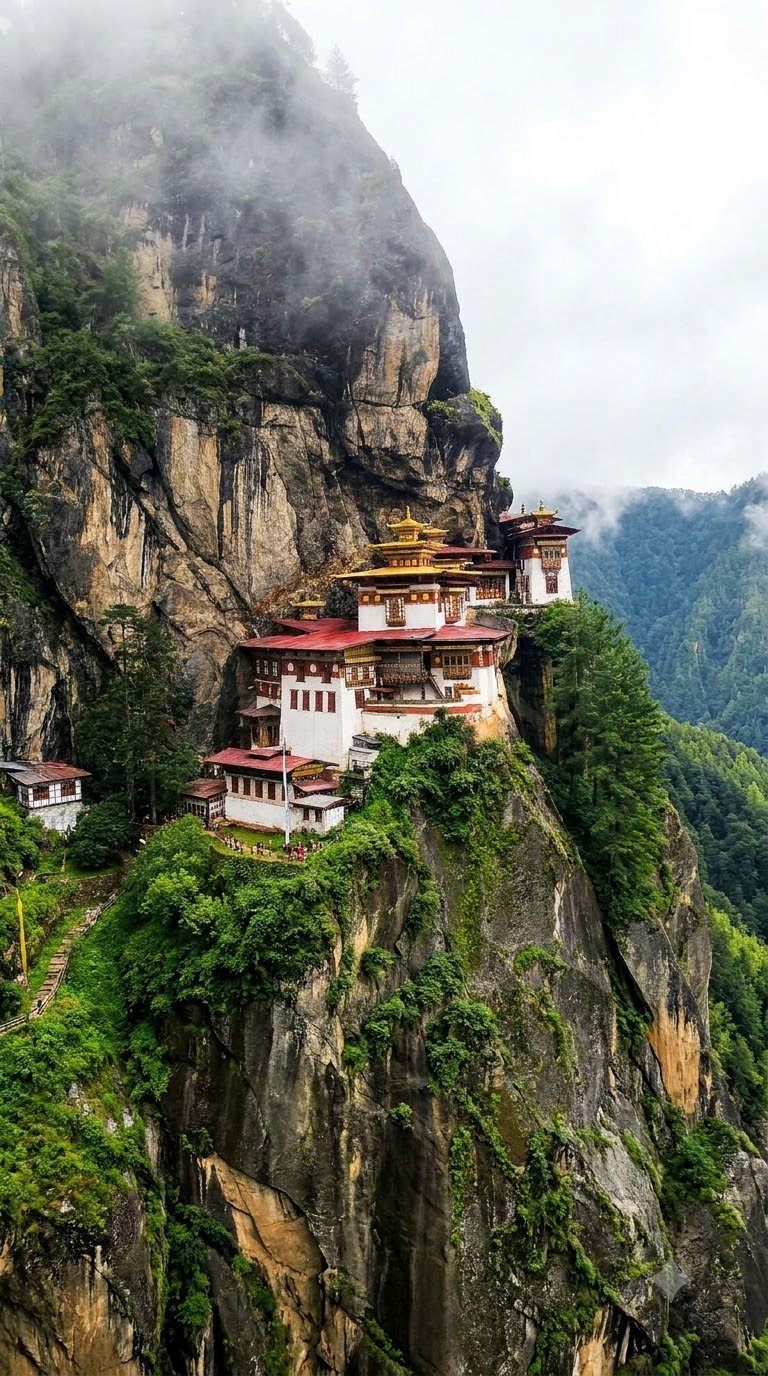
- Tiger's Nest on a day with nothing else scheduled around it
- Dochula Pass and Punakha Dzong in a single scenic crossing
- Thimphu's Memorial Chorten and Buddha Dordenma at an easy pace
- Short enough to fit inside a week of leave
Best for: First-time visitors with about a week to spare who want an honest introduction to the west rather than a rushed tour of everything.
See the day-by-day plan

Private Bhutan Classic Circuit
Balanced7 Nights / 8 Days · Paro · Thimphu · Punakha · Phobjikha
- Two nights in Thimphu, so the capital is more than a single afternoon
- A night in Phobjikha with Gangtey Monastery and an easy valley walk
- Punakha Dzong and the long suspension bridge
- A full, uncrowded day set aside for Tiger's Nest
Best for: Couples and small groups of friends who want the classic western route with enough slack to enjoy it, rather than a checklist.
See the day-by-day plan

Private Bhutan Heritage Route
Cultural9 Nights / 10 Days · Paro · Thimphu · Punakha · Trongsa · Bumthang
- Trongsa Dzong, the largest fortress in the country, and its museum tower
- Two nights in Bumthang, where several of Bhutan's oldest temples sit close together
- Mountain passes crossed at a measured pace instead of in a rush
- Punakha visited twice, in warm river light both times
Best for: Culture-focused travellers, photographers and repeat visitors who want to go beyond the western valleys and do not mind longer drives.
See the day-by-day plan

Private Bhutan Complete Journey
Immersive11 Nights / 12 Days · Paro · Haa · Thimphu · Punakha · Phobjikha · Bumthang
- Haa Valley, a quiet high-altitude detour most itineraries skip
- The western circuit and central Bhutan in a single journey
- Two-night stays where it matters most, so you unpack less
- Enough slack to absorb a weather delay without losing a destination
Best for: Slow travellers and return visitors with around twelve days who would rather see fewer places properly than many places briefly.
See the day-by-day plan
How Many Nights Do Bhutan Private Tour Packages Need?
Five nights is a fair first look at the western valleys. Seven or eight nights lets you add Phobjikha without feeling rushed. Nine or more is where central Bhutan comes within comfortable reach, because the road from Punakha to Bumthang takes most of two days to enjoy properly. Beyond ten nights, you are travelling for the pleasure of slow days, which is a perfectly good reason. Whatever number you choose, the routes above can be adjusted: swap a night, soften a drive or add a free day wherever the group needs it.
How to Customise a Private Bhutan Tour
This is where private tours earn their name. Here are the levers worth thinking about before you write to an operator.
Pace and nights per place
Two nights in a valley feel completely different from one. If you dislike packing every morning, visit fewer places and stay longer in each.
Hotel style
Stays run from simple family-run guesthouses to full-service resorts. Rooms with valley views are the first to go in busy months, so ask early.
Interests
Textiles and weaving, birdwatching, archery, cooking, temple art or photography: tell the operator, and stops can be matched to them.
Activities
A hot stone bath at a farmhouse, an afternoon on bicycles, a short day hike or a longer trek can be layered onto almost any route.
Festivals
If a tshechu matters to you, fix the dates first and plan everything else around it. Hotels in festival towns fill early.
Food
Vegetarian, Jain and no-onion-no-garlic diets are routine requests. Bhutanese cooking leans heavily on chillies (ema datshi, chilli with cheese, is the national dish), so mention it if spice is an issue.
Mobility
Ground-floor rooms, shorter walks, later starts and an extra rest night before a high pass can all be requested in advance.
Entry and exit
You do not have to leave the way you arrived. Flying in and driving out, or entering at one border and leaving at another, is a genuine advantage of travelling privately.
What a Private Bhutan Tour Package Includes
Read the inclusions line by line before you agree to anything. These are the items that normally come bundled into our private tour packages, followed by what you pay for separately.
Included
- Hotel stays for every night of the itinerary, with room types confirmed in writing
- English-speaking guide for the whole trip
- Private vehicle with driver, matched to the size of your party
- Driver allowance and parking fees
- Airport or border pick-up and drop-off
- Sustainable Development Fee, built into the quote
- Entry Permit and Route Permits for every traveller
- MAP meal plan (breakfast and dinner)
- Complimentary SIM card and mineral water in each room
Not included
- Entrance fees and monument fees
- Personal expenses
- Airfare or train tickets
- Lunch
- Costs arising from unforeseen events such as landslides or flight delays
Lunch is normally taken on the road, so it is paid for as you go, which also lets you choose where to stop. The same applies to entrance fees, which are settled on the day at each site.
Permits, Fees and Documents for a Private Bhutan Tour
The paperwork behind Bhutan private tour packages is lighter than most people expect, particularly for Indian nationals. Your operator files the permits; your job is to send clear documents on time.
- Identification for adultsIndian adults travel on a valid passport or a voter ID card. Other documents, including Aadhaar and driving licences, are generally not accepted for entry, so confirm with your operator before you leave.
- Identification for childrenA passport or birth certificate. Carry the original rather than a photocopy.
- A visa, for other nationalitiesTravellers on other passports need a visa, which the operator can apply for before arrival. Indian nationals do not.
- Entry PermitCovers Paro and Thimphu. Your operator files the online application once your dates are confirmed.
- Route PermitNeeded for destinations beyond Paro and Thimphu, such as Punakha, Phobjikha, Haa, Trongsa and Bumthang. It is applied for as a group and tied to the places named in your itinerary.
- Sustainable Development FeeA government fee charged per person for each night in Bhutan. Rates depend on nationality and age, with concessions for children. In a written quote it appears as its own line, so nothing is hidden.
- Photos, copies and cashA few passport-size photographs and photocopies of your IDs are worth carrying. Entrance fees and lunches are paid on the spot; Indian rupees are widely accepted, but cash machines thin out quickly beyond Thimphu.
- Insurance and medicinesTravel insurance is not compulsory for Indian nationals but is sensible. Carry regular medication in your hand luggage, since pharmacies are scarce outside the larger towns.
Ask your operator to confirm in writing that the Route Permit covers every place on your itinerary before you travel. Adding a valley mid-trip is not always possible, because permits are issued for named locations.
Getting to Bhutan for Your Private Tour
Every private package assumes you can reach one of two entry points, Paro's airport or a land border, and takes over from the moment you arrive. Your guide and driver meet you either way.
By air into Paro
Paro is Bhutan's only international airport, with direct flights from Delhi, Kolkata, Guwahati and Bagdogra. Timings and seat availability change by season, so book once your dates are fixed. Flights operate in daylight only and depend on weather, so avoid tight connections on the day you leave.
By road through a border town
Phuentsholing, Gelephu and Samdrup Jongkhar are the main land crossings. Overland suits travellers already in North Bengal or Assam, or anyone who wants to arrive at one gate and leave by another, which only a private itinerary can arrange easily.
However you enter, plan a quiet first evening. Paro sits above 2,000 metres, and a few unhurried hours before the first big day make a noticeable difference to how the rest of the trip feels.
Best Time to Book Bhutan Private Tour Packages
Rather than chasing a single perfect month, decide what you value most: clear mountain views, fewer people or a particular festival. You rarely get all three at once. The calendar below shows how the year breaks down.
- Jan
- Feb
- Mar
- Apr
- May
- Jun
- Jul
- Aug
- Sep
- Oct
- Nov
- Dec
Spring
Rhododendrons flower on the higher slopes, days are mild and the valleys turn green. Paro Tshechu, one of the best-known festivals, normally falls in spring. Hotels fill early.
Good for: Flowers, photography, festival-goers
Autumn
Skies clear after the rains and mountain views are at their sharpest. Thimphu Tshechu and other major festivals fall in this window, and black-necked cranes return to Phobjikha, which marks their arrival with a festival in November.
Good for: Clear views, festivals, birdwatching
Winter
Mornings are cold, days are bright and visitors are few. Higher passes can see snow, but Punakha stays pleasantly mild. A good fit if you prefer quiet temples to a guarantee of blue sky.
Good for: Quiet sites, warm Punakha, lower demand
Summer
The monsoon turns the countryside intensely green and can cause landslides on some roads. Availability is easy, and a private itinerary with spare time absorbs delays far better than a fixed group schedule.
Good for: Greenery, availability, flexible travellers
One caution about festivals: tshechu dates follow the Bhutanese lunar calendar, so they shift from one year to the next. Confirm the exact dates with your operator before you book flights, and book hotels in the festival town as early as you can.
How to Plan a Private Bhutan Tour, Step by Step
A private trip comes together faster when you tackle the decisions in a sensible order.
- Settle who is travelling and for how longGroup size, ages and the number of nights you can spare shape everything that follows. Even rough numbers help an operator point you in the right direction.
- Choose a season or a festivalDecide what matters most: clear mountain views, fewer crowds or a particular festival. That usually narrows the dates quickly.
- Share interests and limits with the operatorMention dietary needs, mobility concerns, hobbies and anything you would rather avoid. The more specific the brief, the less generic the itinerary.
- Review a written draftA good draft names the hotels, lists drive times and states what is and is not included. Ask for changes until it feels right.
- Confirm and send your documentsOnce dates are agreed, send ID copies so permits can be filed. Book flights as soon as dates are firm, because seats into Paro are limited.
- Prepare for the tripPack layers, carry regular medication, arrange travel insurance and keep some cash for entrance fees and lunches.
How to Choose an Operator for a Private Tour
Two Bhutan private tour packages that look identical on paper can feel very different on the road. These questions help separate careful operators from careless ones.
- Is the operator licensed by the Tourism Council of Bhutan, and will they share the licence details?
- Is the itinerary in writing, with named hotels and realistic drive times?
- Who will guide you, and what experience do they have?
- What vehicle will carry your party, and is it sized sensibly for your group and luggage?
- What is excluded, and is anything described vaguely?
- What happens if a landslide or flight delay disrupts the plan?
- Will someone on the ground be reachable throughout the trip?
- What are the payment and cancellation terms, set out in writing?
For transparency, here is who is writing this. Druk Yul Journeys is a Bhutanese-owned, family-run tour operator licensed by the Tourism Council of Bhutan, with a partner office in Thimphu and a branch in India. The advice above reflects how we plan private tours ourselves, and you are welcome to put every one of those questions to us.
Practical Tips Before You Travel
Dress for dzongs and temples
Cover shoulders and knees, remove hats and shoes at the door, and expect photography to be restricted inside prayer halls.
Start the Tiger's Nest hike early
Mornings are cooler and clearer, and the trail is quieter before tour groups arrive.
Pack in layers
Temperatures swing sharply between morning and afternoon and from valley to valley.
Plan for winding roads
If anyone is prone to motion sickness, sit them up front and carry a remedy that already works for them.
Keep a buffer
Avoid scheduling a flight on the same day as a long mountain drive; passes and weather occasionally cause delays.
Leave some hours unplanned
The best moments of a private tour are often the ones nobody scheduled.
Follow local etiquette
Walk clockwise around chortens and prayer wheels, and ask your guide before photographing monks or ceremonies.
Bhutan Travel Terms Worth Knowing
A handful of words come up again and again in itineraries and quotes. Knowing them makes the paperwork easier to read.
- Dzong
- A fortress-monastery that serves as both a religious centre and the seat of local administration. Most districts have one.
- Lhakhang
- A temple, ranging from a small village shrine to a major historic monastery.
- Chorten
- A Buddhist stupa or memorial monument. Visitors circle it clockwise, keeping it on their right.
- Tshechu
- An annual religious festival, usually lasting several days, featuring masked cham dances. Dates follow the lunar calendar and move from year to year.
- Sustainable Development Fee (SDF)
- A per-person, per-night government fee paid by visitors, used to fund national priorities such as conservation and public services.
- Route Permit
- A permit required to travel beyond Paro and Thimphu, issued for the named destinations in your itinerary.
Frequently Asked Questions: Bhutan Private Tour Packages
What are Bhutan private tour packages?
Bhutan private tour packages are guided journeys booked for one travelling party only. You get your own English-speaking guide, your own vehicle and driver, hotels, permits and the Sustainable Development Fee in a single written quote, with an itinerary that can be adjusted to your pace and interests.
How is a private tour of Bhutan different from a group tour?
On a private tour the guide, car and schedule are yours alone, and you choose the start date. A group departure follows fixed dates and a set route shared with other travellers. Group tours usually cost less per person, while private tours offer more control over timing, route and daily pace.
How many days do I need for a private tour of Bhutan?
Five nights is enough for Paro, Thimphu and Punakha at a steady pace. Seven or eight nights adds Phobjikha and leaves breathing room. Reaching Trongsa and Bumthang comfortably usually takes nine nights or more, because the roads are slow and the valleys deserve more than a single evening.
How much does a private Bhutan tour cost?
The cost depends on travel dates, hotel category, group size, the number of nights and the nationality and age of each traveller, since the Sustainable Development Fee varies. Rather than relying on a generic figure, ask the operator for an itemised written quote that lists exactly what is included.
Can couples or solo travellers book a private tour?
Yes. Couples are among the most common private-tour travellers, and solo travellers can book too. Because the guide and vehicle serve fewer people, the per-person cost is higher for a single traveller, which is why some solo visitors share dates with a friend.
Do I need a visa for a private tour of Bhutan?
Indian nationals do not need a visa, but they do need an Entry Permit and, for most places beyond Paro and Thimphu, a Route Permit, both arranged by the operator. Travellers from other countries need a visa, which the operator can apply for before arrival.
Can I change the itinerary during the trip?
Small changes are usually fine, such as staying longer at a site, starting later or skipping a stop. Adding an entirely new valley is harder, since permits are issued for places named in advance. Mention any must-have extras before you travel so they can be built into the permits.
When is the best time to book a private tour of Bhutan?
March to May and September to November offer the clearest weather and the best-known festivals, and they also book up fastest. Winter is quiet and bright, while the monsoon months suit travellers who prefer green landscapes and fewer visitors. For festival dates, start planning several months ahead.
Is a private tour suitable for senior travellers?
Very much so. A private tour can use later starts, shorter walks, ground-floor rooms and extra rest nights before high passes. The guide and driver wait for your group alone, so nobody is hurried along to keep up with strangers.
What is not included in a private tour package?
Entrance and monument fees, lunches, airfare or train tickets, personal expenses and costs from unforeseen events such as landslides or flight delays are normally excluded. Always check the inclusions list in your written quote.
Ready to Plan Your Private Tour of Bhutan?
Tell us your travel dates, who is coming and what you want from the trip. A travel designer will reply with a written, itemised itinerary built around your group, with every inclusion spelled out.
Prefer to talk? Call +91 93667 65557 or write to safarpanda.team@gmail.com.