
The short answer
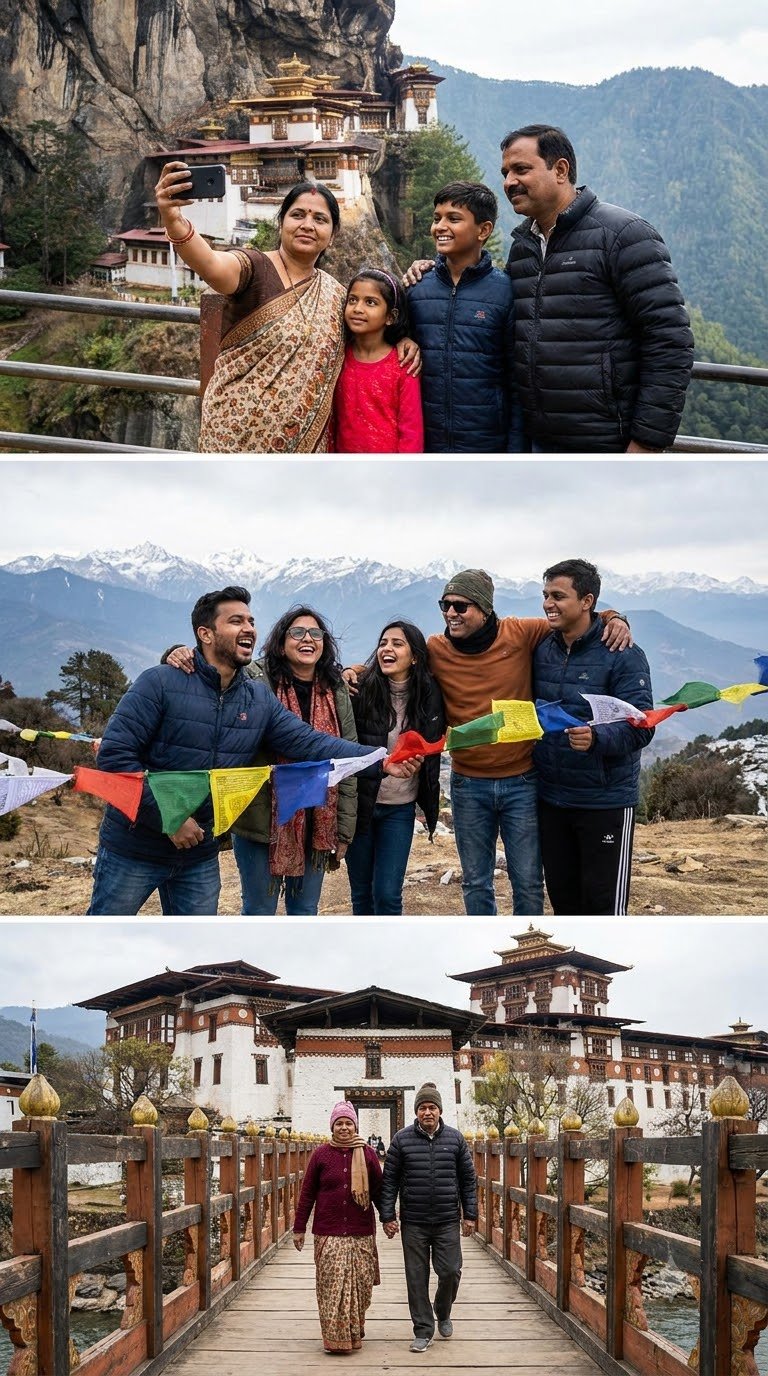
A Bhutan tour package from India bundles a licensed guide, a private car with driver, hotels, breakfast and dinner, your permits and the government's Sustainable Development Fee into one booking. Indian nationals travel without a visa, enter by air at Paro or by road through Phuentsholing, Gelephu or Samdrup Jongkhar, and most first trips run five to eight nights across Paro, Thimphu and Punakha.
- Visa
- Not needed; Entry Permit instead
- Ways in
- Paro airport or a land border
- Money
- Indian rupees widely accepted
- Good first-trip length
- 5 to 8 nights
- Strongest seasons
- March to May, September to November
- Book ahead
- Several weeks; earlier for festival dates
What a Bhutan Tour Package from India Really Includes
Strip away the brochure language and a Bhutan tour package from India is a set of arrangements that would otherwise cost you a dozen phone calls: a licensed local guide, a private car and driver for the whole route, a hotel in each valley, breakfast and dinner every day, and the permit paperwork. The Sustainable Development Fee, the per-night levy every visitor to Bhutan pays, is folded into the same quote.
Indian travellers do have more freedom than most nationalities. Nobody forces you into a fixed-departure group, and some people book hotels and taxis on their own. Even so, most first-time visitors prefer a package for three practical reasons. Good hotels in Paro and Thimphu fill up in busy months, mountain roads are slow and easier with a driver who knows every bend, and a guide turns a dzong from a handsome wall into a story worth listening to.
Why Indian Travellers Find Bhutan So Easy to Reach
Few international trips ask less of an Indian passport holder. There is no visa to apply for, only a free permit. The ngultrum is pegged to the rupee, so you are not hunting for a forex counter. Paro is under two hours by air from Kolkata, a little over an hour from Bagdogra or Guwahati, and close to three hours from Delhi.
The destination does the rest. Bhutan keeps most of its land under forest and deliberately limits tourist numbers, so even the best-known monasteries feel quiet by Indian standards. The pace is slower, the air is cleaner and the culture, with its Vajrayana Buddhism, prayer flags in every valley and archery matches on weekends, feels unlike anywhere else in the Himalaya.
Fly or Drive: Choosing How to Enter Bhutan
Your starting city decides your entry point, and the entry point shapes the first and last day of every Bhutan tour package from India. Use this table as a starting point for planning.
| If you start from | Easiest way into Bhutan | Worth knowing |
|---|---|---|
| Delhi, Mumbai and other metro cities | Fly to Paro, usually connecting through Delhi, Kolkata or Guwahati | Paro flights are limited in number, so seats go quickly around holiday weeks. A morning landing gives you a usable first afternoon. |
| Kolkata and the rest of West Bengal | Direct flight to Paro, or an overnight train to North Bengal and a road transfer to Phuentsholing | Flying saves most of a day. The overland option suits travellers who like to watch the plains slowly turn into foothills. |
| Siliguri, Darjeeling and Sikkim | Road to Phuentsholing, or a short hop from Bagdogra to Paro | Bagdogra to the Jaigaon gate takes roughly four to five hours by car. The climb from Phuentsholing to Thimphu adds another five to six. |
| Guwahati, Assam and Meghalaya | Fly to Paro, or drive to Samdrup Jongkhar or Gelephu | Samdrup Jongkhar opens eastern Bhutan and Gelephu leads into the central valleys. Both mean long mountain drives, so allow a few extra nights. |
| Tripura, Mizoram and the rest of the Northeast | Reach Guwahati first, then fly or drive on | Leave some slack on the connecting day. A delayed train should not cost you a hotel night or the first afternoon's sightseeing. |
A word on border entry. Phuentsholing is the busiest gate and the easiest to manage, because the Indian town of Jaigaon sits right beside it and the road up to Thimphu is well used. Your guide meets you at the gate, completes the formalities and starts the drive. It makes for a long first day, so the first night is usually spent in Thimphu or Paro, whichever your plan begins with.
Whichever way you come in, hold off on non-refundable tickets until your hotels and permit dates are confirmed in writing. Flights into Paro depend on clear weather, so keep the last day of your trip free of anything important, and avoid very tight same-day connections out of Delhi or Kolkata.
Permits and Documents Indian Travellers Need
Indian passport holders do not need a Bhutan visa. In its place there are two permits, both free of charge, and both normally handled by your tour operator once your dates and hotels are fixed. Here is what to keep ready.
- Valid photo ID for every adult: An Indian passport with at least six months of validity, or a voter ID card. Aadhaar, PAN and a driving licence are generally not accepted as stand-alone proof, so do not rely on them.
- Passport or birth certificate for each child: Either is accepted for children travelling with their parents. Carry originals, since photocopies may be refused at the gate.
- Entry Permit: Free of charge and required for every traveller, children included. It covers Paro and Thimphu and is applied for online by your operator once dates and hotels are fixed.
- Route Permit: Also free, and needed for Punakha, Phobjikha, Bumthang and most places beyond Paro and Thimphu. Your guide collects it from the immigration office in Thimphu, usually on the same day.
- Passport-size photographs: Carry two or three per person, in case a physical form is asked for at a border post.
- Travel insurance: Not compulsory for Indian nationals, but worth having for the whole group, especially with infants or older parents.
- Medicines and a basic first-aid kit: Pharmacies thin out beyond Thimphu, so carry what you take regularly, plus remedies for motion sickness and an upset stomach.
The Sustainable Development Fee works differently from the permits. It is charged for every night you spend in Bhutan, at a concessional rate fixed by the Royal Government for Indian nationals. Children under six are exempt and those aged six to twelve receive a reduction. Inside a package the fee sits within your quote, so ask for it to be shown as its own line. That is the only honest way to compare one operator against another.
The spelling on a permit application must match the ID exactly. A missing middle name can slow things down, so send clear scans rather than angled phone photos.
Rules do get revised, and your operator's latest guidance should always override any article, including this one. For official information, see the Tourism Council of Bhutan and the Department of Immigration.
Bhutan Tour Package from India: Four Itineraries Compared
The itineraries below are described by nights rather than sights, because nights decide how a trip feels. Two nights in a valley lets you see it; one night only lets you pass through. Each plan can be stretched, trimmed or reordered to suit your dates.
| Itinerary | Nights | Valleys covered | Pace | Suits |
|---|---|---|---|---|
| Bhutan Quick Escape | 3 | Paro, Thimphu | Relaxed, one hotel change | Long weekends, first visit |
| Classic Bhutan | 5 | Paro, Thimphu, Punakha | Balanced | First trips, families |
| Western Bhutan Explorer | 7 | Paro, Thimphu, Punakha, Phobjikha | Scenic, a few longer drives | Nature and photography |
| Heritage Bhutan | 9 | Adds Trongsa and Bumthang | Drive-heavy, immersive | Culture, repeat visitors |

Bhutan Quick Escape
Short Break3 Nights / 4 Days · Paro · Thimphu
- Tiger's Nest climb or viewpoint walk on day two
- Buddha Dordenma and the capital's evening light at Tashichho Dzong
- Only one hotel change, so very little packing and unpacking
- Compact enough to fit around a short break from work
Best for: travellers with limited leave who want a genuine taste of Bhutan before committing to a longer trip.
See the day-by-day plan
- Day 1: Arrive in ParoMeet your guide, check in and keep the evening light with a short stroll through Paro town.
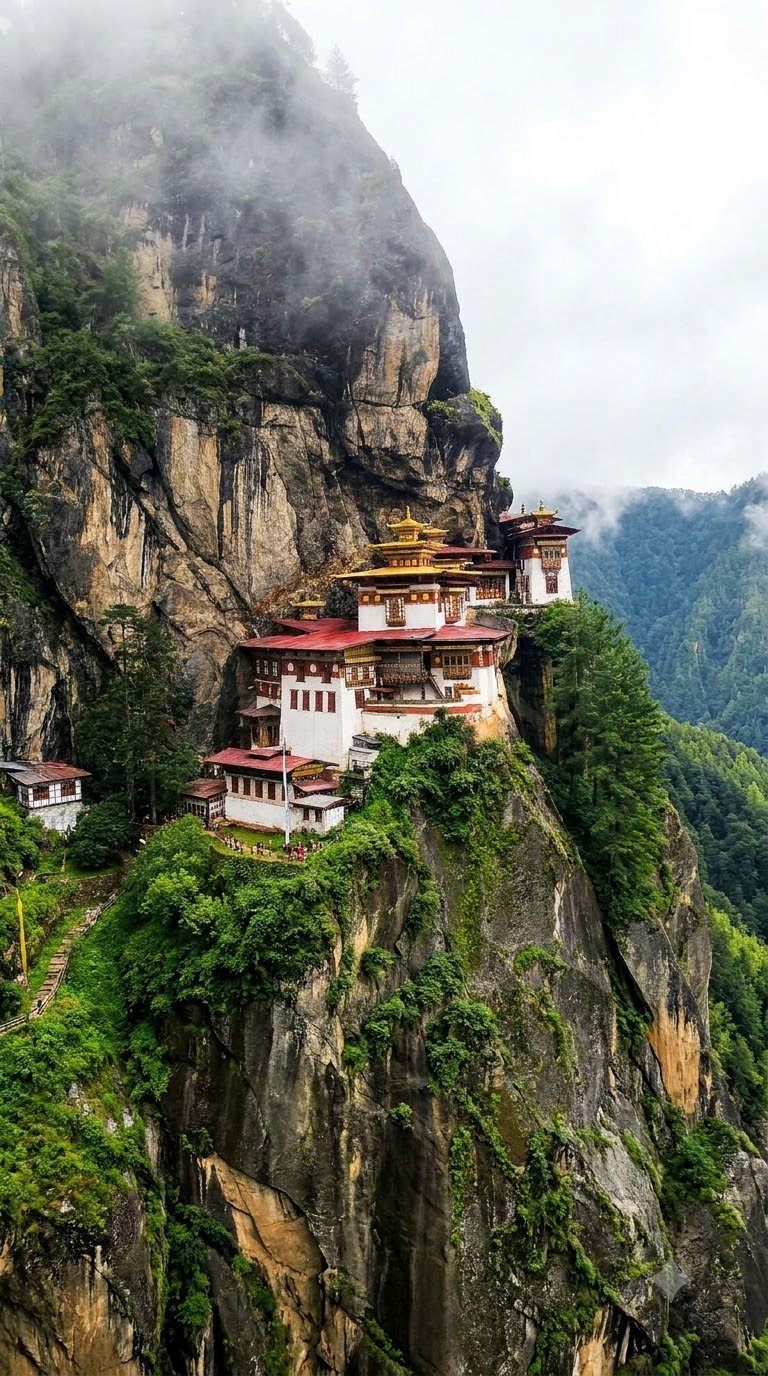
- Day 2: Tiger's NestClimb to the cliffside monastery or stop at the viewpoint, then visit Kyichu Lhakhang in the afternoon.
- Day 3: Paro to ThimphuDrive to the capital for Buddha Dordenma, the Memorial Chorten and Tashichho Dzong in the evening.
- Day 4: DepartureReturn to Paro for your flight, or begin the road journey to the border early.

Classic Bhutan
First Trip5 Nights / 6 Days · Paro · Thimphu · Punakha
- Dochula Pass and its 108 memorial chortens
- Punakha Dzong, set where two rivers meet
- A balanced mix of cool Paro and warm, low-lying Punakha
- Two nights each in Paro and Thimphu, so neither feels rushed
Best for: anyone planning a first Bhutan tour from India who wants the classic western circuit without hurrying it.
See the day-by-day plan
- Day 1: Arrive in ParoSettle in and rest; altitude is easier to handle with a quiet first evening.
- Day 2: Tiger's Nest and Kyichu LhakhangThe big hike in the morning, one of Bhutan's oldest temples in the afternoon.
- Day 3: Paro to ThimphuVisit Rinpung Dzong in the morning, then drive to the capital.
- Day 4: ThimphuMuseums, Buddha Dordenma, handicrafts and a slow evening.
- Day 5: Thimphu to PunakhaCross Dochula Pass, walk to Chimi Lhakhang and see Punakha Dzong.
- Day 6: DepartureStart early for Paro and an afternoon flight, or continue overland.
Western Bhutan Explorer
Scenic7 Nights / 8 Days · Paro · Thimphu · Punakha · Phobjikha
- Phobjikha's wide glacial valley and Gangtey Monastery
- The long suspension bridge walk at Punakha
- Room for a farmhouse lunch or an archery session
- Paro on both ends, giving the last night a relaxed, unhurried feel
Best for: travellers who want scenery and quiet as much as monuments, or who have already seen the standard Paro and Thimphu stretch.
See the day-by-day plan
- Day 1: Arrive in ParoCheck in and take it easy.
- Day 2: Tiger's NestFull day for the hike and a gentle afternoon.
- Day 3: Paro to ThimphuDrive to the capital and see its main sights.
- Day 4: Thimphu to PunakhaOver Dochula Pass to the warmer valley, stopping at Chimi Lhakhang.
- Day 5: Punakha to PhobjikhaPunakha Dzong and the suspension bridge in the morning, then up to the crane valley.
- Day 6: Phobjikha to ThimphuGangtey Monastery and the valley nature trail, then the drive back to the capital.
- Day 7: Thimphu to ParoRinpung Dzong, the old Paro bridge and some unhurried shopping.
- Day 8: DepartureFly out of Paro or continue overland.

Heritage Bhutan: West to Centre
Immersive9 Nights / 10 Days · Paro · Thimphu · Punakha · Phobjikha · Trongsa · Bumthang
- The Pele La crossing and Trongsa Dzong, the largest in Bhutan
- Bumthang's cluster of old temples, including Jambay, Kurjey and Tamshing
- Two quiet nights in Bumthang with no packing in between
- A slower, deeper look at central Bhutan beyond the usual circuit
Best for: travellers comfortable with long scenic drives who want to go beyond the western valleys. Expect several full road days.
See the day-by-day plan
- Day 1: Arrive in ParoSettle in with an easy evening.
- Day 2: Tiger's NestThe signature hike, followed by a restful afternoon.
- Day 3: Paro to ThimphuCapital sightseeing at an easy pace.
- Day 4: Thimphu to PunakhaDochula Pass, Chimi Lhakhang and the Punakha valley.
- Day 5: Punakha to PhobjikhaPunakha Dzong in the morning, then the drive to the glacial valley.
- Day 6: Phobjikha to BumthangA long, scenic drive via Chendebji Chorten, Trongsa and the Yotong La pass.
- Day 7: BumthangJambay Lhakhang, Kurjey Lhakhang, Tamshing and a village walk.
- Day 8: Bumthang to TrongsaTrongsa Dzong and the tower museum above it.
- Day 9: Trongsa to ThimphuA full day on the road, broken by viewpoints and a long lunch.
- Day 10: Thimphu to Paro and departureEarly drive for an afternoon flight.
Every itinerary can be adjusted once your operator knows your starting city, travel dates and who is travelling. Share those three details and a travel designer will confirm what fits.
Drive Times Between Bhutan's Main Stops
Distances in Bhutan can mislead. The roads follow river valleys and cross high passes, so an average speed of thirty kilometres an hour is a sensible assumption. These approximate figures will help you judge how much one day can realistically hold.
| Stretch | Approx. distance | Typical drive time | On the road |
|---|---|---|---|
| Phuentsholing to Thimphu | About 170 km | 5 to 6 hours | A steady climb through forest; keep a light jacket handy for the upper stretch. |
| Paro to Thimphu | About 55 km | 1 to 1.5 hours | The easiest stretch, along a broad river valley. |
| Thimphu to Punakha | About 75 km | Around 3 hours | Crosses Dochula Pass at roughly 3,100 metres, so expect cool air and mist. |
| Punakha to Phobjikha | About 70 km | Around 3 hours | A winding climb out of the warm valley into open highland. |
| Phobjikha to Thimphu | About 135 km | 4 to 5 hours | Runs through Wangdue Phodrang and back over Dochula Pass. |
| Trongsa to Bumthang | About 70 km | 2.5 to 3 hours | Crosses Yotong La, which is often foggy in the morning. |
Weather, roadworks and photo halts all change timings, so treat the table as a guide and leave margin around flights. It also explains why longer itineraries add nights rather than sights.
Matching Your Bhutan Tour Package from India to Who Is Travelling
The same route feels very different depending on the group. These are the adjustments that make the biggest difference in practice.
Couples and honeymooners
The Classic or Western Explorer plan works well. Ask for a hotel with valley views and keep one afternoon unscheduled. Punakha's riverside setting and the Phobjikha valley suit quiet time together.
Families with children
Shorter drives, optional hikes and connecting rooms matter more than the number of sights. Our guide to Bhutan family tour packages covers pacing by age in detail.
Friends and small groups
A larger vehicle keeps everyone together. Decide early whether you want extras such as archery, a hot stone bath or a short half-day hike, so they can be slotted in.
Senior citizens
Ask for ground-floor or lift-access rooms and a late start on the first morning. The Tiger's Nest viewpoint is a rewarding alternative to the full climb.
Solo travellers
Solo travel is welcome and safe. The guide-and-driver arrangement means you are never stranded on a mountain road, and farmhouse meals and festival days are good places to meet people.
Photographers and nature lovers
Pick the Western Explorer or Heritage plan for Phobjikha, Dochula's stupas and Bumthang's temple lanes. Autumn brings the clearest skies and spring brings rhododendrons.
A Typical Day on a Bhutan Tour Package from India
Days start unhurriedly. Breakfast is usually between half past seven and nine, your guide and driver meet you in the lobby, and the first stop is rarely more than an hour away. A morning of sightseeing is followed by lunch at a local restaurant, which most packages leave to you, so you can choose your own table. Afternoons are for a second stop, a short walk or simply the hotel balcony. Dinner is back at the hotel, and most valleys are quiet and dark by nine. On long road days the drive is the programme, broken by tea stops, photo halts at passes and the occasional viewpoint.
Making the Tiger's Nest hike easier
The climb to the cliffside monastery is a steady uphill walk on a well-made trail. Most people take five to six hours for the return trip, including a rest at the halfway cafeteria. Start early to beat afternoon cloud and crowds, wear shoes with good grip, carry water, and let the slowest walker set the pace. Ponies may be available up to the cafeteria, so ask your guide on the morning. Cameras and phones are not allowed inside the temples, and you will be asked to leave them at a counter.
What a Good Bhutan Tour Package from India Should Cover
Core inclusions look similar across operators, since the guide, vehicle, permits and government fee are part of the structure of a Bhutan trip. The details worth checking are quieter ones.
Usually included
- Hotels in every valley, in the room type you choose
- A licensed English-speaking guide for the whole trip
- Private vehicle with driver, including fuel, parking and the driver's allowance
- Breakfast and dinner daily (MAP)
- Pick-up and drop-off at the airport or border
- Entry Permit and Route Permit processing
- Sustainable Development Fee, shown in the quote
- A local SIM card and bottled water in the room
Usually not included
- Monument and museum entry fees
- Lunches
- Flight or train tickets to your entry point
- Personal expenses such as laundry, tips and souvenirs
- Costs caused by events outside anyone's control, such as landslide delays or cancelled flights
When you compare quotes, look beyond the headline. Ask which hotel category is assumed, whether the Sustainable Development Fee is included and for how many nights, and how many people the vehicle is sized for. Two packages with the same title can differ on all three.
Best Time to Visit Bhutan from India
Bhutan does not have a bad season, only different ones. What matters is whether you want clear mountain views, green valleys, festival crowds or winter quiet.
| Season | What it feels like | Good for |
|---|---|---|
| Spring March to May | Mild days, rhododendrons and magnolias in bloom, and clear mornings. April is the busiest month. | First-timers, families and photographers. Paro Tshechu falls in this season. |
| Summer and monsoon June to August | Lush green valleys with afternoon showers. Landslides can slow roads in central Bhutan. | Quiet, unhurried trips with a flexible schedule and a buffer day. |
| Autumn September to November | Crisp air, the clearest mountain views and the main festival season, including Thimphu Tshechu. | Photographers and festival lovers. Book hotels and flights early. |
| Winter December to February | Cold, dry and bright, with snow possible on high passes. Black-necked cranes winter in Phobjikha from late autumn. | Peaceful travel, bird watchers and a winter break from the plains. |
Festival dates follow the Bhutanese lunar calendar, so they move from one season to the next. Paro Tshechu falls in spring, Thimphu Tshechu in autumn, and Punakha Drubchen near the end of winter. If a festival is the reason for your trip, confirm its date first and book hotels and flights around it, not the other way round. Puja holidays push demand up sharply in October; if your dates are flexible, early November often gives similar clear skies with fewer crowds.

On the Ground: Rules, Money and Common Terms
- Dress: wear full sleeves and long trousers or skirts at dzongs and temples, and remove hats and shoes before entering prayer halls.
- Photography: not allowed inside temple halls. Ask your guide when unsure, and check before carrying a drone, as flying one needs prior permission.
- Money: Indian rupees are widely accepted. Carry small notes for roadside stalls, and keep cash handy since card and ATM access thins out beyond the larger towns.
- Mobile network: Indian SIM roaming can be patchy, which is why a local SIM from your operator is useful.
- Altitude and roads: Paro and Thimphu lie above two thousand metres. Keep the first day light, drink plenty of water and carry motion-sickness tablets for the winding roads.
- Packing: temperatures swing sharply between morning and noon in every season, so layers work better than one heavy jacket.
- Plastic: carry a refillable bottle and a cloth bag; the country discourages single-use plastic.
Words you will hear on the trip
- Dzong
- A fortress-monastery that serves as the religious and administrative centre of a district.
- Lhakhang
- A temple or monastery hall; shoes and hats come off before entering.
- Chorten
- A Buddhist stupa, often built beside roads and mountain passes.
- Tshechu
- A multi-day religious festival with masked cham dances, held on dates set by the lunar calendar.
- Sustainable Development Fee
- The per-night fee paid by visitors; Indian nationals pay a concessional rate and children receive reductions.
- MAP
- Modified American Plan: breakfast and dinner included, lunch paid separately.
How to Book Your Bhutan Tour Package from India in Five Steps
- Fix your dates and group sizeCheck school holidays, festival dates and your leave first. Peak weeks sell out earliest, so settle the calendar before anything else.
- Choose your entry point and lengthUse the route table and the four itineraries above. Count nights per valley rather than total days.
- Ask for a written quoteRequest hotel names or categories, vehicle size, meal plan and a clear line showing the Sustainable Development Fee.
- Send clear ID scansShare scans of each traveller's passport or voter ID, plus a photograph, so the Entry Permit can be processed without delays.
- Book tickets lastConfirm flights or trains only after hotels and permit dates are confirmed in writing, and keep a buffer day at the end.
Mistakes Worth Avoiding
- Cramming too much into too few nights. Distances look short on a map, but roads are not. Thimphu to Punakha is about seventy-five kilometres and still takes around three hours.
- Buying tickets too early. Confirm hotels and permit dates first. Flights to Paro are limited and a changed date can be expensive to fix.
- Relying only on an Aadhaar card. Carry a passport or voter ID card, and originals for children.
- Doing Tiger's Nest on arrival day. Give your body a night at altitude before attempting the climb.
- Ignoring weather buffers. In the monsoon, and on mountain passes after fresh snow, a spare day absorbs delays that would otherwise wreck your flight home.
- Judging packages only by headline length. A seven-night plan with five hotel changes is more tiring than a six-night plan with three.
About the Team Behind This Guide
This guide comes from Druk Yul Journeys, a Bhutanese-owned tour operator licensed by the Tourism Council of Bhutan, with a partner office in Thimphu and an India branch in Dharmanagar, Tripura. The team plans Bhutan tour packages for Indian travellers across every season, which is why the advice above leans on what actually goes wrong on the ground: permit spellings, road delays and flights that land at the wrong hour.
Frequently Asked Questions: Bhutan Tour Package from India
Do Indians need a visa for a Bhutan tour package from India?
No. Indian passport holders do not need a visa. They need a free Entry Permit, plus a Route Permit for travel beyond Paro and Thimphu, and both are normally arranged by the tour operator. Carry a valid passport or voter ID card, and for children a passport or birth certificate.
How many days are enough for a Bhutan trip from India?
Five to six days cover Paro, Thimphu and Punakha at a comfortable pace. A four-day plan works for a long weekend if you stay with Paro and Thimphu. Add two or three nights for Phobjikha, and plan around ten days if you want to reach Bumthang in central Bhutan.
Can I enter Bhutan by road from India?
Yes. Indian travellers can enter by road through Phuentsholing, Gelephu or Samdrup Jongkhar. Phuentsholing, next to Jaigaon in West Bengal, is the most commonly used gate. Road entry makes the first and last days longer, so it helps to add a night to your plan.
Which is the best time to take a Bhutan tour package from India?
March to May and September to November are the most dependable months, with clear views and festivals. Winter is cold but calm and bright, while June to August is green and quiet but can bring road delays from rain, so keep a spare day in the plan.
Is the Sustainable Development Fee included in a Bhutan tour package from India?
In a properly built package, yes. The fee is charged per night, children under six are exempt and those aged six to twelve get a concession. A good operator shows it as a separate line in the written quote so that you can compare offers fairly.
Is a Bhutan tour package from India suitable for senior citizens?
Yes, with sensible pacing. Ask for later starts, ground-floor or lift-access rooms, shorter walks and an extra rest night before long mountain drives. Anyone with a heart or lung condition should speak to a doctor before travelling, as Paro and Thimphu lie above two thousand metres.
Can I use Indian rupees in Bhutan?
Yes. Indian currency is widely accepted and the ngultrum is pegged to the rupee. Carry small notes for roadside stalls and village shops, and keep some cash in hand because card and ATM access thins out beyond the larger towns.
How early should I book a Bhutan tour package from India?
For March to May and September to November, start at least four to six weeks ahead, and earlier for a Tshechu or Puja week. Off-peak months are more forgiving, but Paro flights stay limited all through the season.
How difficult is the Tiger's Nest hike?
It is a steady uphill walk on a well-made trail that most people complete in five to six hours return, with rests. It is demanding rather than technical. Many travellers stop at the halfway cafeteria viewpoint, which is a perfectly good choice for children and older relatives.
Do Indian tourists have to travel with a guide?
Indian nationals are not tied to a fixed group tour, and some arrange hotels and taxis on their own. For a first visit, most prefer a licensed guide and driver, because permits, winding roads and hotel availability in peak months are easier to manage through one operator.
Ready to Plan Your Bhutan Tour Package from India?
Share your starting city, travel dates and group size, and a travel designer will suggest a route and itinerary, along with a clear written quote.