
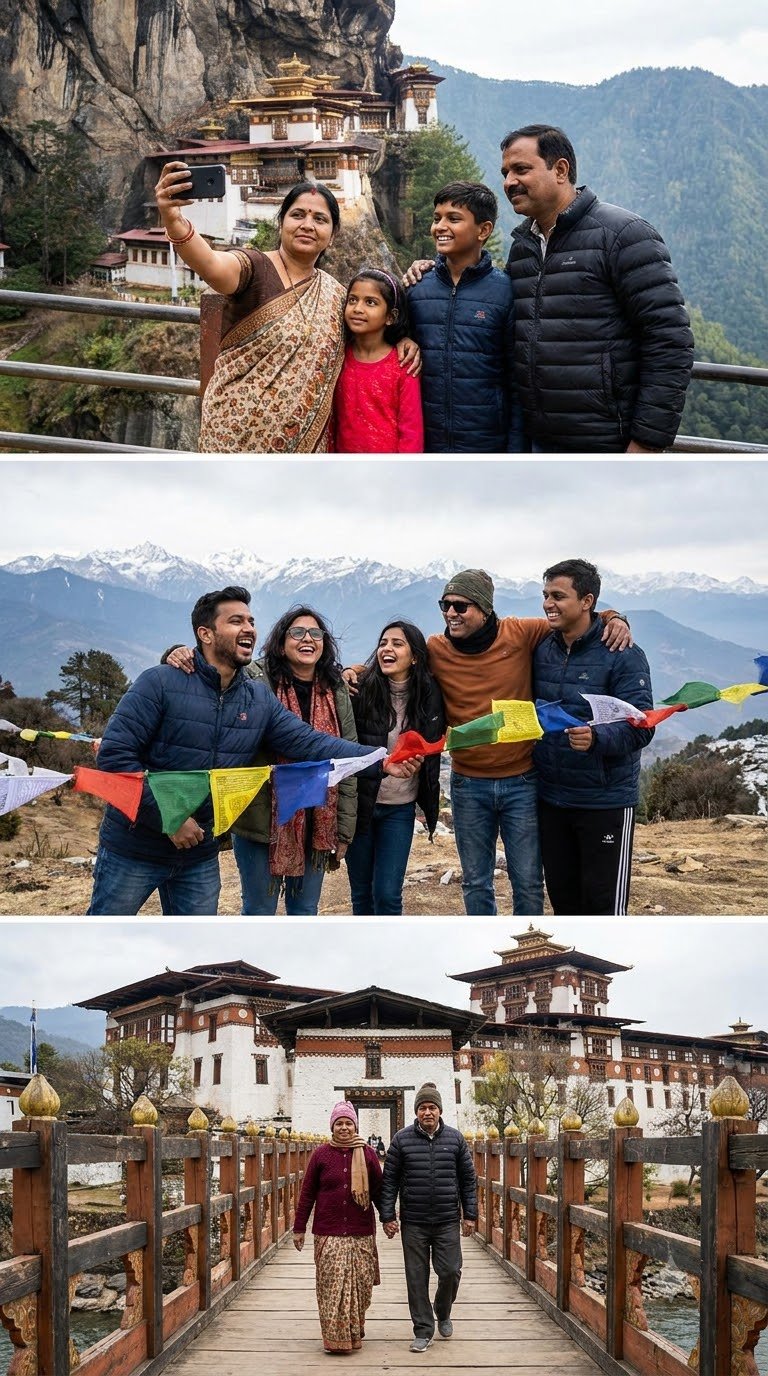
Search for the best Bhutan luxury tour operator and you will meet a wall of confident claims. Every company is “the best”, and almost none can show why, because nobody officially ranks Bhutan’s operators and the badges and “top ten” lists that fill the results are often paid placements or self-awarded. What you can do, and what this guide is built around, is judge an operator on things that are genuinely checkable.
It is written for travellers who are about to commit serious time and money to Bhutan and want to tell a true luxury specialist from a company that has simply added the word to a standard itinerary. We cover how the two differ, seven qualities worth testing, how lodge access really works, what a well-built journey looks like, the questions to ask and the red flags to walk away from. Near the end we show where Druk Yul Journeys, a Bhutanese-owned operator, stands against the same tests. Prices are left out on purpose: they depend on the season, the lodges, the group and the length of stay, and are best requested as a written proposal.
The best Bhutan luxury tour operator for you is a licensed, ideally Bhutanese-owned company that can place you in the lodges you want on your dates, assigns an experienced guide and a private vehicle, builds an itinerary with buffers around mountain passes and flights, and puts every inclusion and exclusion in a written proposal. The sections below show how to test each of those points before you commit.
What “Best” Actually Means for a Bhutan Luxury Trip
Bhutan does not work like most destinations. Almost every visit is organised through a licensed Bhutanese operator, who arranges the guide, the vehicle, the permits, the government fee and the accommodation as one package. So the real decision is not whether to use an operator, but which one.
At the luxury end of the market that choice carries more weight. The finest lodges have only a handful of rooms, the strongest guides are in demand, and mistakes in sequencing, such as a long drive straight after an early flight or a mountain pass crossed late in the day, cost you comfort rather than money. A weak operator is invisible in the brochure and unmistakable by day three.
“Best” is also personal. A company that is brilliant at festival-focused group travel may be ordinary at a slow wellness retreat, and honeymooners, three-generation families and photographers each lean on different strengths. Read “best” as “best match”, and judge candidates against the trip you actually want. If you are still working out the shape of that trip, our guide to Bhutan luxury travel is a good companion read.
How a Luxury Specialist Differs From a Standard Bhutan Tour Operator
The structure underneath is identical: a licensed guide, a private vehicle, permits and the government fee. What changes is how much care goes into each decision around that structure. This is the practical difference between a standard operator and a luxury specialist.
| What you are comparing | Standard operator | Luxury specialist |
|---|---|---|
| Where you sleep | Tourist-class hotels allocated by availability | Premium lodges and heritage-style properties requested by name, with room type and outlook discussed before booking |
| Who guides you | The next licensed guide available | A guide matched to your interests, language and pace, with the experience to run slow, private days |
| Pace of the day | A full sightseeing schedule | Fewer stops, later starts and deliberately empty afternoons |
| Vehicle | A car or coaster sized to the group | A private, comfortable vehicle with a driver chosen for mountain roads |
| Your planning contact | A sales desk, then a handover | One designer from the first message through departure |
| When plans change | Fixed on the day | Buffers built in, with alternatives prepared before you arrive |
| The proposal | A package outline | Property names, room categories, daily flow and exclusions, all in writing |
None of this means a standard operator is a bad one. For a straightforward cultural trip, a good mid-range operator is often exactly right. The gap shows up when rooms are scarce, schedules are tight or a family needs the plan rebuilt around a nap time, a slower walker or a rest day. That is when a specialist earns the word.
Seven Qualities That Mark the Best Luxury Tour Operator in Bhutan
These are the qualities worth testing, in roughly the order they matter. Each one comes with a simple way to check it yourself, because a claim you cannot verify is just marketing.
A licence you can verify, and a real presence in Bhutan
Every legitimate operator works under a licence from Bhutan’s Department of Tourism, the regulator that took over from the Tourism Council of Bhutan. A genuine specialist hands you the licence details without being asked and keeps a physical office, usually in Thimphu or Paro, that you can look up independently. Membership of the Association of Bhutanese Tour Operators is a helpful extra signal, but it is not a substitute for checking the licence itself.
Test it: Look the company up on the Department of Tourism’s list of licensed operators before you share any personal documents.
Genuine relationships with the lodges, not just a booking link
The most sought-after lodges in Bhutan have only a handful of rooms each, and in autumn and spring those rooms go early. An operator that works with the lodges all year can tell you honestly what is free, which room categories are worth the difference and what a comparable alternative looks like if your first choice is full. One that simply submits requests tends to learn about problems at the same moment you do.
Test it: Ask which properties they can confirm for your dates, and what they would offer if one fell through.
Guides chosen for you, not assigned by rota
Every guide in Bhutan is licensed, so a certificate tells you very little. What separates the exceptional ones is range: someone who can explain a ritual without reciting it, who knows when to stop talking and who can read a group’s energy and quietly shorten a morning. The best luxury operators match the guide to the guests, by language, interests and pace, and keep their strongest guides for private and longer journeys.
Test it: Ask about your guide’s background, languages and the kind of guests they usually lead.
Itineraries that respect the roads and the airport
Bhutan’s roads wind through passes where a short distance on the map can mean half a day behind the wheel, and flights into Paro depend on daylight and clear weather. A specialist designs around those facts: an easy first evening, no long drive straight after a flight, a spare night before leaving the way you came. Plans that look impressive because they cover five valleys in a week usually feel the opposite on the ground.
Test it: Ask why each night sits where it does, and what the plan looks like if a day is lost to weather.
Willingness to say no, or “not like that”
A good designer will occasionally talk you out of your own itinerary. If the route you sent is too tight, the right reply is fewer places done well, not a polite yes. That honesty is hard to fake, and it usually shows in the first or second exchange.
Test it: Send a deliberately ambitious plan and see whether the reply challenges it.
A written proposal that leaves nothing vague
Luxury travel falls apart in the gaps: the meal that was not covered, the ticket nobody mentioned, the room category quietly swapped. The best operators write it all down, with named properties, room types, who is in the vehicle, what each day contains and, just as importantly, what is not included.
Test it: Compare two proposals line by line. The vaguer one is rarely the better one.
Someone to call who already knows your trip
Mountain roads and mountain weather mean plans occasionally change mid-journey. What matters then is a named person, reachable in Bhutan, who already knows your itinerary and can rearrange it without a chain of approvals. Ask who that person is before you pay, not after you land.
Test it: Ask for the name and role of whoever handles changes while you are in Bhutan.
Whichever operator you choose, ask for the same three things in writing: the named properties, the night-by-night split, and what is not included.
Why Bhutanese Ownership Is Worth Weighing
A Bhutanese-owned luxury tour operator is not automatically better, and it would be unfair to pretend otherwise. But the case for it is real, and it is more practical than sentimental.
Many overseas agents sell a Bhutan trip and then hand the actual delivery to a Bhutanese company anyway. Booking with the company that owns the guides’ schedules, the vehicle arrangements and the lodge relationships removes a layer, shortens the line of responsibility and puts you in touch with the people who will really run your journey. When a flight is delayed or a road is blocked, the person who can fix it is the one who owns the relationships on the ground.
Ownership also matters for where the money goes. Bhutan’s whole tourism approach rests on high value and low volume, and a locally owned operator keeps more of what you spend in the country, among the families, guides and lodges that make the trip worth taking. If you are comparing overseas and Bhutanese-owned options, ask the overseas agent directly which Bhutanese company will deliver your trip, and then ask that company the same questions.
Lodges, Heritage Stays and How Your Operator Controls Access
For many travellers the lodge is the luxury. Bhutan’s top accommodation falls into a few broad types, and an operator’s relationships with each one decide what is actually available to you.
Small luxury lodge groups
Collections of a handful of intimate lodges set in different valleys, with names such as Amankora, Six Senses Bhutan and COMO Uma among the best known. Rooms are few and demand is high, so an operator’s relationship with each group directly shapes what you can book.
Grand hotels in the main towns
Full-service hotels such as Taj Tashi in Thimphu suit travellers who want more amenities, restaurants and space in the capital, and they often make the first or last night easier.
Heritage and boutique stays
Restored manor houses, farmhouse-style guesthouses and small owner-run hotels that put character, local food and conversation with hosts ahead of scale. These reward an operator that knows the owners personally.
Remote valley lodges
Lodges in places like Phobjikha, such as Gangtey Lodge, where the setting is the point. With fewer services nearby, the operator’s planning of meals, activities and transfers matters even more.
The names above are examples of each category, not a promise of availability. Lodge portfolios and branding change, so your written proposal should confirm exactly where you will sleep. What the operator adds is judgement: which room category is worth paying more for, which side of a lodge has the better outlook, where to avoid a road or a construction site, and how to sequence stays so that a very remote night is followed by an easier one.
Three Sample Luxury Journeys Built the Way a Specialist Would Build Them
The best way to judge an operator is to read the plan it would write. These three sample journeys show the logic to look for: a rest-first arrival, no hard driving day right after a flight, spare time before departure and a return night in Paro. Each can be reshaped once your operator knows your dates, ages and interests.

Western Bhutan Signature
Essential6 Nights / 7 Days · Paro · Thimphu · Punakha
- A first night in Paro with nothing scheduled, so the flight is behind you before sightseeing starts
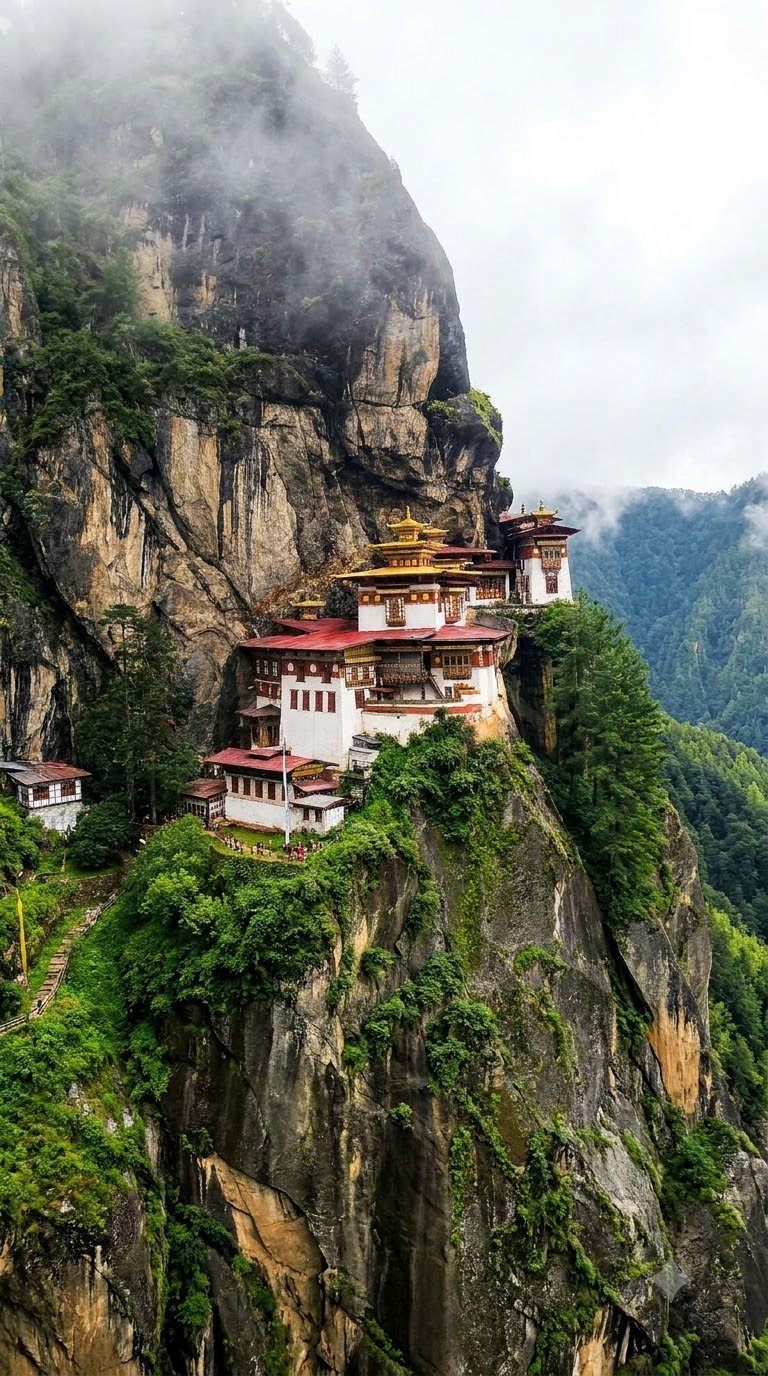
- Tiger’s Nest walked early and at your own pace, with lunch at the lodge or on a picnic
- Dochula Pass and Chimi Lhakhang on the way to the warmer Punakha valley
- Two nights in Punakha instead of one rushed overnight
- A final night back in Paro so the flight out is not a race against the road
Best for: Couples and small groups visiting for the first time who want the classic western circuit at an unhurried pace.
See the day-by-day plan
Western Bhutan & Phobjikha Retreat
Slower pace8 Nights / 9 Days · Paro · Thimphu · Punakha · Phobjikha
- Two full nights in Phobjikha, a wide glacial valley that rewards slow mornings
- Gangtey Monastery and a flat valley-floor walk that suits almost any fitness level
- In winter, the chance to see black-necked cranes that spend the season in the valley
- A second night in Thimphu on the way back for craft, textile and market time
- Paro again at the end, to keep the departure day calm
Best for: Honeymooners, photographers and anyone who wants a quieter valley added to the classic circuit.
See the day-by-day plan

Grand Central Bhutan Journey
Immersive10 Nights / 11 Days · Paro · Thimphu · Punakha · Phobjikha · Bumthang
- Bumthang, the heartland of Bhutan’s oldest temples, with two nights to explore rather than pass through
- Trongsa Dzong, Bhutan’s grandest fortress, as a lunchtime stop instead of a rushed photo
- Weaving villages and farmhouse visits in a valley many visitors never reach
- Every long drive is followed by a lighter day
- Where seats are available, a domestic flight can replace the return drive and give a day back
Best for: Repeat visitors and travellers with time who want the cultural heartland of Bhutan, not just the western valleys.
See the day-by-day plan
Every journey above is a starting point. Swap a valley, add a rest day, change the lodge style or slow a driving day once your designer knows who is travelling. Looking for a trip with children or grandparents? See our Bhutan family tour packages for pacing by age group.
Signature Experiences a Luxury Operator Can Arrange
Experiences are where a specialist separates itself from a booking agent. These are examples of what a well-connected operator can arrange, always subject to the season, the calendar and the goodwill of the people involved.
Tiger’s Nest, timed for quiet
Starting early, walking at your own pace and pausing at the viewpoint teahouse before deciding how far to go gives the hike a very different feel from a late-morning group climb.
A hot stone bath in a farmhouse
The traditional dotsho, where river stones heated in a fire are dropped into a wooden tub of herb-scented water, is arranged through farm families and is best booked ahead.
A morning at a working monastery
Time to sit through part of a ritual, hear a monk explain what is happening and, where the monastery agrees, receive a blessing. Monasteries set their own schedules, so a good operator presents this as an invitation, not a guarantee.
A meal at a family table
A home-style lunch, with a hands-on session making dishes such as momos or ema datshi, gives Bhutanese food far more depth than a hotel menu can.
Archery with local players
Archery is the national sport, and a private lesson is as much about the banter and songs around the target as the shooting itself.
Weaving and craft visits
In Thimphu’s textile museum and in the weaving villages of Bumthang you can see how patterns are made and meet the people behind them.
Stillness at the lodge
Guided meditation, yoga or a herbal spa treatment, depending on the lodge, turns a rest afternoon into something you remember rather than something you fill.
Photography with a guide who knows the light
Dochula Pass at first light, the Phobjikha valley floor, a dzong courtyard late in the day: a guide who knows when and where to stand changes what you bring home.
Six Steps to Choosing a Bhutan Luxury Tour Operator With Confidence
If the whole subject feels overwhelming, work through it in this order. It takes a few evenings and saves a great deal of second-guessing later.
- Decide what kind of trip you wantSettle the occasion, the pace and who is travelling. A honeymoon, a three-generation family and a photography trip need different strengths from an operator.
- Shortlist two or three licensed operatorsVerify each licence and read how each company writes about Bhutan. A short list you can compare properly beats a long one you cannot.
- Brief each one in the same wayShare dates and how flexible they are, ages and mobility, interests, the lodge style you prefer, your departure city and any dietary or medical needs.
- Compare the written proposals line by lineLook at named properties, nights in each place, the daily flow and the inclusions. Treat gaps as answers.
- Test responsiveness and honestyNotice who pushes back on a tight plan, who answers specifics and who retreats into brochure language.
- Confirm payment, changes and support before committingGet the terms, the cancellation policy and the name of your on-the-ground contact in writing, then book.
Questions to Ask Every Bhutan Luxury Tour Operator Before You Book
Put these ten questions to every operator on your shortlist, including us. The answers matter less than how they are given: a specialist answers specifically and without hurry, and a salesperson changes the subject.
- Which licence do you hold, and can I check it?A good answer names the regulator and the licence, and points you to the Department of Tourism’s list of licensed operators.
- Who owns the company, and who will run my trip in Bhutan?Look for a direct answer. If an overseas agent is involved, ask which Bhutanese company will actually deliver the journey.
- Which lodges can you confirm for my dates, and what happens if one is full?Expect named properties and room types, and a comparable substitute offered for your approval, never a silent downgrade.
- Who will guide me, and can I learn about them first?A specialist can tell you who they have in mind, their languages, their background and why they suit your group.
- How many nights in each place, and why?The reasoning should come back to driving times, mountain passes and flight timings, not to fitting in more sights.
- Where are the buffers in this plan?Look for a spare night or a light day placed before the departure flight and after any long drive.
- What exactly is included and what is not?Meals, entry tickets, domestic flights, drinks and spa treatments should all be accounted for in writing.
- How do payments and changes work?Terms should be written down, with payments going to a registered company account and a clear policy if plans change.
- Who do I call if something changes during the trip?You want a named person in Bhutan who already knows your itinerary, not a general inbox.
- How do you handle dietary, mobility or medical needs?A thoughtful operator asks about these before you do and adjusts rooms, pace and vehicle choice accordingly.
Red Flags That Point to the Wrong Operator
Most problems announce themselves early. These are the signs worth taking seriously before any money changes hands.
- A “luxury” quote that never names a propertyIf you cannot tell where you will sleep, you cannot judge what you are buying.
- Access promised too easilyPrivate audiences, closed temples or special ceremonies depend on the monastery and the calendar. Be wary of anyone who guarantees them.
- Five valleys in six nightsA crowded route looks generous on paper and feels exhausting in a car. Fewer places, done properly, is the luxury.
- Reluctance to put details in writingIf answers stay verbal or vague, expect the same vagueness when something goes wrong.
- Pressure to pay quicklyUrgency to “hold” lodges, or a request to pay into an unrelated or personal account, deserves a pause and a few questions.
- A quote far below the others for the same named propertiesAsk what has been left out. Government fees are fixed, so large gaps usually come from somewhere else.
- A licence number you cannot match to the company nameCheck the details against the Department of Tourism’s list before you send any documents or money.
Best Time for a Luxury Tour of Bhutan
For a luxury trip, the calendar matters twice: once for weather and festivals, and once for how quickly the best lodges fill. The chart below weighs both.
Luxury travel suitability by month
Weighted for clear weather, open passes, festival interest and how early lodges need to be secured
Autumn (October and November) and spring (March and April) are the seasons when the best lodges fill first. Skies are clear, festivals are on and the passes are dependable, so if your dates fall in those windows, start the conversation with an operator several months ahead. Winter, from December to February, brings colder mornings but bright air, peaceful valleys and the black-necked cranes in Phobjikha. The monsoon months of June to August bring green hillsides and fewer visitors, and a higher chance of road delays, which is why a good operator builds a spare day into the plan.

Permits, Visas and Documents for a Luxury Bhutan Tour
Indian nationals do not need a visa for Bhutan, and travellers on foreign passports receive visa clearance through their operator. In both cases the operator handles the paperwork, which is one more reason to confirm that yours is licensed. The Sustainable Development Fee, Bhutan’s daily levy on visitors, is also paid through the operator and forms part of the package. It is set by the government, not by the operator, so two operators should never differ on it for the same travellers.
- Photo ID for every Indian traveller: A passport with six months’ validity, or a voter ID card for adults. Carry the original, not a photocopy.
- Passport or birth certificate for each child: Either is accepted for children travelling with their parents. Again, the original.
- Passport and visa clearance for international guests: Travellers on foreign passports need a visa, which the operator applies for before arrival.
- Entry Permit: Needed by Indian nationals to enter Bhutan. Your operator applies once your dates and group details are confirmed.
- Route Permit: Required for travel beyond Paro and Thimphu, such as Punakha, Phobjikha and Bumthang. Also arranged by your operator.
- Travel insurance and regular medication: Insurance is not compulsory for Indian nationals but is well worth having. Carry a few spare days of any regular medication.
What a Luxury Bhutan Tour Proposal Should Include
Exact inclusions vary by operator and by lodge, which is precisely why they belong in writing. As a baseline, a detailed proposal should account for the following.
Inclusions
- Accommodation in the lodge or hotel category named in your proposal
- Licensed English-speaking guide matched to your group, with other languages arranged where possible
- Private vehicle with an experienced driver for the whole journey
- Airport or border pick-up and drop-off
- Sustainable Development Fee and the permits needed for your route
- Meals as set out in your proposal, with dietary needs noted in advance
- Mineral water on the road and a complimentary SIM card
- Day-by-day planning support and a named contact in Bhutan
Exclusions
- Airfare, including any domestic flights, unless stated
- Monument and museum entry fees unless your proposal says otherwise
- Personal expenses such as laundry, shopping and spa extras
- Travel insurance
- Costs arising from events outside anyone’s control, such as landslides or flight disruption
Where Druk Yul Journeys Fits in All of This
We would rather you test us against the same checklist as every other operator, so here is where we stand on it.
- Bhutanese-owned and family-run, with a partner office in Thimphu and an India branch for travellers planning from India.
- Licensed to run tours in Bhutan, with licence details shared on request so you can check them yourself.
- One travel designer from your first message to the day you fly out, with a named contact for changes during the trip.
- Written proposals that name the properties, the nights in each place, the daily flow and what is not included.
- Straight answers on availability. If a lodge is full for your dates, we say so and suggest a comparable alternative for you to approve, rather than substituting it quietly.
If that sounds like the kind of operator you are looking for, send us your dates, who is travelling and the pace you have in mind, and a designer will come back with a proposal in writing. If you would like to compare it with a broader range of trips first, our Bhutan tour packages are a good place to start.
Frequently Asked Questions: Best Bhutan Luxury Tour Operator
Who is the best luxury tour operator in Bhutan?
There is no official ranking, so the honest answer is that it depends on the match between operator and trip. The strongest candidates are licensed companies with a real office in Bhutan, confirmed relationships with the lodges you want, experienced guides and written proposals that spell out every inclusion. Compare two or three operators on those points rather than trusting any list that crowns a single winner.
What makes a Bhutan luxury tour operator different from a regular one?
The core structure, a licensed guide, a vehicle, permits and the government fee, is the same. The difference is in the details: access to premium lodges, guide selection, slower pacing, buffer days and a single planner who stays with the trip from the first message to departure.
How can I check that a Bhutan tour operator is genuine?
Ask for the licence details and look the company up on the Department of Tourism’s list of licensed operators. Confirm that it has an office in Bhutan, ask whether it belongs to the Association of Bhutanese Tour Operators, and be wary of anyone who cannot name the lodges or the guide in their quote.
Do I need a tour operator at all for a luxury trip to Bhutan?
In practice, yes. Bhutan’s system is built around licensed operators, who arrange the guide, vehicle, permits, government fee and accommodation. For luxury travel the operator also controls lodge allocation, so the choice of operator shapes where you stay.
Is a Bhutanese-owned operator better than an overseas agent?
Not automatically, but there are real advantages. Overseas agents often hand the on-the-ground work to a Bhutanese company anyway, so booking directly removes a layer and puts you in touch with the people who actually run your trip. Local ownership also helps keep more of your spending in the country.
How far ahead should I book luxury lodges in Bhutan?
Rooms at the top lodges are limited, and spring and autumn fill first, so several months ahead is sensible for those seasons. Flexible dates and a willingness to change the order of valleys make it easier to secure the properties you want.
How many nights does a luxury Bhutan trip need?
Six or seven nights is where a luxury itinerary stops feeling rushed, covering Paro, Thimphu and Punakha with room to breathe. Eight to ten nights lets you add Phobjikha or Bumthang without long driving days dominating the trip.
Can a luxury Bhutan tour suit grandparents, young children or travellers with limited mobility?
Yes, and this is where a specialist earns its place. Later starts, shorter walks, ground-floor rooms and a spare rest day before any high pass can all be built in, as long as the operator knows who is travelling and how they move.
Do Indian travellers need a visa for a luxury tour of Bhutan?
No. Indian nationals travel on a passport or voter ID card with the right permits, which the operator arranges. Travellers holding foreign passports need a visa, which the operator also handles before arrival.
What should a written proposal from a luxury operator include?
Named properties and room categories, the number of nights in each place, a day-by-day outline, the vehicle and guide arrangements, meals and a clear list of what is not included. If any of these are missing, ask for them before you decide.
Ready to Plan a Luxury Journey With a Bhutanese-Owned Operator?
Share your travel dates, who is travelling and the pace you have in mind, and a travel designer will reply with a written proposal that names the properties, the nights in each place and everything that is included.