
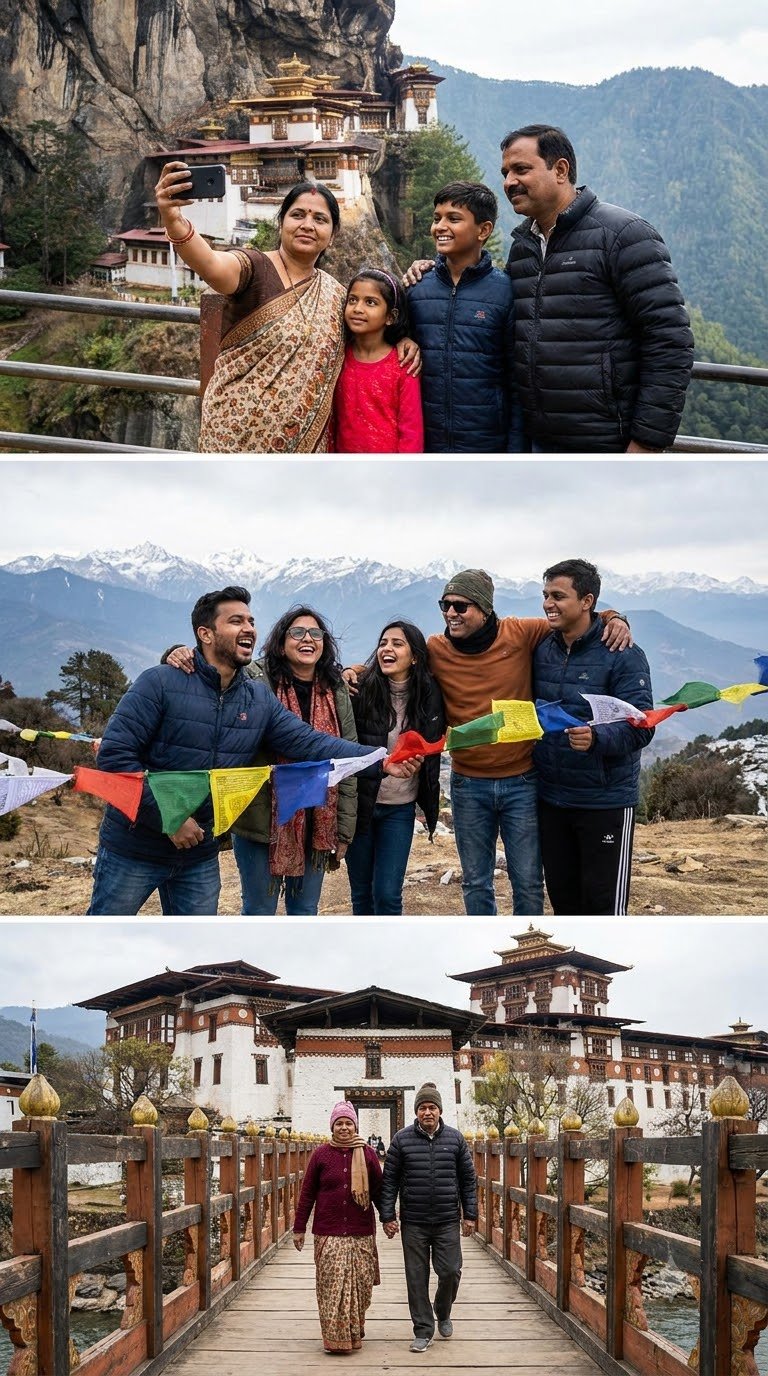
Ask ten travellers what a luxury trip to Bhutan means and you will get ten different answers. For some it is a heated room and a hot-stone bath after a long hike. For others it is a driver who never hurries and a guide who knows which courtyard is empty at four in the afternoon. A Bhutan 4 star luxury tour sits in the sensible middle: hotels in the four-star category, a private vehicle, a licensed guide, and an itinerary that leaves room to breathe.
This guide is for people who are still deciding. It explains what four-star actually means in Bhutan, how it compares with three-star and five-star stays, four itinerary lengths worth comparing, what the hotels are like valley by valley, and which months make the most of the trip. You will not find price tables here. Costs move with the season, the hotels and the size of your group, so a written quote with named hotels is far more useful than a number on a web page.
What Is a Bhutan 4 Star Luxury Tour?
Quick answer
A Bhutan 4 star luxury tour is a private, guided tour in which every night is spent in a four-star category hotel, you travel by private vehicle with a licensed guide, and the days are paced for comfort. Most travellers choose six to nine nights across Paro, Thimphu and Punakha, with Phobjikha as an optional fourth valley.
In plain terms, it is a fully private tour of Bhutan with four-star accommodation every night. The rest follows from how tourism works in the country: you travel with a licensed guide and a driver, your operator arranges the permits, and the itinerary is built around your group rather than a fixed departure date.
What the four-star label changes is mostly what happens when sightseeing ends. Rooms are larger and better finished than at entry-level hotels. Bathrooms are attached, hot water is dependable and rooms are heated for cold evenings. There is usually an in-house restaurant that can serve Bhutanese, Indian and continental dishes from one menu, and some properties add a bar, a massage room or a small spa.
What it does not mean is a resort bubble. Four-star hotels in Bhutan tend to be small and built in the local style, with carved wooden windows, painted eaves and sloping roofs, and they sit close to the places you came to see. That is a feature, not a limitation. You step out of the hotel and you are in a valley, not a lobby.
Bhutan 4 star luxury tour at a glance
- Tour style
- Private, guided, with four-star category stays every night
- Typical length
- 4 to 11 nights
- Usual route
- Paro, Thimphu and Punakha; Phobjikha and Haa Valley as extensions
- Transport
- Private vehicle with driver for the whole trip
- Guide
- Licensed English-speaking guide
- Meals
- Breakfast and dinner at the hotel; lunch usually on the road
- Entry for Indian nationals
- No visa. Entry Permit and Route Permit arranged by your operator
- Best months
- March to May and September to November
- Cost
- Quoted in writing once dates, hotels and group size are confirmed
Three-Star, Four-Star and Five-Star Stays in Bhutan
Star grades in Bhutan are a useful shorthand, but they are not the whole story. Here is how the three categories tend to differ. Treat it as a guide rather than a rule, because individual properties vary.
| Three-star | Four-star | Five-star & luxury lodges | |
|---|---|---|---|
| Overall feel | Clean, simple and friendly, with traditional touches | Polished boutique-hotel comfort, local architecture and attentive service | Resort-style or design-led properties, often in secluded settings |
| Rooms | Compact; heating and views vary | Roomier, attached bath, heating, and a window worth looking out of in many cases | Large rooms and suites, premium bedding and fittings |
| Dining | Set meals or a small buffet | In-house restaurant serving Bhutanese, Indian and continental dishes; a bar at many | Fine-dining restaurants and private dining options |
| Wellness | Seldom on site | A massage room or small spa at many properties | Full spas and wellness programmes |
| Location | In town, close to restaurants | Often central or with valley views, usually a short drive from the main sights | Frequently set apart, on hillsides or in private grounds |
| Where it fits | Short, simple trips | Most travellers who want comfort without isolation | Special occasions, long stays, and travellers who want the hotel itself to be the destination |
For most travellers, four-star is the sweet spot. You get a proper bed, a good dinner, heating and often a view, and you are not paying for seclusion you may not need when your days are spent out among the dzongs and valleys anyway.
Who a Bhutan 4 Star Luxury Tour Suits
The four-star level works across a wide range of travellers, which is part of why it is so popular.
Couples & honeymooners
Romance in Bhutan is mostly about scenery and quiet: a valley-view room, a hot-stone bath after a hike, an evening with nothing scheduled. Mention the occasion when you enquire so it can be passed on to the hotels.
Families & three generations
Connecting rooms are easier to find at four-star level, and the guide can set the day around the youngest and the oldest walker. For child-specific pacing and permit rules, see our Bhutan family tour packages.
Senior travellers
Later starts, shorter walks, a viewpoint instead of the full Tiger's Nest climb, and rooms on the ground floor or near a lift. Not every small hotel has a lift, so say so at booking.
Friends & first-timers
A private vehicle and a guide mean nobody has to plan or navigate. You only decide how much to see in a day and how long to linger over dinner.
Who might look elsewhere? If you want the hotel to be the destination, with private villas, in-house guides and total seclusion, a five-star or ultra-luxury lodge is a better match. And if your idea of Bhutan involves camping for days on a high-altitude trek, that is a different kind of trip altogether, with different logistics.
Bhutan 4 Star Luxury Tour Itineraries, Compared
Once you have settled on four-star stays, the real question is how many nights to spend and how to divide them between valleys. The four routes below are built around pacing, not around ticking off sights. Each can be reshaped once your operator knows who is travelling.

Quick Escape
Short & Smooth4 Nights / 5 Days · Paro · Thimphu
- A whole day set aside for the Tiger's Nest hike, with nothing squeezed in around it
- Rinpung Dzong and Kyichu Lhakhang in Paro, then the capital at an easy pace
- Buddha Dordenma, Tashichho Dzong and the textile museum in Thimphu
- Just two hotels, so very little packing and unpacking
Best for: short breaks, first-timers who want a taste of Bhutan, and couples with a long weekend plus a few leave days.
See the day-by-day plan

Signature Circuit
Most Balanced6 Nights / 7 Days · Paro · Thimphu · Punakha
- Dochula Pass and its 108 memorial chortens, with Himalayan views on clear mornings
- Punakha Dzong where two rivers meet, plus the long suspension bridge
- Chimi Lhakhang, reached on foot through rice fields
- The last night back in Paro, so departure day is never a scramble
Best for: most first-time luxury travellers, couples and mixed-age groups who want all three classic valleys without rushing between them.
See the day-by-day plan
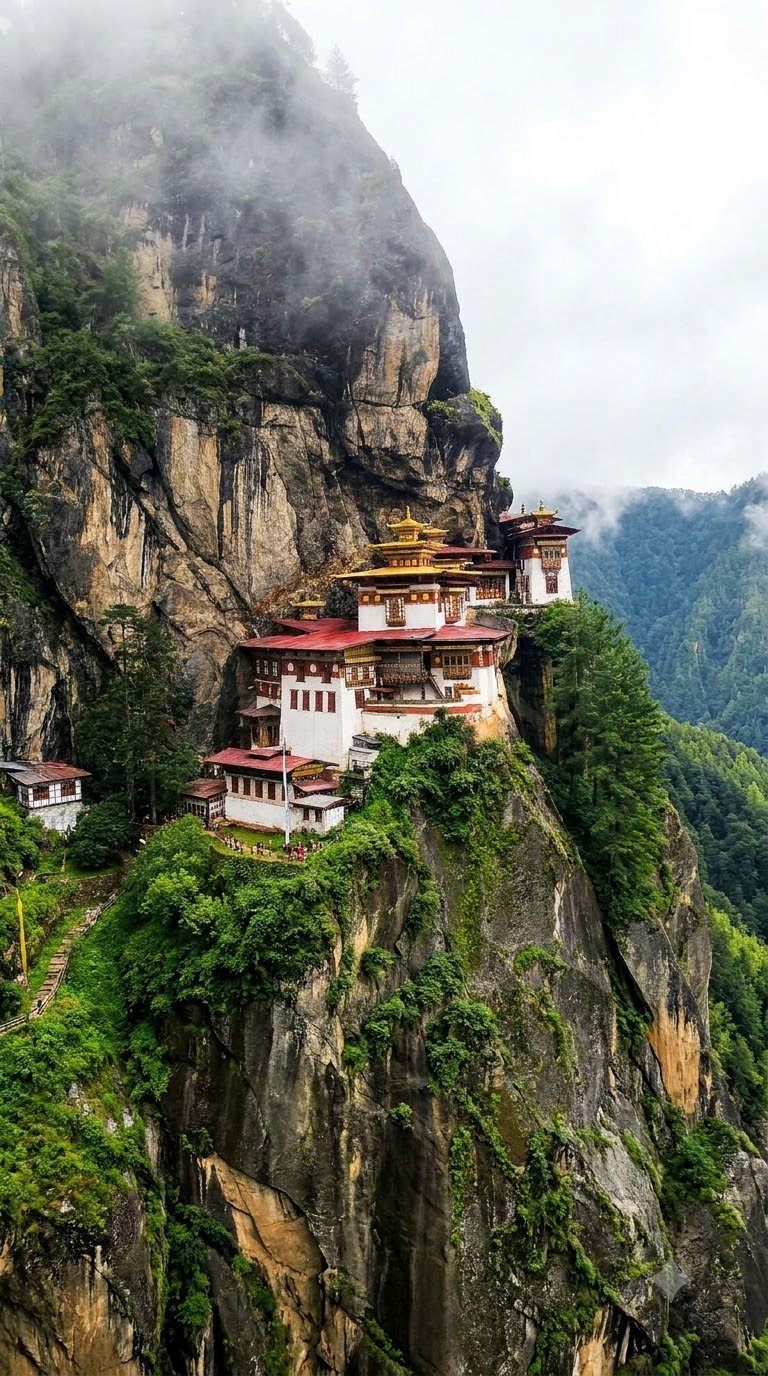
Valley Journey
More Scenic8 Nights / 9 Days · Paro · Thimphu · Punakha · Phobjikha
- Phobjikha's wide glacial valley and Gangtey Monastery
- An easy valley-floor nature trail, and black-necked cranes in the winter months
- Two nights in Punakha, so the dzong and the river get proper time
- A free afternoon in the middle of the trip for spa time, rafting or simply resting
Best for: nature-minded travellers, couples who want a quieter valley, and anyone who has already done the standard western circuit.
See the day-by-day plan

Grand Western Bhutan
Unhurried10 Nights / 11 Days · Paro · Thimphu · Punakha · Phobjikha · Haa Valley excursion
- Two nights in Phobjikha with one genuinely empty day
- A day excursion over Chele La into Haa Valley and its Black and White temples
- No heavy sightseeing scheduled after the long drive days
- Calm bookend nights in Paro at both ends of the trip
Best for: travellers who would rather see a little less, more slowly, and anyone who wants a longer holiday with plenty of breathing room.
See the day-by-day plan
Why does the last night in most routes fall in Paro? Because the airport is close and morning flights are common. Finishing the trip in Paro means departure day is a short drive, not a long one. Night splits can be swapped, for example one more night in Thimphu and one fewer in Punakha, and longer routes that include Bumthang can be built on request.
What Four-Star Hotels Are Like, Valley by Valley
Hotel names and exact room categories are confirmed in your written quote. What follows is what to expect in each place, so you know which questions to ask.
Paro
Four-star hotels sit beside the river or up on the valley sides. Some look straight onto fields and the dzong; others sit higher for sunset views. With the airport so close, Paro works well for both the first and last night.
Thimphu
The widest choice of hotels in the country. Central ones let you walk to cafés and the craft bazaar after dinner; hillside ones trade that for city views and quiet. Check heating, water pressure and the in-house restaurant.
Punakha
Noticeably warmer and greener, with rice terraces in season. Many four-star properties sit above or beside the river, some with gardens or a pool. In summer, ask what cooling the rooms have.
Phobjikha
A small valley with fewer rooms, so stays are usually lodges rather than large hotels. Here a strict star label matters less than heating and the view. Evenings are cold from autumn onwards, and cranes make winter bookings fill early.

Experiences and Dining That Make the Trip
A comfortable hotel is only half of a good Bhutan 4 star luxury tour. The other half is what you do between breakfast and dinner. These are the add-ons that tend to earn their place, and all of them can be arranged through your guide.
Hot-stone bath
River stones are heated in a fire and dropped into a wooden tub of herb-scented water. Farmhouses and some hotels offer it, and it feels best after the Tiger's Nest hike.
Archery
Bhutan's national sport. You can try a traditional bow with your guide, and you will quickly find out how far away the targets are, well over a hundred metres.
Farmhouse lunch
A home-cooked meal in a working farmhouse, often with red rice, vegetables from the garden and a lot of chilli and cheese.
Crafts and textiles
The textile museum and the School of Traditional Arts in Thimphu show how weaving, painting and carving are still taught and practised.
Dzongs at dusk
Tashichho Dzong in Thimphu and Punakha Dzong look their best in low light, and are usually calmer than at midday.
River rafting
Gentle rafting on the Mo Chhu or Pho Chhu near Punakha is possible in suitable months, if the group is keen.
How hotel dining works
Hotels at this level serve a mix of Bhutanese, Indian and continental dishes, often as a buffet at breakfast and a set or à la carte menu at dinner. If you want to try local food, ask for ema datshi, the chilli and cheese dish that is practically the national dish, along with red rice, momos and butter tea. Bhutanese food can be very spicy, so say so if you prefer it mild. Vegetarian meals are easy to arrange. Jain meals and other strict requirements work best with advance notice.
What a typical day feels like
- Morning. Breakfast at the hotel, then a start around nine. Your guide runs through the day and checks how everyone slept.
- Late morning. The main sight of the day, visited while energy and light are at their best.
- Midday. Lunch at a local restaurant, which is why lunch sits outside the usual meal plan.
- Afternoon. A second, lighter stop, or a drive with photo breaks. You are usually back at the hotel by mid to late afternoon.
- Evening. A massage, a hot-stone bath or just tea, then dinner at the hotel and an early night.
What's Included in a Bhutan 4 Star Luxury Tour Package
Bhutan's tourism rules fix a basic structure for every visitor, so the core inclusions look similar from one operator to the next. What is worth confirming on a four-star booking is the hotel names, the room type, the meal plan and what counts as an optional extra.
Inclusions
- Stays in four-star category hotels on a twin or double sharing basis
- Licensed English-speaking guide for the whole journey
- Private vehicle with driver, sized to your group
- Airport or border pick-up and drop-off
- Sustainable Development Fee, handled by your operator
- Entry Permit and Route Permits for every traveller
- MAP meal plan (breakfast and dinner)
- Complimentary SIM card and mineral water per room
Exclusions
- All entrance and monument fees
- Lunch
- Airfare or train tickets
- Personal expenses
- Optional extras such as rafting, spa treatments and hot-stone baths, unless written into your quote
- Costs arising from unforeseen events such as landslides or flight delays
Getting to Bhutan for a Four-Star Tour
Every route starts at one of two entry points: Paro's airport, or a land border. Once you arrive, your guide and driver take over.
Two ways in
Both connect into the same tour on arrival
The quickest way in, and the best use of limited days. The approach between the mountains is dramatic enough that it is worth asking for a window seat. Your guide meets you at arrivals.
A practical choice if you are already travelling through North Bengal or Assam. It adds a long first day on winding roads, so it suits shorter itineraries less well.
Whichever way you arrive, keep the first evening free. Paro sits above 2,000 metres, and a calm few hours before the Tiger's Nest hike makes a real difference to how the rest of the trip feels.
Permits and Documents for a Bhutan 4 Star Luxury Tour
Indian nationals do not need a visa for Bhutan, but there is still some paperwork. The detail that catches people out is that the standard Entry Permit only covers Paro and Thimphu, so anywhere beyond needs a second permit. Your operator handles both. Visitors of other nationalities need a visa, which is also processed through a licensed operator; the Tourism Council of Bhutan publishes the current rules.
- Valid photo ID for every adult: A passport with six months of validity, or a voter ID card, for adult Indian nationals.
- Passport or birth certificate for any child: Carry the original, not a photocopy.
- Entry Permit: Free, applied for online, and arranged by your operator as one group booking once your Bhutan 4 star luxury tour dates are confirmed.
- Route Permit: Also free, and needed for Punakha, Phobjikha, Haa and most places beyond Paro and Thimphu. Your operator applies for it with the Entry Permit.
- Passport-size photographs: A couple of spares per traveller, in case a physical form is needed at a border crossing.
- Travel insurance: Not compulsory for Indian nationals but sensible, especially for senior travellers.
Before you leave home, confirm that the Route Permit has been arranged for every traveller. It is the one item people forget to ask about, and the easiest to fix in advance.
Best Time for a Bhutan 4 Star Luxury Tour
The right month depends on what you want from the trip: clear mountain views, spring colour, a festival, or simply fewer people. The chart below rates each month for overall comfort on a four-star itinerary, weighing weather, open roads and visibility.
Comfort by month
A relative guide for a four-star itinerary through the western valleys
Autumn (September to November) is the classic season. October has the clearest mountain views and the most festivals, but it is also the busiest, so book hotels early. In Phobjikha, black-necked cranes arrive from the Tibetan plateau around late October or November, and the Black-Necked Crane Festival is held at Gangtey Monastery each year on 11 November.
Spring (March to May) brings rhododendrons, mild days and the Paro festival season, which follows the lunar calendar and shifts from year to year. April is the most comfortable month overall.
Winter (December to February) is cold but dry, with crisp skies and few other visitors. This is where the four-star level really earns its keep: rooms are generally heated, so evenings are cosy rather than an endurance test.
Monsoon (June to August) turns the valleys intensely green and the crowds thin out. Rain can delay roads, so build in a spare day and travel with flexible expectations.
How to Plan a Bhutan 4 Star Luxury Tour, Step by Step
- Choose the month firstHotels and festival dates drive availability, so the month decides more than any other choice. October and spring fill up earliest.
- Decide how many nights you can giveFour nights covers Paro and Thimphu. Six to seven adds Punakha. Eight or more lets you reach Phobjikha without rushing.
- Tell your operator who is travellingAges, mobility, food needs, and any occasion such as a honeymoon or anniversary. These shape the pace and the room requests.
- Ask for named hotels, night by nightA star label alone does not tell you much. Ask for the hotel name and room type for every night.
- Read the inclusions line by lineCheck lunch, entrance fees, optional activities and what happens if a road closes or a flight is delayed.
- Sort permits and flights after dates are confirmedYour operator handles the permits. Book flights into Paro once the dates and hotels are locked in.
Packing and temple etiquette
- Layers rather than one heavy coat; mornings and evenings are cold even in spring and autumn
- Comfortable walking shoes with grip for the Tiger's Nest trail
- Modest clothing for dzongs and temples: covered shoulders and knees, and hats off inside
- A rain jacket for the monsoon months, and sun protection year-round
- Remove your shoes before entering temples, walk clockwise around chortens, and do not photograph inside temples
- Any regular medication, plus something for motion sickness on the winding roads
Frequently Asked Questions: Bhutan 4 Star Luxury Tour
What is a Bhutan 4 star luxury tour?
A Bhutan 4 star luxury tour is a private, guided journey where every night is spent in a four-star category hotel and the days are paced for comfort. You travel with a licensed guide and a private vehicle, your operator handles the permits, and the route usually covers Paro, Thimphu and Punakha, with Phobjikha as an optional extra valley.
Is there an official 4 star rating for hotels in Bhutan?
Yes. Bhutan's tourism authority classifies tourist hotels into star categories, and four-star is a recognised grade. The grade is a starting point rather than a guarantee of identical quality, because two four-star hotels can differ in view, room size and services. Ask for the exact hotel name for each night before you confirm.
How many days are enough for a Bhutan 4 star luxury tour?
Four nights covering Paro and Thimphu is the shortest trip that still feels worthwhile. Six to seven nights adds Punakha and is the most popular choice. Eight to ten nights lets you include Phobjikha and, if you like, a day trip to Haa Valley without rushing.
What is the difference between a 4 star and a 5 star luxury tour in Bhutan?
The itinerary can be identical; the difference is mostly the hotel. Five-star and luxury lodges tend to offer larger suites, fuller spas and more secluded settings, while four-star hotels offer comfortable rooms, good dining and a convenient location. Many travellers find four-star gives them the comfort they want while keeping the focus on Bhutan itself.
Is a Bhutan 4 star luxury tour suitable for a honeymoon?
Yes. Couples usually ask for valley-view rooms, a hot-stone bath in Punakha or Paro, and an itinerary with a few unscheduled afternoons. A six or seven night circuit through Paro, Thimphu and Punakha is a popular honeymoon length. Mention the occasion when you enquire so the operator can pass it on to the hotels.
Do Indian travellers need a visa for a Bhutan 4 star luxury tour?
No. Indian nationals do not need a visa for Bhutan. They need an Entry Permit, and a Route Permit for places beyond Paro and Thimphu, both of which your operator arranges once dates are confirmed. A passport or a voter ID card is accepted as photo ID for adults.
What is included in a Bhutan 4 star luxury tour package?
Typically: four-star hotel stays, a licensed guide, a private vehicle with driver, airport or border transfers, permits, the Sustainable Development Fee, and breakfast and dinner. Entrance fees, lunch, airfare and personal expenses are normally extra. Your written quote lists exactly what is covered.
Which months are best for a Bhutan 4 star luxury tour?
March to May and September to November give the best mix of clear skies and mild weather, with October the busiest month. Winter is cold but clear and quiet, and four-star hotels generally have room heating. The monsoon months are greener and quieter but bring a higher chance of road delays.
Is the tour suitable for senior citizens?
Yes, with the right pacing. Later starts, shorter walks, a viewpoint stop instead of the full Tiger's Nest climb, and rooms on the ground floor or near a lift can all be arranged. Anyone with a heart or lung condition should check with a doctor first, because many stops sit above 2,000 metres.
Can vegetarian or Jain meals be arranged?
Vegetarian food is easy to find, since Bhutanese cooking includes many vegetable and cheese dishes. Jain meals and other strict requirements are possible with advance notice, so mention them when you book.
How is the cost of a Bhutan 4 star luxury tour decided?
Season, hotel names, number of nights, group size and the vehicle needed all affect it. Because these change with dates, request a written quote that names the hotels and lists the inclusions, rather than relying on a generic figure.
Ready to Plan Your Bhutan 4 Star Luxury Tour?
Tell us your travel dates, how many people are coming and how many nights you have. A travel designer will suggest a route, name the hotels night by night, and send a written quote with a clear list of inclusions. Travelling with children? Have a look at our Bhutan family tour packages too.