

A Bhutan 5 star luxury tour pairs top-tier lodges and hotels in Paro, Thimphu, Punakha, Phobjikha and, on longer trips, Bumthang with a private guide, a dedicated vehicle and a pace you set. Most travellers spend five to ten nights. March to May and September to November bring the best weather, and the best rooms need to be reserved well ahead. Costs depend on the lodges, the season and the group, so a written quote is the only fair way to compare.
Search for a Bhutan 5 star luxury tour and you will meet two very different ideas of the word. One is a hotel-style trip with a star rating attached. The other, which is much closer to how Bhutan actually works, is a handful of unhurried days spent in small lodges, travelling with a private guide and a dedicated driver, with enough slack in each day that nothing feels rushed.
This guide is about the second kind. It covers what high-end travel looks like on the ground, how the valleys differ as places to stay, four sample itineraries of different lengths, what a proper luxury proposal should list, how permits work and when the weather and festivals are at their best. We have left price tables out on purpose. What a trip costs depends on the lodges, the month and the size of the group, and a written quote is the only honest way to compare.
What a Bhutan 5 Star Luxury Tour Really Means
Bhutan does grade its hotels by stars, and a few properties sit at the top of that scale. But the star count says surprisingly little about why people choose luxury here. The country's best stays are mostly small: lodges with a few dozen rooms at most, some with fewer than ten, built from rammed earth, timber and stone in the local style and set above a river, a rice terrace or a pine forest rather than beside a main road.
In practice, a luxury tour of Bhutan rests on three things.
The stay
Design that belongs to its valley, a high ratio of staff to guests, and a setting you would happily spend a whole afternoon in.
The access
A private guide and vehicle that run on your timetable, so you can reach the Tiger's Nest trail early or linger in a courtyard once the tour buses have gone.
The pace
Fewer hotel changes and longer stays in each valley, with rest built into the plan instead of a new bed every night.
A fair warning about expectations. Luxury in Bhutan is quiet. There are no casinos, malls or beach clubs, and Wi-Fi can be slow away from the main towns. If that sounds like a relief rather than a drawback, you are the right traveller.
Why Bhutan Suits High-End Travel So Well
Bhutan limits how many visitors arrive and charges each of them a daily Sustainable Development Fee. The result is a country that has largely avoided crowding. Popular sites are busy by Bhutanese standards, but nothing like the queues found at comparable cultural destinations elsewhere in Asia.
The landscape does the rest. The constitution commits the country to keeping at least sixty per cent of its land under forest, and you see it from the car window: steep valleys of blue pine and oak, prayer flags on every ridge, villages that still farm the same terraces their grandparents did. Add monasteries that are working religious places rather than museums, and a food culture built on red rice, chilli and local cheese, and the setting becomes the luxury.
There is a quieter argument too. The government directs the daily fee towards health, education and conservation, so most visitors feel their money is going somewhere useful. Lodges that employ local staff and buy from nearby farms extend that effect, and it is worth asking how each property you are considering does so.
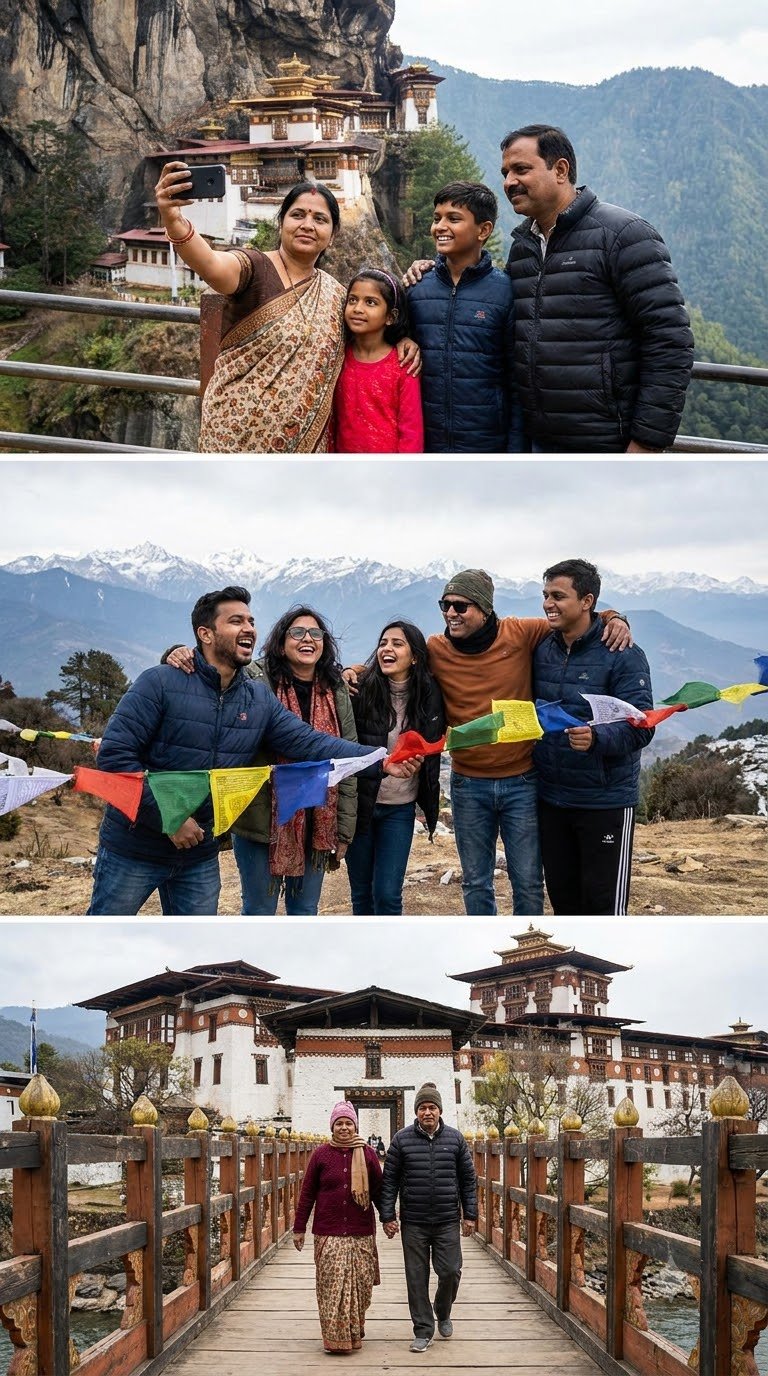
Where You Will Stay: Bhutan's Luxury Valleys Compared
Most luxury itineraries move through some combination of five valleys. Each has a different character, and the right lodge in the right valley matters more than any star rating.
Paro
about 2,200 mThe gateway valley. Most itineraries begin and end here. Lodges sit on forested slopes and orchard terraces above the river, minutes from the airport and close to the Tiger's Nest trailhead.
Kyichu Lhakhang, one of the oldest temples in the country, and an easy first evening.
Thimphu
about 2,300 mThe capital. The widest choice of city-style luxury hotels, plus a few hillside lodges just above town. It is the best base for museums, craft shops and restaurants.
One or two nights is usually enough to see the best of it.
Punakha
about 1,200 mThe warm valley. Lower, greener and noticeably warmer, with terraced rice fields beside a wide river. This is where lodge spas and hot stone baths earn their keep.
Two nights is the sweet spot. It is also the best winter base.
Phobjikha
about 3,000 mThe glacial valley. A broad, open valley of dwarf bamboo and pine, known as the winter home of black-necked cranes. Lodges here are few, remote and cosy, with fires lit in the evening.
Cool at any time of year, so bring warm layers even in spring.
Bumthang
about 2,600 mThe temple valley. Central Bhutan's cluster of old shrines, quiet villages and apple and buckwheat country. Fewer visitors make it this far, which is much of its appeal.
Reaching it takes a long day by road or a short domestic flight.
Which names come up most? Properties generally considered Bhutan's top tier include the Amankora lodges, COMO Uma in Paro and Punakha, the Six Senses lodges, Taj Tashi in Thimphu, Zhiwa Ling in Paro and Gangtey Lodge in Phobjikha. Availability changes with the season, and the final line-up for your dates is confirmed in your written proposal.
Four Bhutan 5 Star Luxury Tour Itineraries Compared
The four plans below are starting points rather than fixed products. Each can be lengthened, shortened or re-ordered once your dates and preferred lodges are known. Every one ends with a night in Paro, so the departure flight never depends on a long morning drive.

Western Bhutan Luxury Escape
Compact5 Nights / 6 Days · Paro · Thimphu · Punakha · Paro
- Tiger's Nest hiked early, with a tea stop and a guide who sets the pace
- Two nights in Punakha instead of a rushed overnight
- Thimphu's main sights in a single, unhurried morning
- A closing night in Paro, so the flight home never depends on a long drive
Best for: first-time visitors who want top-tier stays but only have a working week to spare. It is the busiest of the four plans, which is why the longer options add nights.
See the day-by-day plan
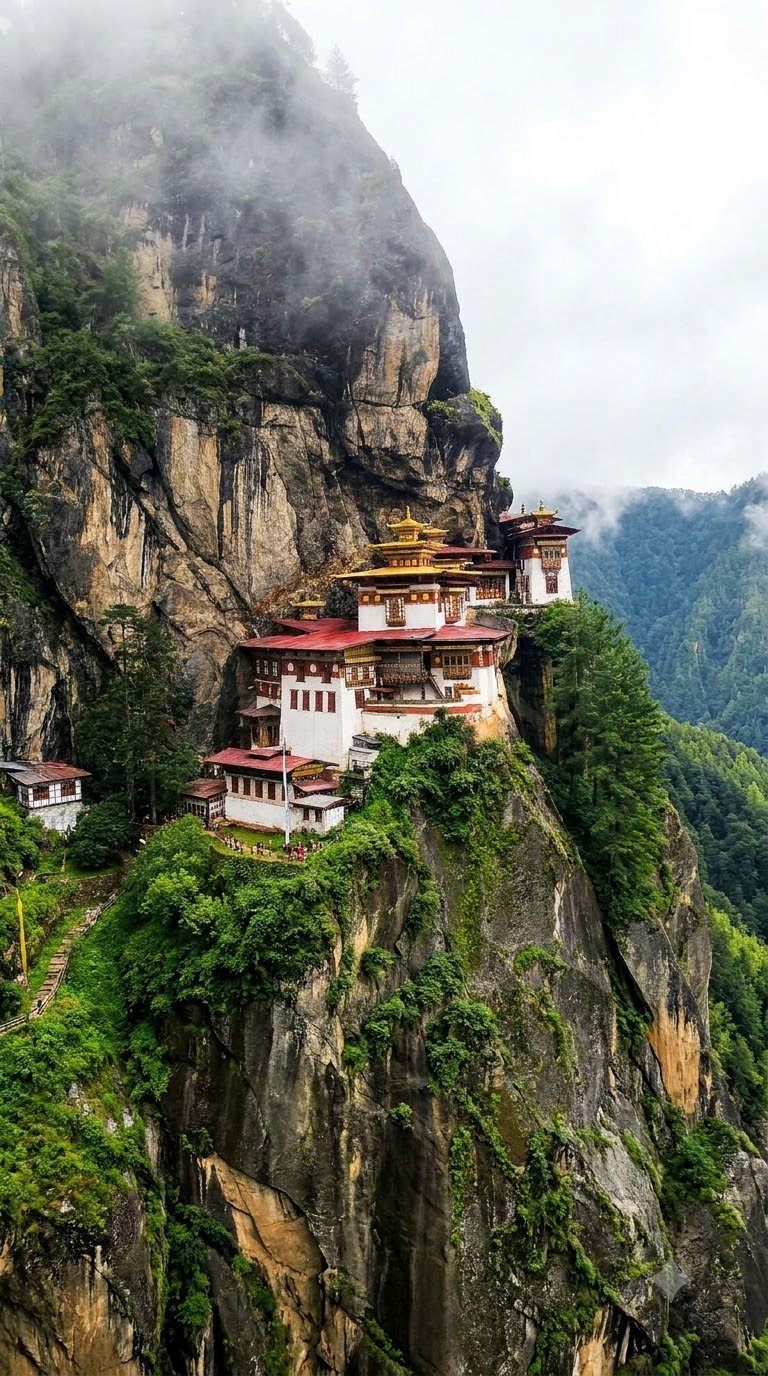
Signature Luxury Circuit
Signature7 Nights / 8 Days · Paro · Thimphu · Punakha · Phobjikha · Paro
- Two nights in Paro to settle in before the Tiger's Nest hike
- Dochula Pass and Punakha Dzong at a gentle, late-afternoon pace
- Two full nights in Phobjikha, with a day that has no schedule at all
- Gangtey Monastery and the valley-floor nature trail
Best for: couples and photographers who want the classic route done properly, with a remote valley as the centrepiece.
See the day-by-day plan

Slow Travel & Wellness Retreat
Restorative8 Nights / 9 Days · Paro · Thimphu · Punakha · Paro
- Three nights in Punakha, the warmest and most relaxed valley
- Spa, hot stone bath and yoga woven into the plan
- A guided meditation session or quiet temple visit in Thimphu, where it can be arranged
- No day with more than one main activity
Best for: travellers who want to come home rested rather than busy, including groups where energy levels differ.
See the day-by-day plan

Grand Heritage Journey
Grand10 Nights / 11 Days · Paro · Thimphu · Punakha · Phobjikha · Bumthang · Paro
- Everything on the western route, plus Bumthang's temple valley
- Three nights in Bumthang, enough to see it without hurrying
- Trongsa Dzong on the road east
- A domestic flight back to Paro where available, saving a full day on the road
Best for: repeat visitors, culture-minded travellers and anyone marking a milestone who wants the fullest version of the trip.
See the day-by-day plan
Mountain flying and road conditions can shift any plan. Itineraries with a spare night survive that far better than tightly packed ones, which is why the longer options earn their extra days.
Experiences That Make a Luxury Tour Worth It
The best moments on a luxury trip to Bhutan are rarely extravagant. They are well timed, well explained and unhurried. These are the ones travellers mention most often.
Tiger's Nest before the crowds
Starting at first light keeps you ahead of the tour groups, and your guide sets the pace and the tea stop. If a shorter day suits you better, the viewpoint is a rewarding place to stop.
Dzongs, explained properly
Punakha Dzong and Tashichho Dzong mean far more when someone explains the murals, the monastic routine and the festivals they host.
A traditional hot stone bath
Known locally as dotsho: river stones are heated on a fire and dropped into a wooden tub of herb-scented water. Several lodges and farmhouses offer it.
Lunch in a farmhouse
A home-cooked meal of red rice, vegetables and chilli-cheese, usually served in the family's upstairs room. It is often the part of the trip people remember best.
Archery, the national sport
Try a few shots yourself, then watch the experts at long range. Matches come with teasing, singing and a great deal of good humour.
Cranes in Phobjikha
Black-necked cranes spend the colder months in the valley, and a guided walk near their roosting area is a highlight of the season.
Textiles and craft
The National Textile Museum in Thimphu explains the weaving traditions, and a visit to a working weaver or painter shows how they continue.
Stillness on purpose
Lodge spas, morning yoga or a guided meditation session give the trip a restorative side, especially in Punakha and Phobjikha.
Luxury vs Standard: What Changes on the Ground
The sights are largely the same, since a dzong is a dzong whichever hotel you return to afterwards. What changes is the quality of the time in between, and how much of it you control.
| What you compare | Standard Bhutan tour | Bhutan 5 Star Luxury Tour |
|---|---|---|
| Accommodation | Comfortable mid-range hotels, often in town centres | Top-tier lodges and hotels chosen for setting, design and service |
| Scale | Mid-sized hotels with dozens of rooms | Often small lodges with a limited number of suites |
| Vehicle | Standard tour car or minibus | A dedicated premium vehicle with the same driver throughout |
| Guide | Licensed guide, sometimes shared with other travellers | Private licensed guide briefed on your interests and energy |
| Pace | A new hotel every night or two | Fewer moves, longer stays and rest time built in |
| Meals | Mostly hotel set menus | Lodge dining, private dinners and farmhouse meals, with dietary needs planned ahead |
| Flexibility | A fixed daily plan | A plan that bends around weather, energy and interests |
| Lead time | Often bookable at short notice | Limited rooms, so spring and autumn need early booking |
What a Luxury Bhutan Tour Package Should Include
Inclusions differ from one proposal to the next, so treat this as a checklist rather than a promise. The aim is that nothing surprising appears after you have paid.
Usually included
- Nights at the agreed top-tier lodges or hotels, with breakfast and whichever meal plan each property offers
- A private licensed guide for the whole trip
- A dedicated vehicle and driver, with fuel, parking and the driver's allowance
- Airport or border meet-and-greet and every transfer
- Entry Permit and Route Permits for every traveller
- The Sustainable Development Fee, shown as its own line
- Bottled water in the vehicle and welcome touches at the lodges
Worth confirming in writing
- International and domestic airfare, including any Bumthang flight
- Monument and museum entrance fees
- Spa treatments, premium drinks and laundry
- Lunches or other meals outside the lodge meal plan
- Tips for your guide and driver
- Travel and medical insurance
- Extra costs caused by weather, landslides or flight disruption
Permits, Visas and Paperwork for a Luxury Trip
Paperwork is straightforward, but it depends on your passport. Rules and fees are set by the Bhutanese government and revised from time to time, so your operator should confirm the current position before you pay for anything.
Indian nationals
- No visa is needed, but an Entry Permit is required
- A valid passport or photo voter ID card is accepted; Aadhaar and driving licences are not
- A Route Permit is needed for destinations beyond Paro and Thimphu
- Both permits are free, and your operator can apply for the whole group
- The Sustainable Development Fee applies for each night of your stay
Other nationalities
- A visa is required and is applied for through the official Bhutanese system
- Your passport should be valid for at least six months beyond your travel dates
- The Sustainable Development Fee applies per person, per night, at the rate set for your nationality
- Route permissions for areas beyond Paro and Thimphu are arranged by your operator
- Children's concessions apply by age and are handled in the quote
For any traveller, it is sensible to carry copies of your bookings, a few passport-size photographs and a note of any regular medication. Travel insurance that includes medical evacuation is strongly worth having, given the altitude and the distances between valleys.
Best Time for a Bhutan 5 Star Luxury Tour
Bhutan has four distinct seasons. The right one depends on whether you value clear mountain views, festivals, warm weather or quiet.
Comfort and views by month
An editorial guide that weighs weather, mountain visibility and festivals. The tallest bars are also the months when top lodges sell out first.
- January: Good. Cold, crisp and quiet; Punakha stays mild.
- February: Good. Clear skies and few visitors.
- March: Excellent. Rhododendrons begin and festival season starts.
- April: Peak. Mild days and spring festivals.
- May: Good. Warm and green, before the rains.
- June: Quiet or wet. Monsoon begins; fewer visitors.
- July: Quiet or wet. Heaviest rain of the year.
- August: Quiet or wet. Wet and very green.
- September: Good. Skies clearing; autumn festivals begin.
- October: Peak. Clearest mountain views and festival season.
- November: Excellent. Crisp, clear and calm; cranes arrive.
- December: Good. Cold mornings and bright days.
Spring
Rhododendrons and magnolias flower on the higher slopes, days are mild, and the Paro Tshechu usually falls in March or April. It is also when the best lodges sell out first.
Summer
The monsoon brings green valleys, dramatic cloud and far fewer visitors. Rain mostly comes in the afternoon or overnight, but landslides can slow the roads, so keep the schedule loose.
Autumn
The clearest skies of the year and the best chance of seeing the high Himalaya. Festivals are frequent, including the Thimphu Tshechu and the Jambay Lhakhang Drup in Bumthang, and demand is at its highest.
Winter
Cold, bright mornings and the least crowded sites. Punakha stays pleasantly warm, Phobjikha has its cranes, and passes can occasionally close after snow. A good fit for travellers who value space over spectacle.
Whatever the season, the rule is the same: the best lodges have few rooms, so spring and autumn dates are worth locking in as early as you can. Festival dates follow the lunar calendar and shift from year to year, so confirm them before you fix your flights.
Getting to Bhutan for a Luxury Trip
Paro is the only international airport. Drukair and Bhutan Airlines fly into it from Delhi, Kolkata, Bagdogra, Guwahati, Kathmandu, Bangkok and a few other cities. Timetables change with the season, so check current schedules when you book.
The approach into Paro is one of the most demanding in commercial aviation, flown only by specially trained pilots and only in daylight. Weather can cause delays, so avoid tight onward connections on either side of your trip, and keep the first and last days light.
Entering overland through Phuentsholing, Gelephu or Samdrup Jongkhar is possible and suits travellers already touring North Bengal or Assam, but most luxury travellers fly because it saves hours on the road. On longer itineraries, a domestic flight to or from Bumthang can save a day of driving, subject to the schedule.
Who a Bhutan 5 Star Luxury Tour Suits
Honeymooners and anniversary couples
Quiet lodges, private dinners and a pace that leaves room for each other.
Multi-generational families
A private vehicle with room for everyone and a plan that flexes around different energy levels. Our guide to Bhutan family tour packages covers age-by-age pacing.
Wellness and slow-travel seekers
Spa days, yoga, meditation and long stays in one valley rather than a new bed every night.
Culture and photography enthusiasts
Early starts at the main sites, time to linger, and a guide who knows where the light falls.
Milestone celebrations
Small private groups marking a birthday, anniversary or retirement with something more considered than a hotel package.
Who might prefer something else? If you want nightlife, shopping, beach days or a packed sightseeing list that covers as much ground as possible, Bhutan's version of luxury may feel too quiet. Travellers on tighter budgets can still have an excellent trip in comfortable hotels, which is a different and perfectly good kind of Bhutan journey.
How to Plan It Well: Tips From the Ground
- Secure rooms and flights together. Top lodges have few rooms and Paro's flights are limited, so a gap of a few weeks between the two can cost you your dates.
- Choose fewer, longer stays. Two or three nights in a valley feels like a holiday. One night feels like a transfer.
- Ask for the room, not just the lodge. Category and view vary a great deal within one property, especially where valley-facing suites are limited.
- Keep one buffer day. Mountain weather can delay flights and close passes. A spare day absorbs that without wrecking the plan.
- Pack layers. A warm morning in Punakha can become a cold evening in Phobjikha. Bring a windproof jacket, sturdy walking shoes and sun protection, since the sun is strong at altitude.
- Go easy on the first evening. Paro sits at about 2,200 m. Drink plenty of water, keep dinner light and save the big hike for the next morning.
- Plan for patchy connectivity. Signal and Wi-Fi are dependable in Paro and Thimphu and less so in remote lodges. A local SIM helps, and a lodge with no signal can be part of the appeal.
- Share dietary needs before you travel. Lodges handle vegetarian, vegan and allergy requests well when they have notice. Local dishes can be fiery, so ask for milder versions.
- Dress and behave respectfully at temples. Cover shoulders and knees, remove hats and shoes where asked, and check with your guide before photographing inside shrines.
Key takeaways
- A Bhutan 5 star luxury tour is defined by setting, access and pace more than by the star label.
- Five to ten nights across Paro, Thimphu, Punakha, Phobjikha and, on longer trips, Bumthang cover what most travellers want.
- March to May and September to November bring the best weather and festivals, and the best lodges sell out first.
- Indian nationals need an Entry Permit rather than a visa; most other nationalities need a visa. Everyone pays the Sustainable Development Fee.
- Ask for a written, itemised quote that names the lodges, vehicle and guide, and lists what is excluded.
Bhutan Travel Terms, Explained
A few words come up constantly on a trip. Knowing them in advance makes itineraries and guides easier to follow.
- Dzong
- A fortress-monastery that houses both the local monastic body and the district administration. Punakha Dzong and Tashichho Dzong are the best known.
- Lhakhang
- A temple or shrine building. Many Bhutanese temples are small, very old and still in daily use.
- Tshechu
- An annual religious festival, usually lasting several days, with masked dances and blessings. Dates follow the lunar calendar, so they move from year to year.
- Chorten
- A Buddhist stupa that holds relics and blessings. You will pass them at mountain passes, bridges and village entrances.
- Dotsho
- The traditional hot stone bath: river stones are heated and dropped into a wooden tub of herb-infused water.
- Ngultrum
- Bhutan's currency, pegged to the Indian rupee. Rupees are widely accepted in towns.
- Sustainable Development Fee
- A per-person, per-night levy paid by visitors and set by the government, which revises it from time to time. Your operator lists it as a separate line in your quote.
- Route Permit
- A free permit needed to travel beyond Paro and Thimphu. It is arranged for the whole group before you travel.
Frequently Asked Questions: Bhutan 5 Star Luxury Tour
Are there really 5 star hotels in Bhutan?
Yes. Bhutan classifies hotels by star category, and several properties sit at the top of that scale. The most memorable luxury stays, though, are often small lodges valued for their setting and service rather than their rating, so it helps to compare both.
How many days do I need for a Bhutan 5 star luxury tour?
Five nights covers Paro, Thimphu and Punakha at a reasonable pace. Seven or eight nights add Phobjikha or a slower rhythm, and ten nights or more make room for Bumthang. Fewer than five nights tends to feel rushed once travel days are counted.
How much does a Bhutan luxury tour cost?
It varies too much for one number to be useful. The cost depends on the lodges you choose, the month, the length of the trip, the size of the group and the government's per-night fee, which differs by nationality. The reliable way to compare is a written, itemised quote.
Do I need a visa for Bhutan?
Indian nationals do not need a visa. They travel on an Entry Permit using a valid passport or photo voter ID, plus a Route Permit for areas beyond Paro and Thimphu. Most other nationalities need a visa, which is applied for through the official Bhutanese system. Your operator can handle both.
Is a private guide required?
Most visitors still travel with a licensed guide, and on a luxury tour a private guide and vehicle are standard. It is less about a rule than about getting the best out of each day: someone who sets the timing, explains what you see and takes care of logistics.
How early should I book for spring or autumn?
As early as you can. Top lodges have few rooms, and the peak months of April and October fill first. Booking several months ahead gives you the widest choice of lodges and room categories.
Can I combine a luxury tour with trekking?
Yes. Many travellers add day hikes, and some add a short supported trek at the start or end. Tell your operator how much walking you want so the pace and rest days can be planned around it.
Is a luxury tour suitable for children and older travellers?
Yes, and the private vehicle and flexible timing help. Itineraries can be softened with later starts and shorter walks. For age-by-age pacing, see our guide to Bhutan family tour packages.
Will altitude be a problem?
Paro and Thimphu sit at about 2,200 to 2,300 m, and the passes on the main roads reach roughly 3,100 to 3,400 m. Most healthy travellers adjust well with a quiet first evening and plenty of water. Anyone with a heart or lung condition should speak to a doctor before booking.
Ready to Plan Your Bhutan 5 Star Luxury Tour?
Share your travel dates, the number of travellers and the pace you have in mind, and a travel designer will build an itinerary around the right lodges, with a clear, itemised written quote and no deposit needed to get started.