
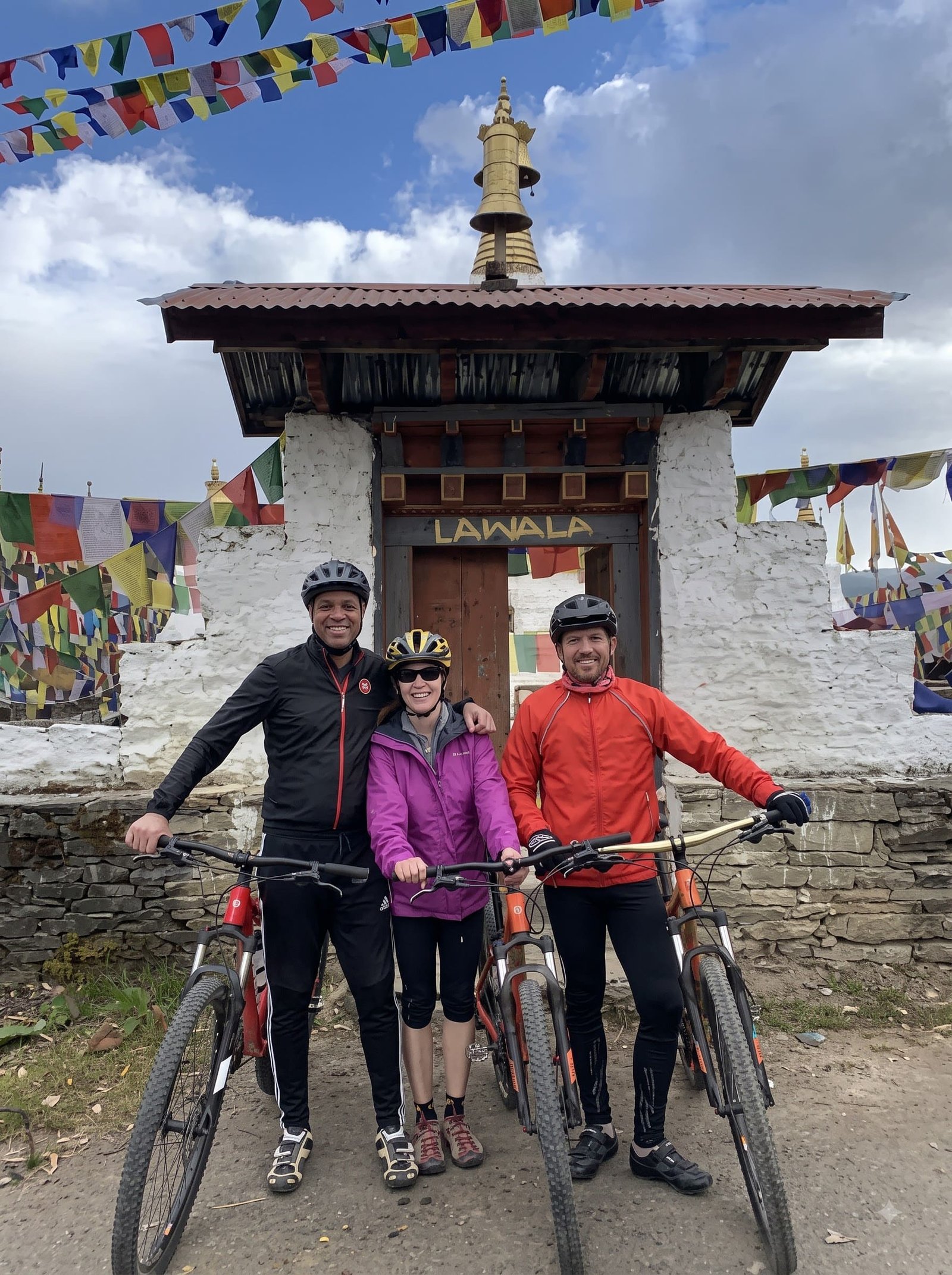
Most international trips force families to choose — beaches for the little ones, trekking for the teens, benches for the grandparents. A family holiday in Bhutan refuses that trade. The western valleys sit close together, the culture is hands-on rather than roped off, and streets are calm enough that children can actually walk them. The real work of planning is deciding how slowly to move: the difference between a trip everyone remembers and one everyone recovers from is almost always pacing. This page lays out how we pace family itineraries, what the altitude means for different ages, which stops keep children happy between fortresses, and what a family package should include before you pay anything.
Why Bhutan Suits Families So Well
Families arrive expecting to compromise and leave surprised that they didn't. The country's scale works in your favour — everything worth seeing in the west sits within short drives of everything else. Here is what makes the difference on the ground.
Distances stay short
In the western circuit, drives run a couple of hours or less, so nobody spends a day strapped into a seat. A two-hour drive with waterfall stops feels like part of the outing, not a chore.
Streets feel safe and calm
Traffic is light, drivers are patient, and towns are small enough to walk with children in tow. Parents used to guarding kids in crowded hill stations notice the change within an hour.
Guides are wonderful with children
Bhutanese guides genuinely enjoy kids — they turn fortress walls into stories and festivals into games. By day two, most children are dragging the guide to the next stop.
Culture is hands-on
Children can spin prayer wheels, watch archers shout across the field and count chortens — nothing is behind glass. Museum fatigue rarely gets a chance to start.
Keep the first day deliberately empty. Arrival day is for settling in, not sightseeing — the flight, the altitude and the excitement all land at once. A slow afternoon around the hotel lawn, an early dinner and a full night's sleep will buy you two good days afterwards. Families who rush day one usually pay for it on day two.
Altitude, Health and Comfort for Every Age
The western valleys — Paro, Thimphu and Punakha — sit around 2,300 metres, with Punakha lower at around 1,300 metres. That is meaningful but gentle: most people adjust with an easy first day, steady water and early nights. The trick is not to spend day one sprinting between viewpoints. Keep the arrival afternoon to a garden or a courtyard, and let everyone's breathing settle before the hikes begin.
Pacing through the days matters more than the height itself. Two stops a day is the honest maximum for a family with young children or elderly parents — one in the morning, one after lunch, with a proper break between. Children rarely complain about altitude; they simply run out of charge, so watch energy rather than words, and swap in a hotel-lawn afternoon the moment eyes go dull.
Carry your usual medicines from home, and ask your family doctor before travelling with infants or elderly parents with existing conditions — that is standard, sensible advice for any hill destination. Build in the comforts Bhutan does well: hot stone baths for tired legs, early dinners, and hotels with outdoor space where children can burn off energy while adults drink butter tea in the sun.
Tell your operator about grandparents at booking, not on arrival. Vehicle choice, hotel floors and daily distances all change when elders travel — a car with easier entry, rooms near the lift or ground floor, and shorter walking loops. Mentioning ages upfront costs nothing and quietly upgrades the whole trip.
Matching the Itinerary to Your Children's Ages
The right trip length follows the youngest traveller's stamina, not the oldest member's ambition. Here is how the plans usually line up by age group.
Itinerary shape, by who is travelling
Match the plan to the youngest set of legs — everyone else adapts happily
One stop a day, short drives and long lawn afternoons. The two-valley plan that keeps naps sacred and grandparents fresh.
Rivers, a long suspension bridge and fortress courtyards to run in — the age when Bhutan turns into a playground.
Longer trails, cycling stretches and the full Tiger's Nest climb — enough challenge to earn their respect and their phone cameras.
Two nights in every valley with a built-in rest day, so four-year-olds and seventy-year-olds keep the same cheerful rhythm.
Family-Friendly Bhutan Packages
Family pacing shapes every plan below — two-night stays, short driving days and one afternoon left deliberately empty. Treat these as starting frames; nights move around easily once your dates and ages are known.
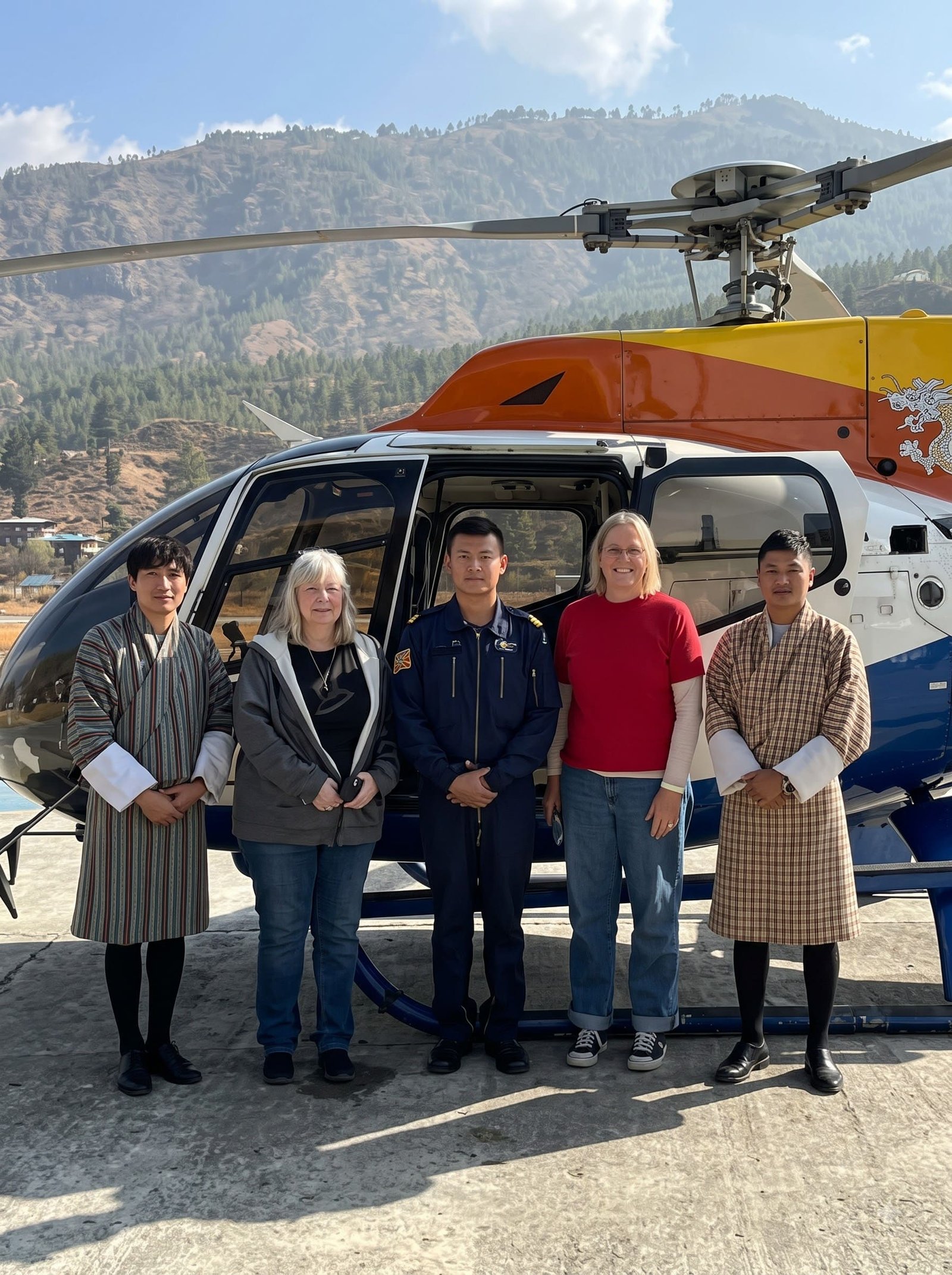
Little Wanderers Paro-Thimphu Break
Quick Escape4N/5D · Paro and Thimphu, family-paced
Best with: first family trips with young children or elderly parents
- One sight a day, naps fully protected
- Tiger's Nest hike paced to the family
- Takin preserve and archery for the kids
- Every drive kept under roughly an hour
Best for: families testing the waters with very young children or grandparents along for the first big trip.
Expand the day plan
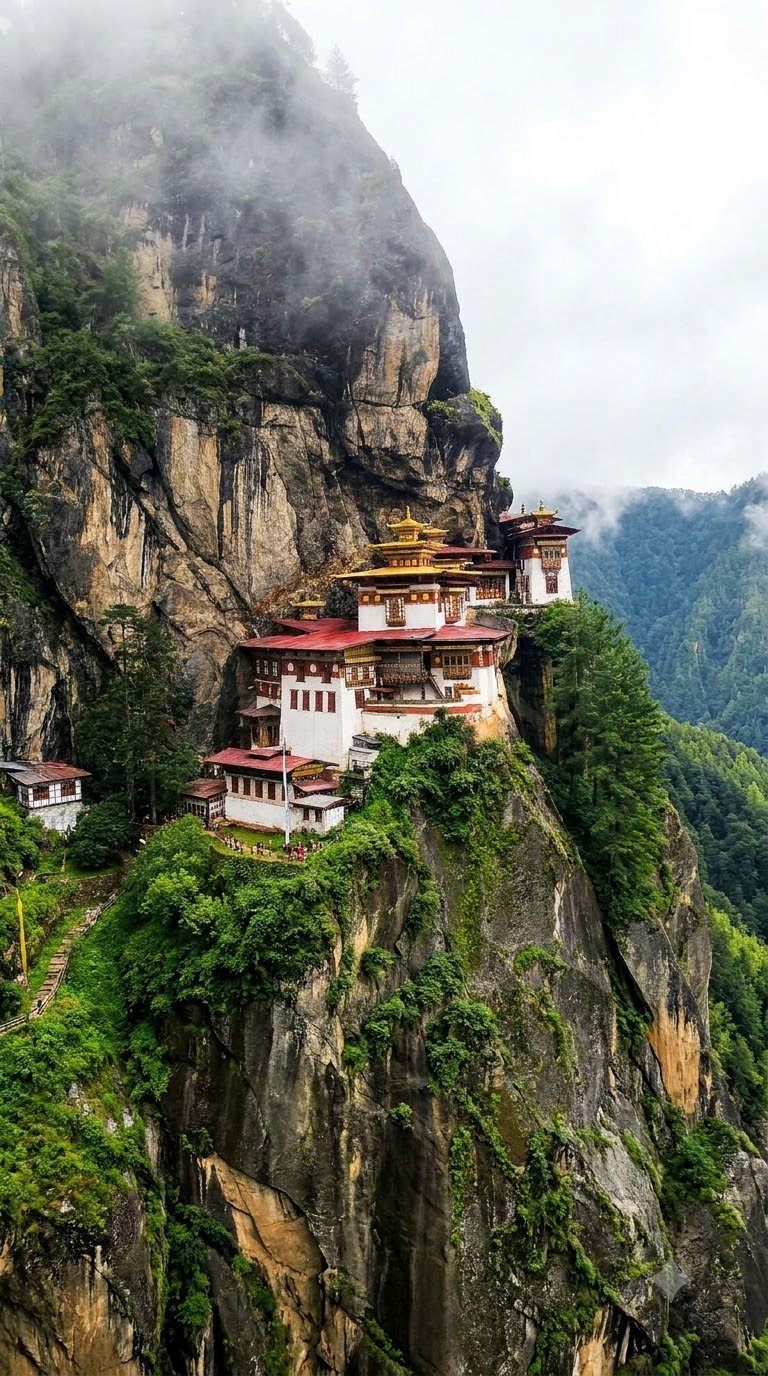
Three-Valley Family Classic
Family Favourite6N/7D — the classic trio, family-paced
Best with: school-age kids ready for rivers, bridges and fortresses
- Two nights in every valley — no repacking
- Suspension bridge and river-stone afternoons
- Dochula's 108 chortens as a picnic stop
- Tiger's Nest while legs are still fresh
Best for: families with five-to-twelve-year-olds who want the classic circuit without a single rushed morning.
Expand the day plan
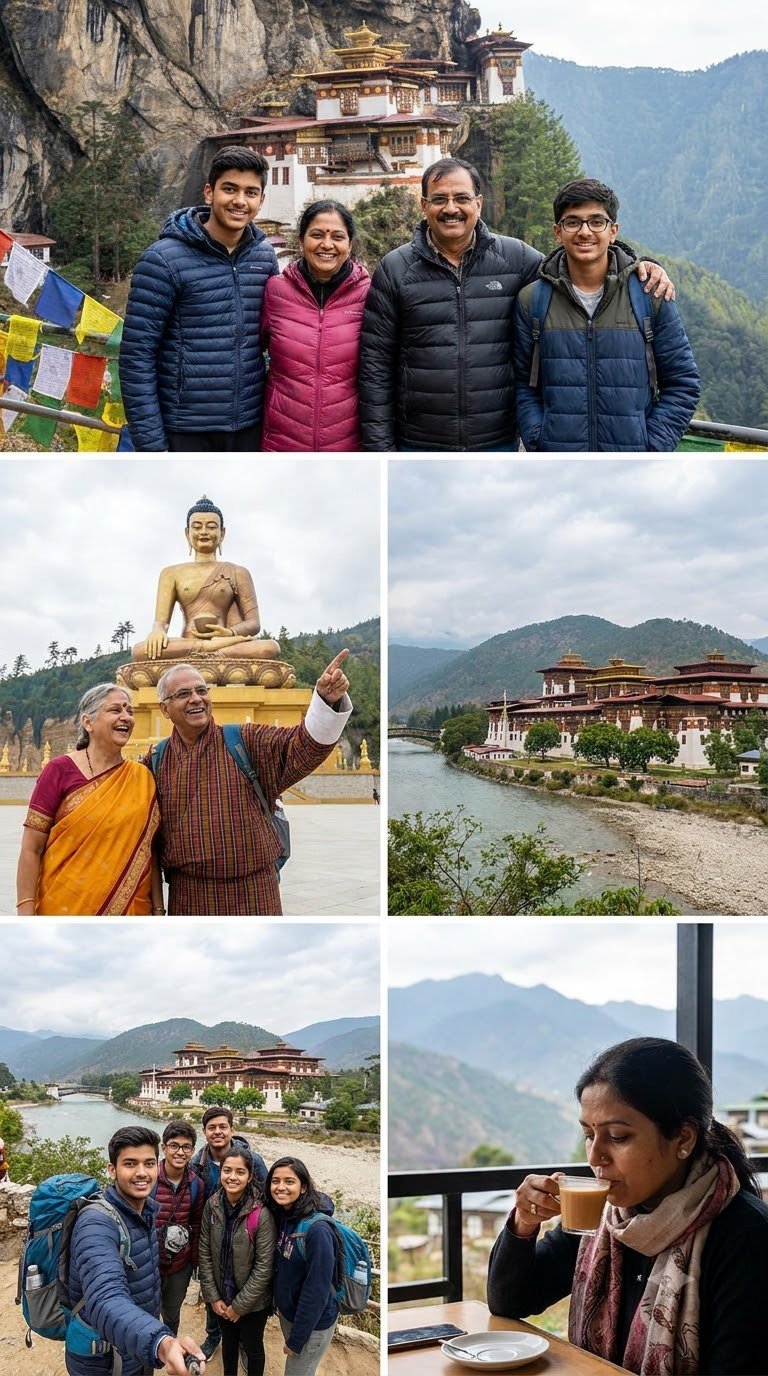
Family Nature & Culture Week
Cranes & Valleys7N/8D — the west, with a night added in Phobjikha
Best with: families who want one genuinely quiet valley in the mix
- A night in Phobjikha's glacial bowl
- Nature trails where cranes winter
- River afternoons in warm Punakha
- Tiger's Nest saved for the strong finish
Best for: families with mixed ages who want culture plus a real taste of Bhutan's quiet, wide-open side.
Expand the day plan
These itineraries are frames to start from, not fixed products. Nights can move between valleys, a rest day can be added mid-trip, and every plan flexes around school holidays and flight timings. Tell us the ages in your group and your dates, and a travel designer will shape the pacing, rooms and meals around them before sending a written plan.

What Keeps Children Happy Between Dzongs
Dzongs thrill adults; children need something to do with their hands and voices between them. The good news is that Bhutan supplies these moments naturally — you only have to leave room for them in the plan.
Archery matches
Watch the national sport played with shouting, singing and dancing down the range. Many grounds let children try a draw under supervision, which makes their day.
The takin
Bhutan's national animal looks assembled by a playful god — part goat, part antelope, entirely lovable. The Motithang preserve is a short visit that children ask to repeat.
Riverside afternoons
The Punakha river's pebble banks are made for skipping stones and paddling shoes-off. One unhurried hour here beats any number of viewpoint photographs.
Butter tea and momos
Let each child order their own steamer of momos and judge the butter tea. Food becomes an activity, and fussy eaters discover new favourites without pressure.
Spinning prayer wheels
Rows of brass wheels turn with a gentle push, and children count them like a game. It is devotion and play in the same gesture — very Bhutan.
Hotel lawns at dusk
Most family-friendly hotels sit on open grounds where children can run while the sun drops behind the hills. Ask which properties have that space before booking.
Best Time for a Family Trip
Every family works around a school calendar, so the honest answer is that you will probably travel when the schools close — which is exactly when everyone else travels too. Here is how the months balance weather against crowds.
Family months at a glance
A taller bar means clearer skies — but school-break months also fill rooms fastest
If your school calendar allows a mid-term escape, the weeks either side of the big breaks give you the same clear skies with calmer roads and cheaper confirmations. Travelling in the main breaks instead? Lock rooms and flights several weeks ahead — family rooms are the first thing to go in every valley, and a written confirmation of the room configuration matters as much as the date itself.
What a Family Package Should Include
Family trips fail on logistics, not sights, so read a family package's inclusions with that in mind. The list below is what we consider the honest baseline — anything missing is worth asking about before you pay.
Inclusions
- Family rooms or connected rooms, confirmed in writing
- A licensed guide who is used to travelling with children
- A roomy private vehicle with space for everyone
- Entry permits and SDF paperwork handled in advance
- Breakfast and dinner, with veg and kid-friendly options
- Hands-on cultural activities, not just viewing stops
- One deliberately light day built into the middle
- Drinking water and a local SIM for co-ordination
- A driver with real mountain-road experience
Exclusions
- Flights to and from Bhutan, added on at actuals
- Entry tickets to monuments and museums
- Lunches, except on special setups
- Personal expenses, snacks and souvenirs
- Optional extras such as cycling or rafting add-ons
- Additional costs from weather or road delays
Documents for the Whole Family
Travelling with children adds a small layer of paperwork to an otherwise simple list. Get these five ready before the trip and border day becomes a five-minute affair.
- Adult photo ID: originals plus photocopies — either a voter ID card or a passport valid for six more months.
- Children's documents: ask your operator exactly what minors need and carry birth certificates to be safe — requirements are stricter for children travelling with one parent or guardians.
- Entry permits: arranged by your operator for every traveller, adult and child alike; carry printed copies.
- Photographs: a recent passport-size set for every member of the family, including the youngest.
- Travel insurance: sensible for the whole family on a mountain trip with winding roads and flight sensitivities.
Bhutan hands families the rarest luxury in travel — a trip where nobody has to be rushed, least of all the adults.
What Shapes a Family Quote
Family quotes move on details that couples' quotes barely notice. Understand the levers below and you will know exactly why two similar-sounding plans price differently.
- Room configuration: connected rooms, family suites and extra beds all price differently — and some hotels have only one or two true family rooms.
- Vehicle size: a family of five with luggage needs a bigger car than a couple, and the upgrade shows in the quote.
- Meal preferences: veg and kid-friendly menus are easy to arrange, but they shape which hotels suit you best.
- Season: school-holiday months carry the tightest room availability, especially for the larger configurations.
- Trip length: every added night brings its own SDF levy, plus that day's room, guide and meals.
- Activity add-ons: cycling, rafting and extra hikes are priced separately, family by family.
Ask for the quote to name the rooms, not just the hotels. "Family room" can mean a connected pair, a large quad or a sofa bed — three very different nights. A written line per room, per night, is the difference between a plan and a hope, especially in the smaller valleys where alternatives are few.
Tips for a Smooth Family Bhutan Trip
These are the habits our family travellers swear by after the trip — small things that make the whole journey gentler.
- Pack layers, not bulky coats. Mornings and evenings are cold, middays warm, and children shed layers constantly — three thin layers beat one heavy jacket every time.
- Carry snacks kids love. Familiar biscuits and fruit smooth over every delayed lunch, and mountain drives have no vending machines.
- Plan motion-sickness care. The roads wind, so keep tablets, motion bands and a spare polythene bag within arm's reach — not in the boot.
- Hold the two-stop rule. Two sightseeing stops a day is the honest maximum with kids; a third stop buys you a grumpy evening.
- Choose hotels with outdoor space. A lawn at dusk absorbs the energy that courtyards and car seats stored up all day.
- Keep a buffer day. Fog or a slow pass can delay any leg; a spare day protects the flight home and everyone's mood.
- Involve kids with the festival calendar. If a tshechu falls within your dates, arrange one day around it — masked dances are the story children retell for months.
Frequently Asked Questions: Family Holiday in Bhutan
Is Bhutan safe for a family trip?
Yes — it is one of the safest, calmest places you can travel with children. Streets are quiet, locals are warm towards kids, and crime is rare. The main care point is the roads: mountain bends demand a steady driver, so keep drives to daylight hours, buckle up always, and let your operator's experienced hill driver handle the wheel while you enjoy the view.
Is the altitude hard on children or grandparents?
The western valleys sit at a moderate height, and most families adjust comfortably with an easy first day and slow pacing. Keep early days to two stops, drink plenty of water, and let children set the walking rhythm. For infants, or if a grandparent has a heart or lung condition, check with your family doctor before booking — that advice never goes out of date.
Will my fussy eater manage?
Comfortably. Veg meals, simple rice, noodles and egg dishes, and familiar Indian food are widely available, and hotel kitchens are used to young guests. Tell the operator in advance what your child eats, and the hotels will plan for it. Most parents report that by day three the kids are happily eating momos and asking for more.
Do hotels have family rooms?
Many properties offer large rooms or connected rooms, but the count is limited in every valley. Confirm the exact configuration in writing while booking — two adults and two children in one space, or two adjoining rooms — and ask which floor the rooms sit on. Operators who know a family is coming will hold the right combination before it goes elsewhere.
How many days are ideal with kids?
Six to seven nights is the sweet spot — enough for Paro, Thimphu and Punakha without rushing, with two-night stays in every valley. Four to five nights works better with very young children or elderly parents, keeping the trip to two valleys. Longer trips suit families with teenagers who want hikes and slower days in the quiet valleys.
Can I take a stroller?
You can bring one, but carriers work better almost everywhere. Monastery steps, village paths and viewpoint trails are not pram-friendly, and pavements in the towns appear and disappear. A light baby carrier keeps your hands free on stairs and lets a tired toddler nap on the move, which is worth more than any four wheels on this route.
What if someone falls ill?
Thimphu has the country's main hospital, and smaller towns have basic health centres; your licensed guide helps with everything from finding a pharmacy to arranging a consultation. Carry your regular medicines from home, plus basic first aid for cuts, fevers and motion sickness. Serious cases are stable, managed and evacuated if needed — which is another reason insurance is recommended.
Are long drives avoidable?
In the western circuit, yes — drives between Paro, Thimphu and Punakha stay within a couple of hours, broken by stops that children actually enjoy. Phobjikha adds a longer day over the pass, so plan it with a proper lunch halt and an early start. Beyond that, longer journeys exist but belong to teen-and-up itineraries, not toddler ones.
Do we need a guide with us all day?
Yes — a licensed guide accompanies every foreign-tourist itinerary, and for families they become part of the fun rather than an escort. A good guide turns fortress walls into stories, counts prayer wheels with the children, and reads when the group needs a lawn instead of another monument. Think of the requirement as a feature your family will miss afterwards.
Ready to Plan a Trip the Whole Family Will Remember?
Tell us the ages in your group, your school-holiday dates and the two or three things the children already love, and a travel designer will pace a Bhutan plan around them — family rooms confirmed in writing, veg meals arranged, and a clear quote before any deposit.