
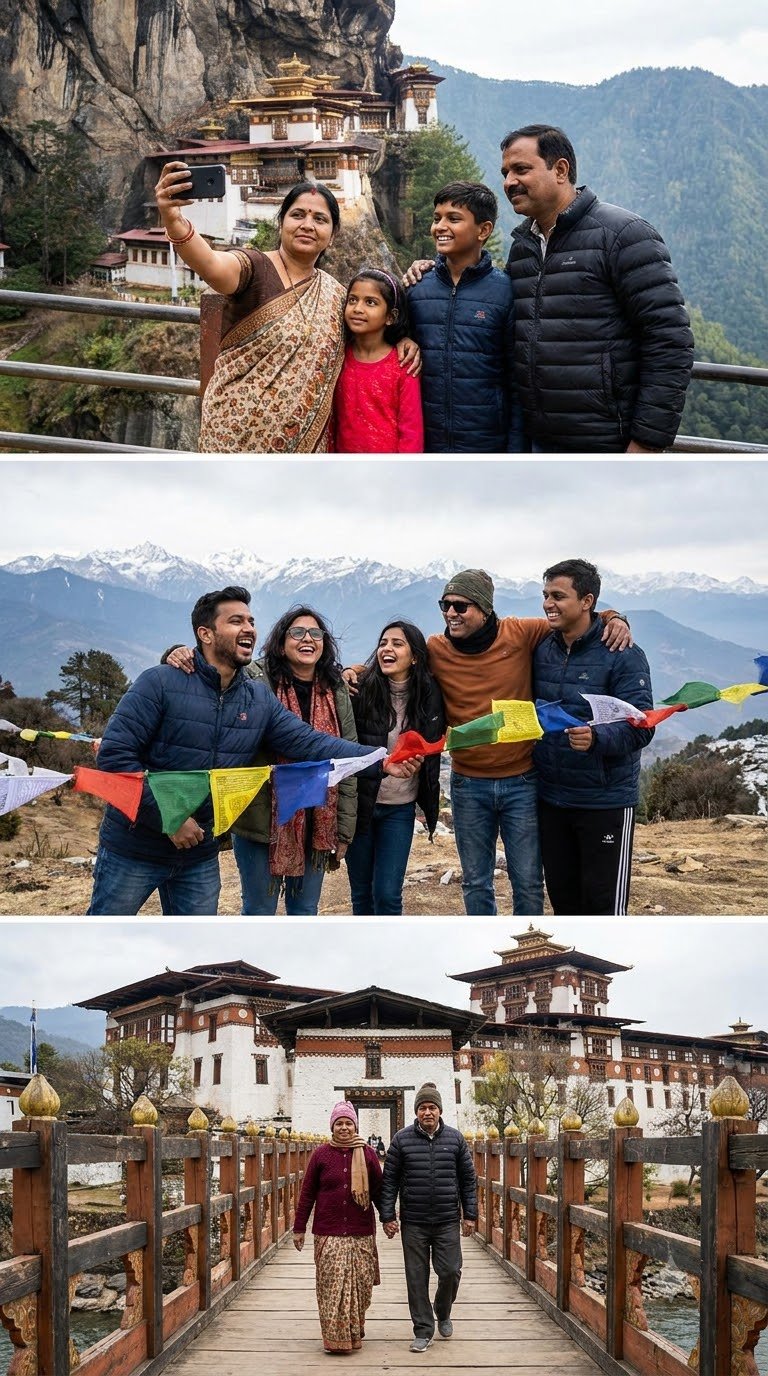
The short version
A Bhutan luxury hotel tour is a private, guided journey through valleys such as Paro, Thimphu, Punakha, Phobjikha and Bumthang in which every night is spent at a luxury lodge, a five-star hotel or a heritage boutique property. Most travellers choose between three and nine nights, arrive by air at Paro and travel with their own guide and driver. Indian passport holders need no visa, only a free Entry Permit and, for valleys beyond Paro and Thimphu, a Route Permit that the tour operator arranges.
Bhutan luxury hotel tour at a glance
- Best for
- Couples, anniversaries, multi-generational families and travellers who want to slow down
- Typical length
- Three to nine nights; four itineraries are compared below
- Where you sleep
- Luxury lodges, international five-star hotels, heritage and boutique properties, wellness retreats
- Getting there
- Fly into Paro from Delhi, Kolkata, Guwahati or Bagdogra, or cross by road at Phuentsholing, Gelephu or Samdrup Jongkhar
- Paperwork (Indian nationals)
- Valid photo ID, free Entry Permit, and a Route Permit for valleys beyond Paro and Thimphu
- Best months
- March to May and September to November; winter and monsoon are quieter
- Cost
- Quoted in writing once dates, valleys and hotel preferences are known
Most people judge a luxury holiday by its lobby. In Bhutan that habit misleads you. The kingdom has only a small number of properties that truly deserve the word, they are strung along a single winding road, and almost all of them are small: a few dozen rooms at the most, often fewer. The best are placed where the view is rather than where the traffic is.
That is why a Bhutan luxury hotel tour is planned back to front. Instead of choosing sights and then finding beds close to them, you choose the stays first and let the sightseeing arrange itself around them. Costs are deliberately not listed in this article, because they depend on the properties you pick, the season and the size of your group. We quote them in writing once we know your plans.
What a Bhutan Luxury Hotel Tour Actually Is
Strip away the label and it is an ordinary Bhutan tour, with a private car, a licensed guide, permits and the government fee, where the accommodation has been raised to the top tier and the schedule loosened to match. The hotel stops being a place to drop your bags between sights and becomes part of what you came for: a hot stone bath after a morning on the trail, a window that opens onto rice terraces, a dining table where the chef already knows you eat no onion.
Three things usually set it apart from a conventional hotel-based itinerary:
- Scale and setting. Small properties on ridges, riverbanks and valley floors rather than on busy central streets.
- Attention. A high ratio of staff to guests, which in practice means people remember how you take your tea.
- Time. Fewer stops each day, longer lunches and rest built in, so the hotel is something you actually get to use.
Everything else, the dzongs, the festivals and the Tiger's Nest walk, is the same Bhutan every visitor sees. What changes is what you come back to in the evening.
Why Where You Stay Matters So Much in Bhutan
Bhutan runs on one main east–west road, and it climbs and drops constantly. Thimphu to Punakha takes about three hours, largely because of the Dochula pass in between; Gangtey to Bumthang is a long day at the wheel. In a country shaped like this, the night's location decides your next morning. Wake up in Paro and you can be on the Tiger's Nest trail before the first groups arrive. Wake up in Thimphu and you are an hour and a half away.
There is a second reason, which is capacity. The number of top-end beds is genuinely limited. A lodge with twenty rooms cannot add a floor in festival season, so the finest rooms go first and flights to Paro follow. Settling the stays early is the single most useful thing a traveller can do.
And then there is the quiet. Outside Thimphu there is little traffic and almost no light pollution, and a well-placed lodge makes the most of both. That stillness, more than any marble bathroom, is what many guests say they remember.
Four Kinds of Luxury Stay You'll Find in Bhutan
Luxury in Bhutan is not a single style. Broadly, properties fall into four camps, and the most satisfying trips mix them.
Lodge circuits
A few operators run a lodge in each major valley, designed as a sequence. Amankora and Six Senses Bhutan are the best-known, each with properties in Paro, Thimphu, Punakha, Gangtey and Bumthang. Expect small room counts, strong design and a consistent standard from one valley to the next. The trade-off is less room to improvise.
International five-star hotels
Brands such as Taj Tashi and Le Méridien, in Thimphu and Paro, bring the familiar: larger rooms, several restaurants, a bar and a front desk that never closes. They suit travellers who value convenience and, in the capital, being close to the main sights.
Heritage and boutique hotels
Places like Zhiwa Ling Heritage and Naksel in Paro, or Gangtey Lodge in Phobjikha, lean on Bhutanese craft: carved timber, painted woodwork, wood-fired stoves. They tend to sit somewhere with a strong sense of place.
Wellness-led retreats
COMO Uma, in Paro and Punakha, builds the stay around a spa, yoga and hot stone bathing. It suits people who want recovery as much as sightseeing, particularly after a long flight or a hard hike.
A note on names: the properties above are examples of each type, not a fixed menu. Availability, renovations and seasonal closures change, so your written proposal names the exact hotel for every night.
A well-built trip combines them. A design-led lodge in Paro to begin, a five-star in Thimphu for its restaurants and easy access, a riverside retreat in Punakha, and a lodge with valley views in Gangtey. Mixing also gives you a fallback when one property has no rooms on your dates.
Where to Stay: A Valley-by-Valley Guide
Each valley asks something different of a hotel. The table gives the practical numbers; the notes below it explain what to look for.
| Valley | Approx. altitude | Usual drive from previous stop | What a luxury stay adds |
|---|---|---|---|
| Paro | About 2,200 m | 20 to 40 minutes from the airport | Hillside and riverside stays, hot stone baths, closest base for the Tiger's Nest trail |
| Thimphu | About 2,300 m | 1 to 1.5 hours from Paro | City access, the widest choice of restaurants, galleries and textile studios |
| Punakha | About 1,300 m | About 3 hours from Thimphu over Dochula Pass | A warm, green valley with river and rice-terrace settings |
| Phobjikha (Gangtey) | About 3,000 m | About 3 hours from Punakha | A wide glacial valley, stillness, wood-stove warmth, cranes in winter |
| Bumthang | About 2,600 m | A long road day from Gangtey, or a short domestic flight from Paro on days it operates | Ancient temples, farmland and the quietest stays in the country |
Arrive, then recover
You will want somewhere that lets you shake off the flight before the Tiger's Nest. Look for a hillside or riverside setting, a spa or hot stone bath, and a room with a proper valley view. Paro has a strong choice of luxury beds, from lodge-style retreats to international hotels.
Choose for location and kitchen
The capital rewards a hotel that is close to things: restaurants, the weekend market, the Textile Museum. A five-star here earns its keep through its kitchen and its position. One night is enough for most itineraries; two lets you see the city properly.
The valley where guests exhale
Lower, warmer and greener than the rest, Punakha is where many travellers finally relax. The better stays sit above the river or among the rice fields. If you add only one extra night to any itinerary, make it here.
Check the heating
At roughly 3,000 metres the evenings are chilly in every season, so ask about underfloor heating or a wood stove. In return you get open skies, soft light and, from late autumn, black-necked cranes circling the valley.
Further than most go
Central Bhutan's temple valley is beyond the usual circuit, which is exactly the appeal. Stays are quiet and farm-fringed. Plan for the long road, or for the short domestic flight on the days it runs.
Fewer valleys, longer stays
Two nights in a place you love beat four one-night stops in places you merely pass. The route that looks shortest on paper is rarely the one that feels best on the road.
Four Bhutan Luxury Hotel Tour Itineraries
The four routes below differ mainly in how many valleys they cover and how much road sits between nights. Treat them as starting points: once we know who is travelling, the hotel mix, the pace and any special occasion can all be adjusted.

Luxury Taster
Short Escape3 Nights / 4 Days · Paro · Thimphu
- Two nights in Paro, so the Tiger's Nest walk is never squeezed against a flight
- One night in Thimphu with the capital's best dining on the doorstep
- No long road days; the longest transfer is about ninety minutes
- Fits inside a few days of leave
Best for: first-timers with limited leave, couples marking an occasion, or anyone who wants a short taste before committing to a longer circuit.
See the day-by-day plan

Signature Luxury Circuit
Most Popular5 Nights / 6 Days · Paro · Thimphu · Punakha
- The three most-visited valleys, each with a stay chosen for its setting
- Dochula Pass and its 108 memorial stupas on the way to Punakha
- Two nights in Punakha with a genuinely empty afternoon
- A hot stone bath or spa session easy to slot in at any stop
Best for: couples and honeymooners, and anyone planning their first Bhutan luxury hotel tour who wants the classic route done comfortably.
See the day-by-day plan
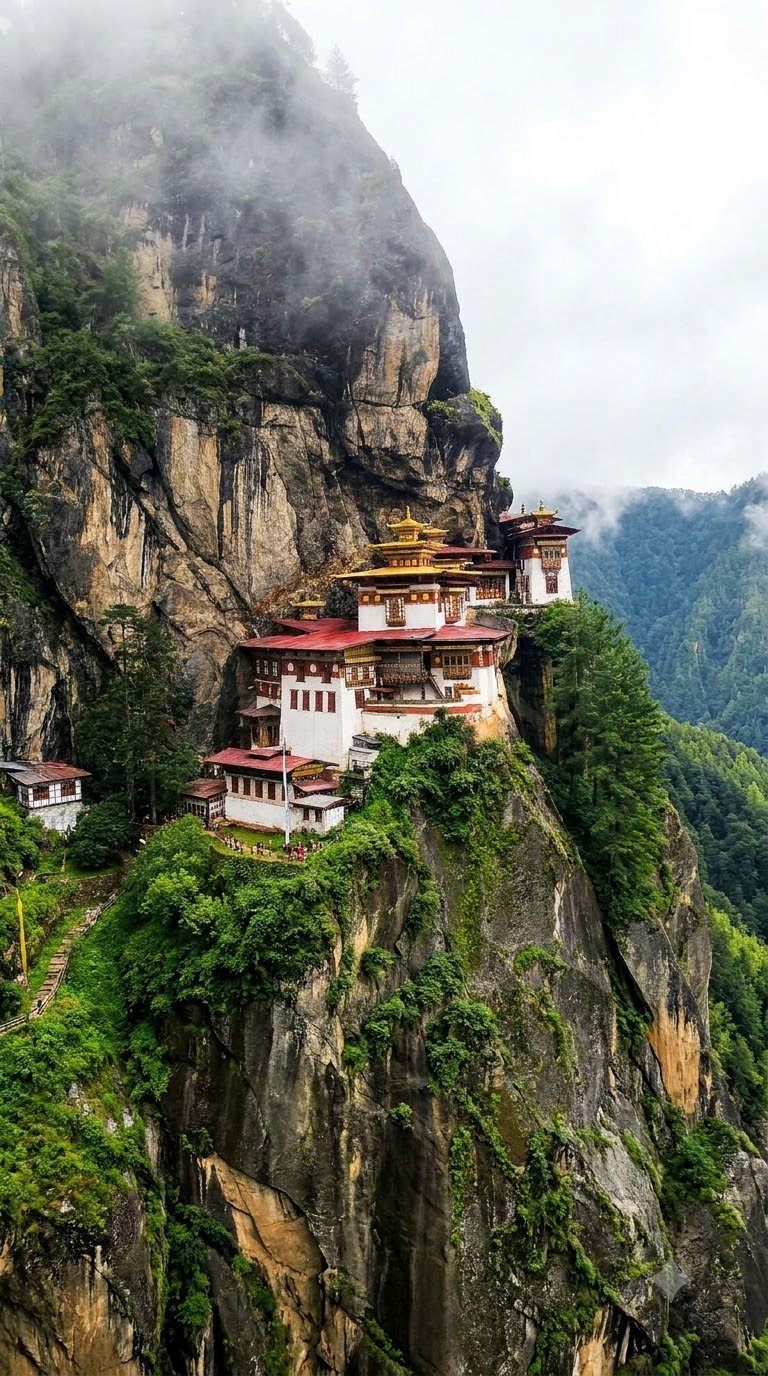
Valleys & Wellness Retreat
Slow Luxury7 Nights / 8 Days · Paro · Thimphu · Punakha · Phobjikha
- Two nights in Phobjikha, a wide glacial valley of stillness and wood-stove warmth
- Gangtey Goenpa and a flat valley-floor walk, one of the easiest on the trip
- A night in Thimphu on the way back, so the longest drive is not followed by a flight
- Room in the schedule for spa time, yoga or a farmhouse lunch
Best for: travellers who want stillness over sightseeing volume, wellness-minded couples, and families with older relatives who prefer a flat, quiet valley to a mountain climb.
See the day-by-day plan

Grand Luxury Odyssey
Deep Journey9 Nights / 10 Days · Paro · Thimphu · Punakha · Phobjikha · Bumthang
- Every valley from the shorter routes, plus Bumthang's ancient temples
- A deliberate cushion day in Punakha that absorbs delays from earlier in the trip
- A domestic flight back to Paro on days the service operates, instead of two days on the road
- A final night in Paro, so the flight home is never tight
Best for: travellers who want to go well beyond the standard circuit, repeat visitors, and celebrations where the journey itself is the gift.
See the day-by-day plan
Each route can be reshaped: swap a night, trade a lodge for a five-star, add a rest day or build in a celebration. Send your dates and group size and a travel designer will confirm what fits.
What Actually Makes a Hotel Luxury in Bhutan?
A star rating tells you the category, not the feel. When you compare properties, these are the questions worth asking.
What does the room look at?
Ask which way it faces and what it overlooks. The gap between a valley view and a car park is wider than the gap between two star categories.
How many rooms in total?
Fewer rooms generally mean quieter corridors, faster dinner service and staff who know your name. Ask how many other groups are likely to be in-house.
How is it heated?
At altitude, heating matters more than a marble bathroom. Ask about underfloor heating, a wood-burning stove (a bukhari) and insulation, especially in Phobjikha and Bumthang.
What does the kitchen do?
Find out how it handles vegetarian and special diets, and whether it serves proper Bhutanese dishes or only a tourist-friendly version of them.
What's on site?
A hot stone bath, a spa, a yoga deck: confirm what exists, whether it needs booking ahead, and whether it is included or an extra.
Stairs, slopes and lifts
Some of the loveliest properties sit on hillsides. If anyone in your group finds steps hard, say so early so we can choose accordingly.
Luxury Hotel Tour vs a Standard Hotel Tour in Bhutan
Neither is wrong. A standard tour is built to see as much as possible; a luxury tour is built to see the right things well. The differences show up less in the sights than in everything around them.
| Aspect | Luxury hotel tour | Standard hotel tour |
|---|---|---|
| Where you sleep | Lodges, five-star and heritage properties chosen for their setting | Comfortable three- and four-star hotels, usually in town |
| Room and space | Larger rooms, valley views, often a sitting area or terrace | Clean, practical rooms of a smaller size |
| Daily pace | Fewer stops, later starts, rest afternoons built in | More sights packed into each day |
| Dining | In-house chefs, set or tasting menus, dietary tailoring | Buffet or set menu at the hotel |
| Wellness | Spa, hot stone bath or yoga on site at many properties | Limited, or available elsewhere in town |
| Service | High staff-to-guest ratio and personal attention | Standard hotel service |
| Privacy | Quiet settings and small guest numbers | Busier common areas, especially in peak months |
| Booking lead time | Longer, because the best rooms go first | Shorter |
Experiences Worth Adding to a Bhutan Luxury Hotel Tour
Many luxury properties can arrange the following on request. Availability depends on the season, the lodge and the day, and it is better to choose one or two than to fill every afternoon.
A hot stone bath
River stones are heated until they glow and dropped into a wooden tub of water scented with aromatic leaves. A farmhouse tradition, and the best thing you can do for legs that have just climbed to Tiger's Nest.
A farmhouse dinner and cooking session
Eat in a family home, with red rice, ema datshi and buckwheat pancakes, and try cooking alongside the household. Lighter on ceremony than a hotel dinner and often the evening people talk about afterwards.
A private blessing
Where it can be arranged, your guide can set up a short blessing with a monk or a quiet butter-lamp offering at a temple, outside the busy hours.
Archery
Bhutan's national sport. A coach, a traditional bow and a target a very long way off make for a surprisingly competitive hour.
Craft and textile studios
Watch a weaver at the loom, a painter working on a thangka or the making of handmade paper. Worth the time for the stories as much as the souvenirs.
Quiet mornings
Yoga or meditation on a lodge deck, a forest walk before breakfast, a flask of butter tea. The simplest of these tends to be the one that stays with you.

What's Included in a Bhutan Luxury Hotel Tour
The core of the package is the same as for any Bhutan trip: guide, vehicle, permits and the government fee. What deserves a closer look on a luxury booking is the meal plan, which varies by property, and what counts as an extra.
Inclusions
- Nights at the luxury lodges, five-star or heritage hotels agreed in your proposal
- Meals on the plan each property operates: breakfast and dinner as standard, full board where the lodge offers it
- Private vehicle with a driver for the whole trip, with driver allowance and parking fees
- Licensed English-speaking guide, briefed on your group and its pace
- Airport or border pick-up and drop-off
- Sustainable Development Fee, the daily government fee that funds conservation and community programmes
- Entry Permit and Route Permits for every traveller
- Complimentary SIM card and bottled water
Exclusions
- Airfare, including any domestic flight within Bhutan
- Monument and museum entrance fees
- Lunches, unless your lodge's meal plan includes them
- Spa treatments, special experiences and optional add-ons
- Personal expenses such as laundry, drinks, tips and shopping
- Costs caused by events beyond anyone's control, such as landslides, road closures or flight delays
Permits, Visa and Documents
Indian nationals do not need a Bhutan visa, which is one reason so many luxury travellers come from India. There is still a short paperwork trail, and one detail catches people out: the standard Entry Permit covers Thimphu and Paro, so every other valley needs a second document.
- Valid photo ID for every adult: a passport with at least six months' validity, or a voter ID card for adult Indian nationals.
- Passport or birth certificate for each child: carry the original, not a photocopy.
- Entry Permit: free for Indian nationals and applied for online by your operator once the tour is confirmed.
- Route Permit: also free, and needed for Punakha, Phobjikha, Bumthang and other valleys beyond Paro and Thimphu.
- Other passports: travellers who are not Indian nationals need a Bhutan visa, which we apply for in advance.
- Insurance and medication: travel insurance is not compulsory for Indian nationals but is sensible, especially for older travellers, and a few days of any regular medication should travel in your hand luggage.
A week before you fly, check that the names on your permits match your ID letter for letter. A spelling slip is a small thing at home and a long delay at a checkpoint.
Best Time for a Bhutan Luxury Hotel Tour
Two calendars matter: the weather and the festivals, and the demand that follows them. The best rooms in the best months are the first to disappear.
Spring
Green valleys, rhododendrons blooming at higher altitude from April, and Paro's spring festival. The most popular window, so luxury rooms fill early.
Monsoon
Lush, misty and the quietest season of the year. Rain can slow the roads and soften the views, so keep the schedule flexible and enjoy the stillness.
Autumn
Crisp air and the clearest mountain views. Thimphu's festival, Bumthang's Jambay Lhakhang Drup and the Black-Necked Crane Festival in Phobjikha all fall in this stretch, which makes it the busiest season of all.
Winter
Cold at altitude but sunny and calm in the lower valleys, with cranes in Phobjikha and wood stoves lit in the hotels. A good choice for peace over crowds; a high pass can close after snow.
How fast luxury rooms tend to fill, by month
An indicative guide to demand for top lodges, not a promise. Festival dates and holiday weeks move it.
If your dates are flexible, the shoulder weeks either side of the peak, late February to early March, or the first half of May, often deliver the best combination of comfortable weather, available rooms and an unhurried feel.
Who a Bhutan Luxury Hotel Tour Suits
Couples and honeymooners
Privacy, quiet settings and the kind of dinner where nobody rushes you. Lodges are good at small gestures, such as a table set apart or a surprise for an occasion.
Milestone celebrations
Anniversaries, big birthdays and retirements. A trip planned around meaningful moments, with the hotels told in advance, feels very different to one that simply happens to include them.
Multi-generational families
Rooms close together, shorter drives and a gentler pace make it work for grandparents and children alike. Our guide to Bhutan family tour packages covers pacing by age in more detail.
Wellness and slow travellers
People who want spa time, yoga and long walks over a checklist of monuments. Choose fewer valleys and longer stays, and the trip does most of the work for you.
How to Plan Your Bhutan Luxury Hotel Tour, Step by Step
- Choose your travel window first. Settle the month before anything else, because festival weeks and school holidays fill the best rooms first.
- Decide how many valleys. Pick fewer valleys with longer stays rather than a long list with a different bed every night.
- Pick a mix of stay types. Combine a lodge, a five-star and a heritage or wellness property to suit each valley.
- Share traveller details early. Give names exactly as on ID, plus dietary needs, mobility needs and any celebrations, so each hotel is briefed in advance.
- Confirm rooms and flights together. Secure the hotels and your Paro flights in the same week, because each depends on the other.
- Add one or two experiences, not ten. A hot stone bath, a farmhouse dinner or a private blessing will do more than a packed afternoon.
- Pack for four seasons in a day. Bring layers, sturdy shoes, and modest clothing with covered shoulders and knees for dzongs and temples.
- Keep a buffer at the end. Avoid tight onward connections, because Paro flights depend on the weather.
Travelling Well, Not Just Comfortably
Bhutan's approach to tourism favours fewer visitors who stay longer and spend more thoughtfully, and the better luxury properties reflect that: local staff, local produce and a light touch on the landscape. A few habits make you a better guest.
- Dress modestly in dzongs and temples, and remove shoes and hats before entering.
- Do not photograph inside temples, and ask before photographing people.
- Walk clockwise around chortens and prayer wheels.
- Tipping your guide and driver is customary and appreciated, though never obligatory.
- Where you can, choose properties that employ and train local people and buy from nearby farms.
Frequently Asked Questions: Bhutan Luxury Hotel Tour
What is a Bhutan luxury hotel tour?
A Bhutan luxury hotel tour is a private, guided trip in which every night is spent at a luxury lodge, five-star hotel or heritage boutique property. The itinerary is paced around those stays, with a licensed guide, a private car and driver, permits and the government fee arranged for you.
How many nights are enough for a Bhutan luxury hotel tour?
Five to seven nights is a comfortable first luxury circuit covering Paro, Thimphu and Punakha and, with seven nights, Phobjikha. A three-night trip works as a short taste of Paro and Thimphu, while nine nights lets you add Bumthang without rushing.
Which are the best luxury hotels in Bhutan?
Well-known luxury options include the Amankora and Six Senses Bhutan lodge circuits, COMO Uma in Paro and Punakha, Taj Tashi and Le Méridien in Thimphu, Zhiwa Ling Heritage in Paro and Gangtey Lodge in Phobjikha. The right mix depends on your dates, valleys and the feel you want, and the final hotels are confirmed in your written proposal.
Do Indian travellers need a visa for a Bhutan luxury hotel tour?
No. Indian nationals travel on a valid photo ID such as a passport or voter ID card, with a free Entry Permit and, for valleys beyond Paro and Thimphu, a Route Permit. Your tour operator applies for both once your dates are confirmed.
When is the best time for a Bhutan luxury hotel tour?
March to May and September to November are the most popular months, offering mild weather, clear views and festivals. Winter is quiet and sunny in the lower valleys, and the monsoon months are the greenest and least crowded. The finest rooms fill first in spring and autumn.
Can I mix lodges and five-star hotels on one Bhutan luxury hotel tour?
Yes, and most well-planned trips do. A design-led lodge in Paro, a five-star hotel in Thimphu for its restaurants and a riverside retreat in Punakha is a typical combination. Mixing also helps when a particular lodge has no availability on your dates.
Are luxury hotels in Bhutan suitable for children and older travellers?
Generally yes, but check access. Many properties sit on hillsides with steps, so tell your operator about mobility needs and ask for ground-floor rooms or lift access. Shorter driving days and an extra rest night before high passes make a real difference for grandparents and young children.
Can luxury hotels in Bhutan handle vegetarian and special diets?
Most can, with notice. Vegetarian meals are common in Bhutan, and kitchens at luxury properties are used to adjusting dishes for allergies and dietary preferences. Share your requirements at booking so each hotel is briefed before you arrive.
How early should I book a Bhutan luxury hotel tour?
For March to May and September to November, start planning several months ahead, because small luxury lodges have few rooms and fill early. Winter and monsoon dates are usually more flexible. Confirm rooms and Paro flights around the same time since each depends on the other.
Ready to Plan Your Bhutan Luxury Hotel Tour?
Tell us your dates, who is travelling and how many nights you would like. A travel designer will suggest a mix of lodges and hotels, sketch the route and send a written quote, with no deposit needed to start the conversation.