
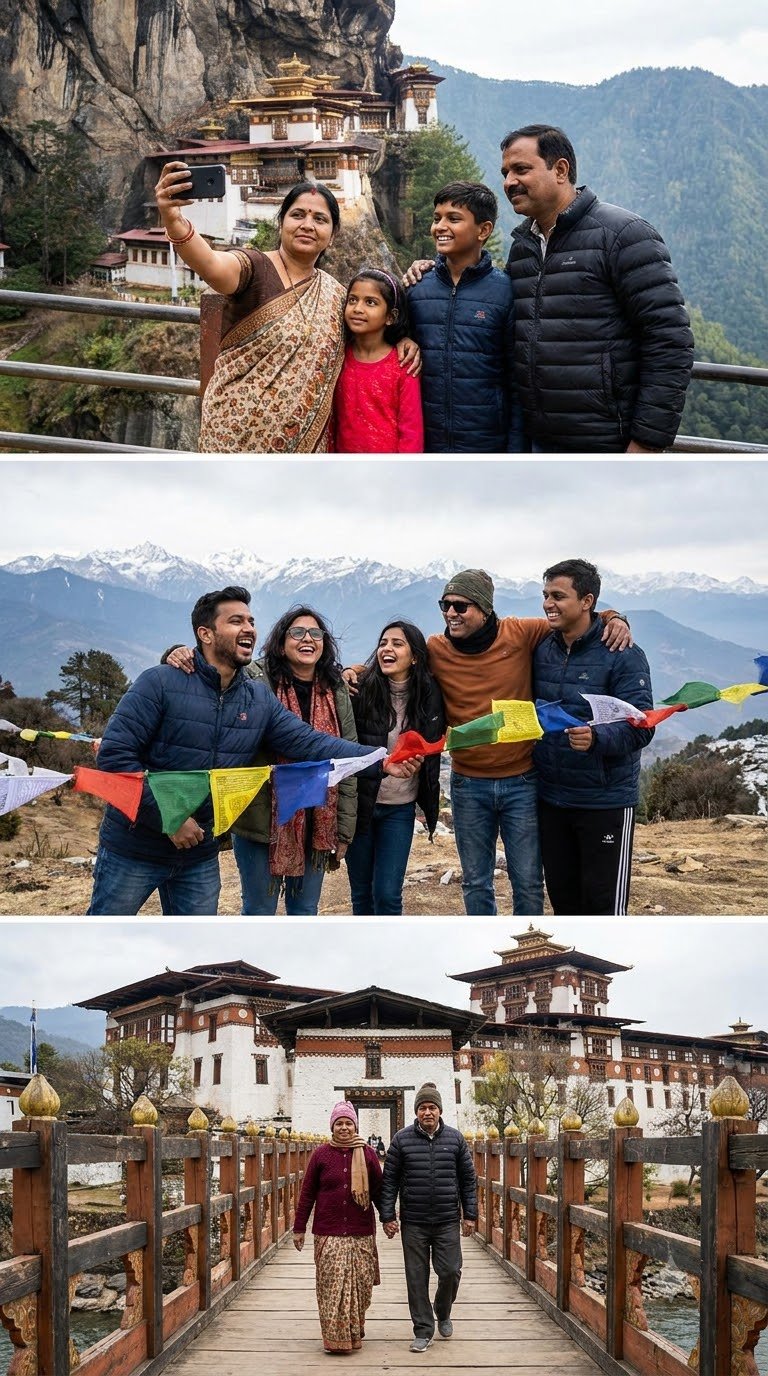
Families who ask about a Bhutan luxury family holiday usually arrive with the same quiet worry: will it actually be comfortable? Bhutan is famous for mountains, monasteries and a national philosophy built around happiness. It is not famous for resort-style indulgence, and a few clumsy brochures have left people picturing either a rustic trek or an over-polished bubble. The truth sits somewhere in between, and it is more interesting than either.
Luxury in Bhutan is mostly about subtraction. Fewer people, fewer transfers, fewer decisions. The kingdom limits visitor numbers through a daily fee and a licensed-operator system, so even the best-known sites stay calm, and a family travelling on a private plan has the valley more or less to itself. Add premium lodges, a dedicated guide and a vehicle that stays with you from arrival to departure, and you get a luxury family holiday that feels unhurried in a way few international destinations can match.
Below you'll find how a luxury family trip to Bhutan is structured, what "premium" really covers, four route lengths to compare, how to shape the plan around each generation, which papers the children need, and when to go. Prices are left out on purpose. The cost of a Bhutan luxury family holiday shifts with the hotel category, the time of year, how many are travelling and how old the children are, so a written quote built around your actual dates is far more useful than a number on a web page.
At a glance
- What it is
- A private, premium-paced Bhutan trip with family-sized rooms, a dedicated guide and a car that stays with you throughout
- Ideal length
- Six to eight nights for most families; four for a long weekend, ten or more for three generations
- Best months
- March and April, then September to November, with winter as a quieter option
- Getting there
- Fly into Paro, or cross overland through Phuentsholing
- Paperwork
- An Entry Permit and, for onward valleys, a Route Permit for every family member, children included
- Child fee rules
- A reduced Sustainable Development Fee from age six to twelve; younger children are exempt
What a Bhutan Luxury Family Holiday Really Means
Strip away the marketing and a luxury family holiday in Bhutan rests on six things. None of them is about excess. All of them are about how the days feel.
Space
Interconnecting rooms, family suites or a small villa, so parents, children and grandparents each get a door they can close. Space matters more than thread count when a toddler is asleep at seven and a teenager is not.
Time
Two or three real stops a day instead of five, with the spare hours left free. A Bhutan luxury family holiday earns its name by letting the afternoon go wherever it wants.
Access
A private guide who can reorder the day around mood, weather and energy, and a driver who knows the quiet viewpoints. You never queue as part of a group of strangers.
Quiet
Lodges set apart from the main road, on hillsides, riverbanks and valley floors. Evenings are warm, hushed and starry rather than loud.
Food
Menus that bend. Familiar dishes for fussy eaters sit beside Bhutanese cooking for the curious, with the chilli adjustable. Mention preferences early and the kitchens take care of the rest.
Care
Someone who notices an altitude headache, car sickness or a tiring grandparent before it becomes a problem, and a plan that already has a fallback built in.
Why Bhutan Suits a Luxury Family Holiday So Well
Bhutan's travel system was designed around small parties. Every group travels with a licensed guide and its own vehicle, which means a family is never part of a coach tour and never has to navigate alone. That single feature quietly solves most of the problems that make family travel tiring elsewhere: no group schedules, no hunting for taxis, no losing a grandparent in a crowd.
The country is also unusually calm. Traffic is light, towns are small, and the pace of daily life rubs off on visitors within a day or two. Parents often notice it first in the children, who tend to stop asking for screens once there is a river to throw stones into or a monk's debate to watch from the courtyard wall.
One caveat deserves honesty. Bhutan is a mountain kingdom. Roads wind, domestic flights are limited, and the loveliest lodges are not always next door to a hospital. Luxury here means handling those realities gracefully, not pretending they don't exist.
The best Bhutan luxury family holiday isn't the one with the most impressive rooms. It's the one where nobody in the family ever feels hurried.
Where Families Stay on a Luxury Holiday in Bhutan
Bhutan has few large resorts. Premium accommodation tends to come in smaller, more characterful forms, which suits families well: quieter corridors, more attentive staff and gardens where children can roam. Rather than naming a handful of famous hotels, here are the stay styles you'll meet and what each is best for.
Hillside Retreat Hotels
Found above Paro and Thimphu, with big windows, mountain views and, in several, spa facilities. The easiest choice for arrival nights and first-time families.
Heritage-Style Lodges
Rammed-earth walls, carved timber and painted details, paired with modern bathrooms and heating. Good for older children and grandparents who enjoy atmosphere.
Riverside Stays in Punakha
Lower, warmer and gentler. Properties here often have garden space beside the river, and some have pools for warmer months, so ask which.
Crane-Valley Lodges
Remote and wide open in Phobjikha. Rooms are usually warmed by wood-fired stoves, and the setting is the attraction: big skies, pine slopes and, in winter, black-necked cranes.
Boutique Stays in Bumthang
Small luxury lodges beside orchards and farmland in central Bhutan, offering a slower, more rural chapter for families who go further east.
A Farmhouse Stop
Not luxury by thread count, but a farmhouse lunch or evening with a hot stone bath is often what families talk about longest afterwards.
When you request rooms, be specific. "Family room" means different things at different properties. Ask whether rooms truly interconnect or simply sit side by side, whether there is a lift or a stair-free route (handy for grandparents and pushchairs), how rooms are heated in the cooler months, and whether bathrooms have a tub or only a shower. Small lodges hold only a few rooms of each type, and family set-ups are the first to go during festival weeks.
Arriving in Comfort: Flying In or Crossing Overland
Every luxury route begins at Paro's airport or at a land border. Paro's runway is one of the most dramatic in the world, set between mountain ridges and flown by specially trained pilots. Landings happen in daylight only, and weather can delay flights, so the arrival day works best as a day with slack rather than a tight one.
Three routes into the kingdom
All three join the same private guide-and-car arrangement on arrival
The shortest total journey and the kindest option for toddlers and grandparents. Your driver is at arrivals, and most families are in their hotel within the hour. Book window seats for the older children; the descent is half the entertainment.
A good fit if you are already touring North Bengal or Sikkim. The drive up to Thimphu is long and winding, so keep the first night easy and the schedule empty. Better with older children than with a napping toddler.
Saves doubling back across the same valleys, at the cost of one long scenic driving day. Works well for families with teenagers who don't mind a day with the window down.
Whichever way you enter, treat the first afternoon as a blank page. Paro sits at roughly 2,200 metres, and a slow evening with plenty of water before the first sightseeing day makes the whole trip feel easier for everyone, children and grandparents especially.
Four Bhutan Luxury Family Holiday Routes, Compared
These routes grow in length and geography, but they share one principle: enough nights in each valley that nobody feels like luggage. All four assume premium-category stays, a private guide and a private vehicle, and each can be reshaped as soon as your operator learns exactly who is coming.

Valley Retreat
Short & Restful4 Nights / 5 Days · Paro · Thimphu
- Two nights in each valley, so nobody packs and unpacks more than once
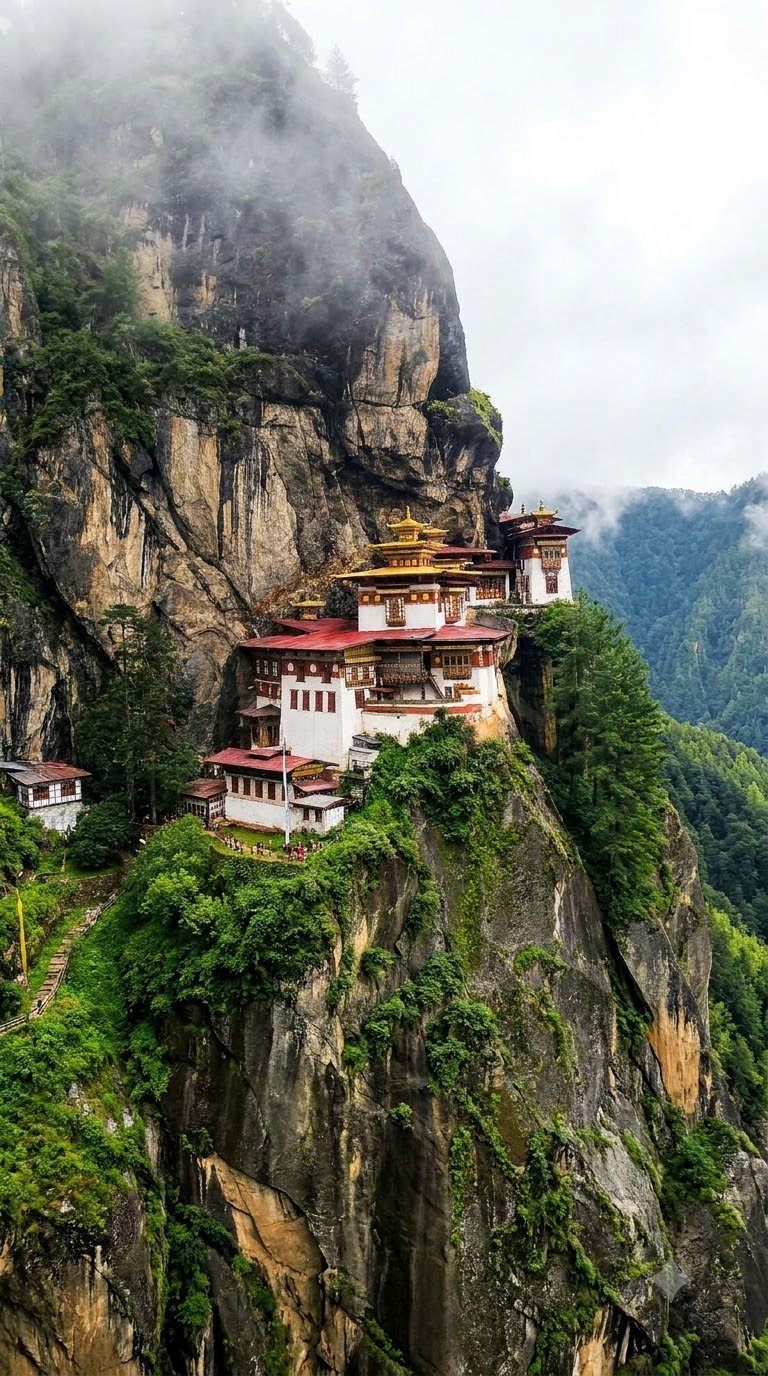
- Tiger's Nest taken as a gentle walk to the viewpoint, with a pony for the first stretch where available
- A hands-on afternoon in Thimphu: paper-making, archery or a cooking class
- Real time to enjoy the hotel itself rather than just sleep in it
Best for: families with young children, or a group testing Bhutan before committing to a longer holiday.
Open the day-by-day plan

Western Bhutan Signature
Balanced6 Nights / 7 Days · Paro · Thimphu · Punakha
- The classic western circuit, with a second night in Punakha so the valley isn't a blur
- The 108 memorial chortens at Dochula Pass, with time for a short forest stroll
- A flat walk through rice fields to Khamsum Yulley Namgyal Chorten or Chimi Lhakhang
- The final night back in Paro, so departure morning is calm
Best for: first-time families whose children are old enough to enjoy a day of sightseeing but young enough to need a rest after it.
Open the day-by-day plan
Crane Valley & River Escape
Nature-Led8 Nights / 9 Days · Paro · Thimphu · Punakha · Phobjikha
- Two full nights in Phobjikha, at around 3,000 metres the highest overnight stop on the route
- The Gangtey Nature Trail, an easy walk across the valley floor
- Black-necked cranes roosting in the valley from late autumn into winter
- Room for an optional river activity in Punakha and a farmhouse visit near Thimphu
Best for: families with teenagers or active parents, and returning visitors who have seen the west and want a calmer, more remote valley.
Open the day-by-day plan

Grand Kingdom Journey
Unhurried10 Nights / 11 Days · Paro · Thimphu · Punakha · Phobjikha · Bumthang
- Five valleys with a rest day in Punakha and an open day in Bumthang
- Bumthang's temples, orchards and local cheese and honey, a different Bhutan from the west
- A scheduled domestic flight back to Paro where the dates allow, replacing a very long road day
- Day walks are always optional, never compulsory
Best for: three-generation families, repeat visitors, and anyone with enough time to treat Bhutan as a proper holiday rather than a quick circuit.
Open the day-by-day plan
Every route can be reshaped once your operator knows the ages travelling: move a night, trim a long drive or slot in an extra rest day wherever it helps. Prefer a standard-category hotel plan? Our Bhutan family tour packages cover that approach.
Shaping the Holiday Around Every Generation
The routes above are starting points. What makes a luxury family holiday in Bhutan feel right is how each age group is looked after inside them, so most good operators rebuild the details once they know who is coming.
Little Ones
Short drives, early dinners, a cot or extra bed arranged ahead, and the lower Tiger's Nest viewpoint in place of the summit.
School-Age Children
Hands-on moments beat long explanations: archery, a cooking class, the takin preserve, the swaying suspension bridge. The big hike is optional.
Teenagers
Longer hikes, active add-ons where offered, and a real say in the plan. Most premium lodges have Wi-Fi, though it is slower than city broadband.
Grandparents
Later starts, stair-free rooms where available, shorter walks and an extra rest night before long mountain drives, with the car parked close to every stop.
For mixed groups, the simplest trick is the split day. The keen walkers hike in the morning while the others enjoy a slower temple visit or a lodge breakfast, and everyone meets for lunch. With a private guide and car this costs nothing in atmosphere, and it stops a three-generation holiday from running at the speed of its fastest member.
Signature Moments That Make the Trip Feel Special
A luxury family holiday in Bhutan is remembered less for the thread count than for a handful of small, unrepeatable moments. These are the ones families mention most often, and most can be slotted into any of the routes above.
A Hot Stone Bath
At a farmhouse, river stones are heated in a fire and dropped into a wooden tub scented with artemisia leaves. Parents and grandparents tend to love it more than the children expect.
An Archery Lesson
Archery is Bhutan's national sport, and the target is startlingly far away. A beginner session with a local coach is usually good for a lot of laughter.
A Cooking Class
Roll momos, stir ema datshi and learn why the chilli here is a vegetable and not a spice. Heat levels can be adjusted for younger cooks.
A Riverside Picnic
Lunch laid out beside a river in Paro or Punakha instead of at a restaurant table. Children can paddle while adults finally sit down.
A Festival Day
Masked cham dances, bright brocade and a crowd in festival dress. Tshechu dates follow the lunar calendar and shift each year, so check them before fixing your dates.
Craft and Butter Lamps
See handmade paper being made or a painting studio at work in Thimphu, then light a butter lamp with your guide at a quiet temple. Small, calm and often the most affecting stop.

What to Have in Writing for a Luxury Family Package
Bhutan's tourism structure bundles the essentials of guide, vehicle, permits and government fee, so what separates one luxury family holiday from another is the detail around them. Before you confirm anything, ask your operator to put the following in writing.
Typically Bundled
- Premium-category hotels, with interconnecting rooms or a family suite where available
- English-speaking private guide, briefed on every traveller's age and pace
- Private vehicle with driver, including driver allowance and parking
- A meet-and-greet at the airport or border crossing, and the same on departure, for everyone travelling
- The government Sustainable Development Fee, already reduced for eligible children
- All entry and route permits, for each traveller including the children
- Meal plan matched to each hotel (breakfast and dinner as standard), with children's menu requests passed on in advance
- A local SIM card and bottled water in each room at no extra charge
Usually Paid Separately
- Entrance and monument fees
- Lunches, unless a lodge includes them (confirm property by property)
- Airfare or train tickets
- Spa treatments and optional activities such as rafting
- Personal expenses and tips
- Extra costs caused by things nobody controls, like a landslide closing a road or a delayed flight
Permits, Visas & Documents for the Whole Family
Indian nationals can enter Bhutan without a visa, but permits are compulsory for everybody, children included. Families on foreign passports go through a visa process arranged by the operator before arrival. Rules are revised from time to time, so treat the list below as a guide and let your operator confirm current requirements when you book.
- Adults: a valid passport (with at least six months left on it) or, for Indian nationals, a voter ID card.
- Children: either a passport or a birth certificate will do, and it should be the original document rather than a copy.
- Entry Permit: there is no charge, and your operator files it online for the whole family at once after dates are fixed. It covers Thimphu and Paro.
- Route Permit: required for the valleys further out, such as Punakha, Phobjikha and Bumthang. Don't leave it to the last day.
- Sustainable Development Fee: charged per person per night. Children from six to twelve pay a reduced rate, younger children are exempt altogether, and your operator builds this into the quote.
- Passport photos: pack a few spare prints per person in case a form turns up at a checkpoint.
- Medical kit and regular medicines: include motion-sickness remedies and rehydration salts. The best facilities are in Thimphu and Paro; remote valleys have basic clinics only.
- Travel insurance: strongly advised for everyone, and especially if infants or older relatives are travelling.
Check every name and date of birth on the permit against the document each person is carrying. A small mismatch is easy to fix at home and awkward to fix at a border counter.
Best Time for a Bhutan Luxury Family Holiday
Two things set the best dates: what the mountains are doing, and when your children are free. Autumn and spring are the classic choices, but winter and even the early monsoon have their fans.
Family comfort by month
An editorial guide weighing mild weather, mountain views and festival timing, not measured data
Autumn (September to November) is the headline season. Skies clear, the valleys turn gold with harvest, and festivals fill the calendar. It is also when small premium lodges sell out first, so aim to book well ahead. In November the black-necked cranes return to Phobjikha, and the Black-Necked Crane Festival is usually held around the 11th of the month.
Spring (March to May) brings blossom, mild days and the Paro festival season, which suits families who want colour without the autumn rush. Winter (December to February) is cold in Thimphu, Paro and Phobjikha, but days are crisp and clear, Punakha stays comfortably warm, and heated lodges feel especially cosy. The monsoon (June to August) turns everything green and quiet, though road delays are more likely and flexibility matters.
How to Plan a Smooth Luxury Family Holiday in Bhutan
- Share every age and need first. A three-year-old, a twelve-year-old and a seventy-year-old need different things, even on the same route. Mobility limits and dietary needs belong in this first conversation too.
- Choose the pace before the places. Decide how many nights you want in each valley. More nights in fewer valleys is the simplest way to make a family trip feel luxurious.
- Lock dates early for autumn and festivals. Premium lodges are small and family room types are limited, so October, November and festival weeks fill first.
- Get room set-ups confirmed in writing. Interconnecting or just adjoining, lift or stairs, tub or shower, heating in the cold months. These details decide whether a room works for your family.
- Build slack around flights. Paro flights run in daylight and can be delayed by weather. Keep a spare half day at either end of the trip if you can.
- Pack for several seasons in one day. Layers, sun protection, a rain jacket, warm socks and motion-sickness remedies cover most of it.
- Leave one afternoon unplanned. It is often the one the children remember best.
Frequently Asked Questions: Bhutan Luxury Family Holiday
What makes a Bhutan luxury family holiday different from a standard family tour?
The sightseeing is similar, but the set-up is not. A luxury plan uses premium or boutique stays with family-sized rooms, fewer sights per day, more nights in each valley, and a guide and driver who stay flexible around the energy of the youngest and eldest travellers. The emphasis moves from covering ground to enjoying it.
How many nights are best for a luxury family holiday in Bhutan?
Six to eight nights is the sweet spot for most families. It covers Paro, Thimphu and Punakha, with Phobjikha added at the upper end, without long repeated drives. Four nights suits a long weekend with young children, while ten or more nights suits three-generation groups who want rest days and a look at central Bhutan.
Are luxury hotels in Bhutan suitable for young children?
Generally yes. Most premium properties can arrange a cot or extra bed, simple children's meals and interconnecting rooms when asked in advance. Many sit on hillsides or in gardens, so check for steep drops, stairs and heating in cooler months, and ask which room categories work best for little ones.
Can grandparents comfortably join a luxury family trip to Bhutan?
Yes, when the plan is shaped around them. Later starts, shorter walks, an extra night before long mountain drives, ground-floor or stair-free rooms where available, and a car that parks close to every stop all make a real difference. Anyone with a heart or lung condition should speak to a doctor first, because most of the route sits at altitude.
Do children need permits, and are there fee concessions?
Yes. Each child is issued an Entry Permit, plus a Route Permit whenever the trip goes past Thimphu and Paro into valleys such as Punakha. Children can travel on either a passport or a birth certificate, and the operator files for the whole family in one go. The Sustainable Development Fee is reduced for children from six to twelve, and younger children are exempt.
When is the best time for a Bhutan luxury family holiday?
October and November bring the clearest mountain views and the strongest festival atmosphere, with March and April as the best spring alternatives. Winter is cold but crisp, and black-necked cranes settle in Phobjikha. The monsoon months are greener and quieter but wetter, with a higher chance of road delays. Premium stays fill first in autumn, so book early.
How is a luxury family holiday in Bhutan priced?
There is no single figure, because the cost depends on hotel category, season, number of nights, group size and the ages of the children. The only reliable way to compare options is a written quote built around your dates and the ages travelling, so share those details with the operator first.
Is Bhutan safe and healthy for children?
Bhutan is widely regarded as a calm, low-crime destination with light traffic, and your guide stays with the family throughout. The practical points are altitude, winding roads that can cause motion sickness, and limited medical facilities outside Thimphu and Paro. Pack regular medicines, ask your doctor about any existing conditions, and carry travel insurance.
Can the itinerary be customised for our family?
Yes. The four routes in this guide are starting points. Nights can be shifted, valleys swapped, rest days added and activities chosen around each family member. Share your dates, the ages travelling and what everyone enjoys, and the plan is built around them.
Ready to Plan Your Bhutan Luxury Family Holiday?
Send us your dates, who is coming with their ages, and roughly how long you can stay. A travel designer will shape a premium, private itinerary around your family and send it as a written quote.